

I didn’t realize how fast my life felt until I arrived in Romania.
Not fast in the obvious sense — no traffic jams or constant noise — but fast in my head. The constant internal countdown of what comes next. Romania has a way of quietly undoing that. Not dramatically, not instantly. It just starts happening somewhere between your second coffee of the day and the moment you notice you haven’t checked the time in hours.
I went to Romania expecting scenery, history, maybe a few good photos. What I found instead was a country that gently teaches you how to slow down again.
First Impressions Aren’t Loud — They Linger
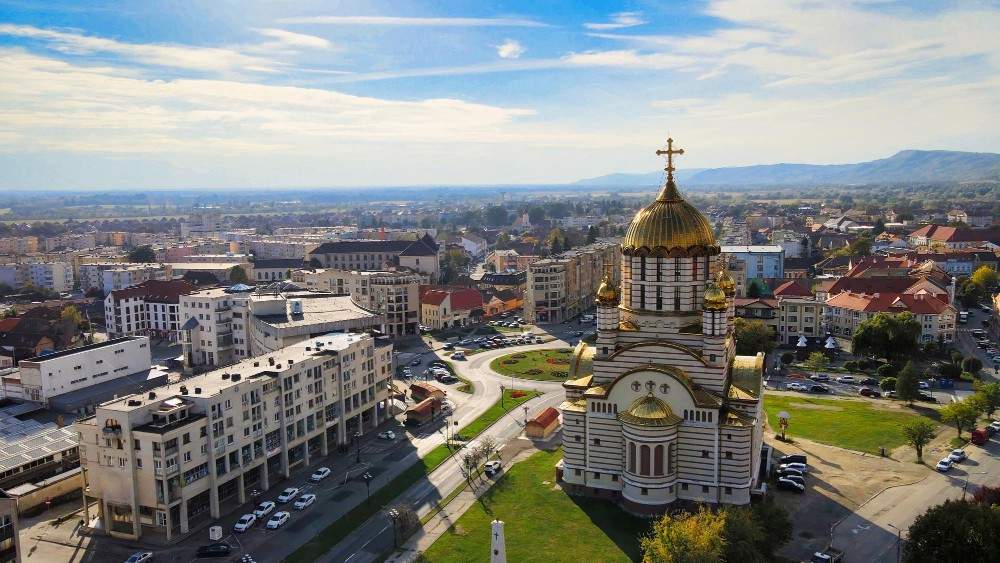
Romania is not self-declaring at your stage of arrival. It doesn’t bombard you with spectacle. Even Bucharest, which has its own brand of chaos, seems more rooted than frenetic. There’s movement, sure — trams rattling by, people talking over each other on café terraces — but there’s also an ease to it. No one is hustling you in or out.
Once I left the city, that feeling deepened. Roads curved through countryside that looked quietly productive rather than manicured. Fields were being worked. Villages were awake. People waved without expecting anything in return.
Since I was a tourist in someone’s daily life, rather than a consumer of experiences, it was the first time in a long while that I felt that way.
Romania Is Best Understood Between Destinations
Traveling in Romania, the spaces between places matter as much as the places themselves. The drive from one town to the next isn’t dead time. It’s where the country introduces itself.
You pass horse carts sharing the road with modern cars. You pass old women selling apples and jars of honey from folding tables. You pass children walking home from school through fields instead of sidewalks. None of it feels staged. It’s just how things work.
In Transylvania, especially, I found myself stopping often — not because there was a landmark, but because something felt worth noticing. A fortified church rising unexpectedly from farmland. A village square where nothing was happening, and that somehow felt important.
Romania rewards attention, not speed.
Villages Where Life Still Has a Rhythm
It was in the little villages that I truly came to know Romania. Small towns where the peal of a church bell punctuates the day, where diners linger over their meals, where people still speak to their neighbours—face to face, not mediated by screens.
I stayed in a village where evenings meant sitting outside, not inside. Someone would bring a chair. Someone else would bring a bottle. Conversation wandered without an agenda. There was no entertainment beyond being present, and somehow that was enough.
The cooking was simple but satisfying: broths that seemed like they’d been simmering since sunrise, bread that deserved a few extra bites, and vegetables that really tasted like what they were. No one hurried to clean their plates. No one glanced at their phones.
Travelling this way made me realise how often I confuse efficiency with quality.
History That Hasn’t Been Put Behind Glass
Romania’s history is everywhere, but it isn’t packaged. Medieval towns still function as towns. Churches are still used, not just admired. Old buildings show their age, and nobody seems embarrassed by that.
In Brașov or Sighișoara, it’s easy to forget you’re walking through streets listed by UNESCO, because life goes on all around you. Children play football on pitches next to medieval walls. Locals perch on centuries-smoothed steps.
History here doesn’t demand attention. It coexists with the present.
That’s part of what makes Romania feel honest. It hasn’t separated its past from its daily life.
The Kind of Hospitality That Doesn’t Feel Like Hospitality
Romanian hospitality doesn’t announce itself. It just happens.
You’re standing around a little unsure when someone notices and asks if they can help. Someone tells you to eat more, not because they’re hosting you, but because people just do that. Someone can explain something slowly, patiently, and will not switch to English unless you ask.
There’s no performance. No script. Just a quiet assumption that guests are meant to be taken care of.
That’s something I appreciated deeply while choosing to travel to Romania with Balkan Trails. The experience never felt rushed or overly managed. There was structure when needed, but plenty of space for wandering, for pauses, for conversations that weren’t on any schedule.
It felt like being guided through a place, not dragged across it.
Romania Changes How You Travel
At some point during the trip, I stopped trying to “optimise” my days. I stopped worrying about how much I was seeing and started paying attention to how I was feeling.
There would be late days when nothing of note happened — and those were often the best. Sitting in a village courtyard. Watching clouds roll across the hills. We had coffee, and then went to lunch; nobody had the energy to move.
Romania reminds you that travel need not be productive to be meaningful.
What Stays After You Leave
I didn’t leave Romania with a list of superlatives. I left with quieter memories — the kind that surface later, unexpectedly.
The sound of church bells echoes across fields. The weight of a ceramic bowl in my hands. The way evenings stretch when nobody is counting minutes. The feeling of being somewhere that hasn’t tried to reinvent itself for visitors.
Romania doesn’t shout. It doesn’t sparkle on command. It doesn’t bend itself to trends.
And maybe that’s why it stays with you.
Travelling there didn’t give me a rush. It gave me perspective. It reminded me that not everything needs to be fast, new, or optimised. Some things just need to be lived — slowly, fully, and without trying to turn them into something else.
And that, in the end, felt like the most valuable souvenir I could have taken home.