Key Takeaways
- Advanced parking surveillance systems enhance parking efficiency and reduce urban congestion.
- Technologies like AI, IoT, and smart meters are transforming urban parking management.
- Major cities have reported notable improvements in traffic flow, safety, and urban livability due to these innovations.
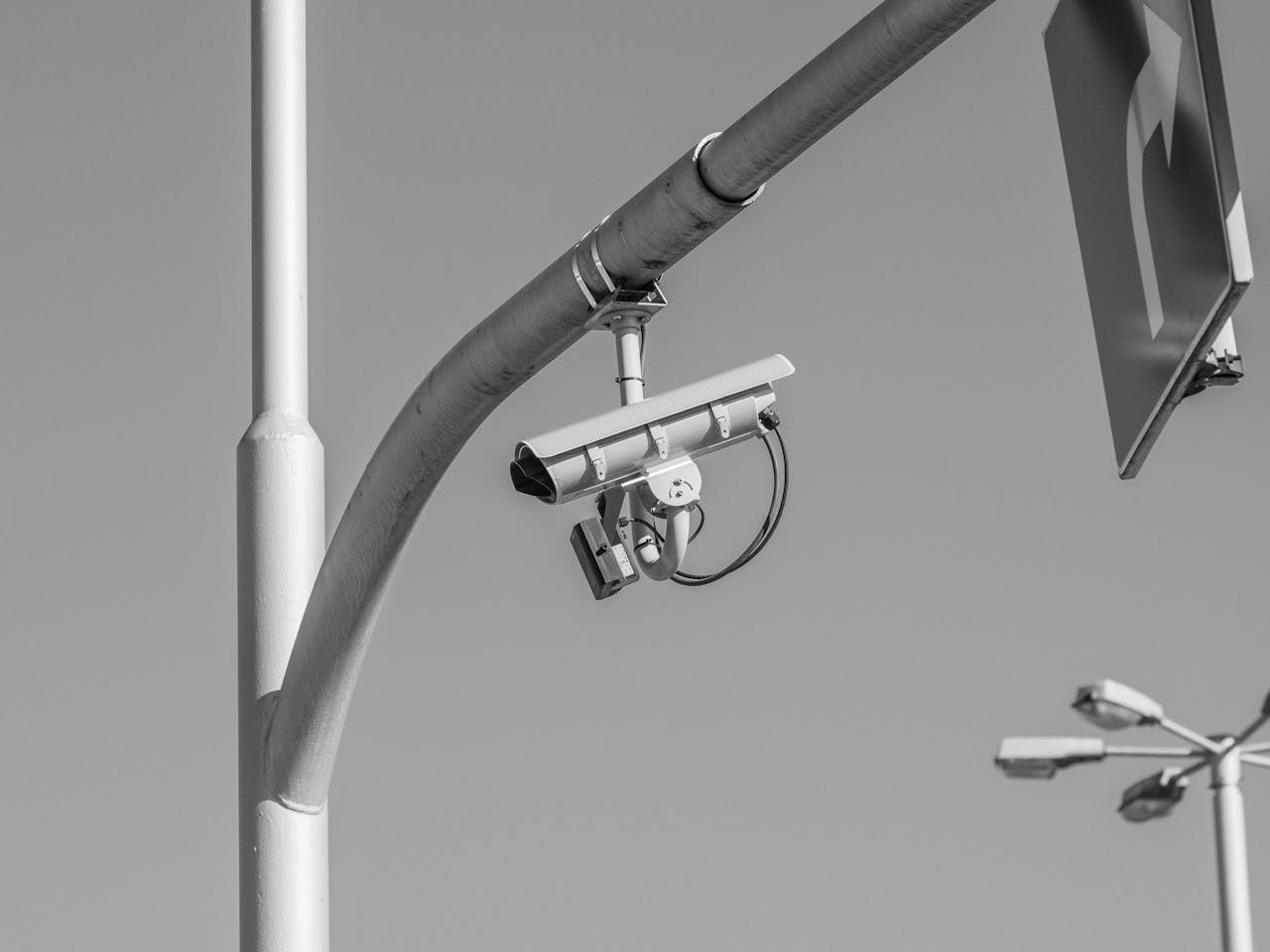
In dense urban areas, the hunt for a parking spot is more than just a daily frustration—it’s a major contributor to traffic congestion. Modern solutions, such as parking lot surveillance cameras for enhanced security monitoring, are transforming the way cities manage parking supply and demand. By leveraging cutting-edge technologies, cities are beginning to alleviate congestion, mitigate emissions, and improve the experience for drivers and pedestrians alike.
The adoption of smart parking and surveillance systems enables real-time tracking, efficient parking allocation, and enhanced enforcement—all of which play a crucial role in addressing some of the most persistent urban mobility challenges. City planners and policymakers increasingly view parking management not just as a matter of convenience, but as a cornerstone strategy for broader traffic reduction and public safety efforts.
Advanced parking surveillance now tracks more than cars; it works with smart systems to lead drivers to open spaces, enables dynamic pricing, and generates useful data for city planning models. This technology-based approach is enabling a new era of city mobility and sustainability in cities spearheading the movement around the world.
With city populations continuing to rise, new parking solutions are needed if we want cities that are easier to live in, and more efficient and sustainable. Proactively tackling such issues today can have a profound impact on city life for the next generation.
The Role of Advanced Parking Surveillance in Urban Traffic Management
Intelligent surveillance leverages artificial intelligence (AI), Internet of Things (IoT) sensors, and high-resolution cameras to continuously monitor parking availability. Real-time data collected from on-street and off-street locations inform drivers about available spaces before they arrive, reducing the endless circling that accounts for up to 30% of city centre traffic in some areas.
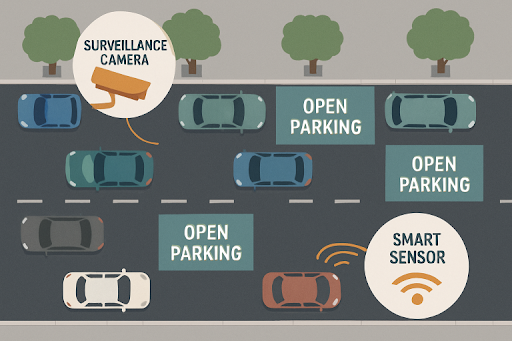
These systems also enable parking authorities to respond rapidly to instances of illegal parking, utilize space more efficiently, and pinpoint areas where additional capacity or enforcement is required. Ultimately, advanced parking surveillance is proving to be a highly effective tool for optimizing urban traffic and making cities more accessible.
To further enhance the benefits of smart parking systems, integrating Traffic Flow Traffic Management solutions can help cities better coordinate vehicle movement and significantly reduce congestion in busy urban areas.
Technological Innovations Driving Change
- Integration of AI and IoT: Sophisticated IoT sensors deployed in parking spaces and streets provide real-time information about available spots to centralised management systems and public apps. Based on the analysed information, AI predicts when the parking spaces will be occupied, and drivers receive information regarding peak periods, which helps them to find parking faster and traffic to be smoother.
- Computer Vision for Traffic Analysis: High-resolution video streams, analysed by deep learning, facilitate accurate detection and classification of vehicles with actionable insights for law enforcement and traffic management. With over 90% accuracy, the estimates give planners confidence to act on the findings and intervene where it will count the most.
- Automated Enforcement: Automated license plate recognition (ALPR) cameras track vehicles around the clock and issue tickets for expired meter or illegal parking without human involvement. This has translated into more equitable enforcement and safer streets across the board.
Real-World Implementations and Their Impact
San Francisco SFpark Program: In a groundbreaking move, SFpark uses a network of meters and an app that relays real-time information on availability of parking spaces and adjusts rates dynamically. This is done in to achieve a target occupancy rate (for minimising the time the drivers spend looking for parking and the amount of fuel used in the congested area).
New York City’s Congestion Pricing: New York City instituted a congestion pricing system in January 2025, which tracks and charges cars that enter a high-traffic area. According to preliminary figures, the peak-time traffic reductions have been substantial, raising income to help fund public transit improvements.
London’s AI-Driven Enforcement: Now, London has escalated its war on infractions with pervasive AI-powered cameras and automated number plate recognition, reducing city-centre traffic dramatically and seeing improvements in air quality.
Challenges and Considerations
- Privacy Concerns: The expansion of surveillance raises legitimate questions about personal privacy and data security. Balancing effective enforcement with respect for citizens’ privacy remains an ongoing conversation.
- Infrastructure Costs: Upgrading to smart infrastructure—sensors, high-speed networks, and cloud data systems—demands substantial initial investment, which can be a barrier for smaller or resource-constrained municipalities.
- Public Acceptance: Success depends on establishing and maintaining public trust. This includes transparency around how these systems are used, measures in place to protect privacy, and clear evidence of community-wide benefits.
Future Prospects
The next wave of innovation will be cities evolving toward predictive, self-optimising parking systems. Research in multi-agent reinforcement learning, for instance, may allow for real-time dynamic reallocation of curb space – morphing from deliveries to ride-sharing to private vehicles as demand changes.
With twirling data analytics and machine learning capabilities, its coordination with other mobility networks (public transit, micromobility, car-sharing) will undergird the development of smarter, greener urban environments. The development of innovative parking management solutions could turn out to be a crucial success factor for smart city projects all over the world.
Conclusion
State-of-the-art urban parking monitoring systems enable cities to alleviate congestion and increase the convenience and quality of life for their residents and visitors alike. Using artificial intelligence, IoT sensors and automated data processing, cities can track parking space availability, eliminate unnecessary traffic from drivers hunting for spaces and improve enforcement of fines. These technologies also provide valuable insights that support more innovative infrastructure planning and the more effective use of urban space. No longer a concept of the future, smart parking solutions are already delivering measurable results. As costs decline and adoption expands, these systems will play a critical role in sustainable city development, efficient transportation networks, and the evolving landscape of urban mobility.