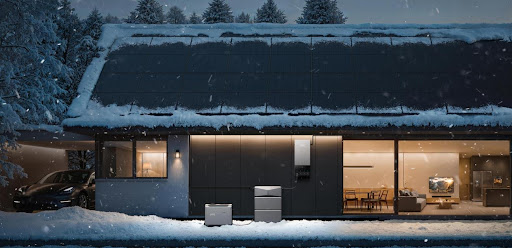
Extreme weather events can disrupt our daily lives, often leading to power outages that last hours or even days. For homeowners, ensuring a continuous power supply is crucial for maintaining comfort and safety. Investing in a reliable home backup power system is becoming increasingly popular as it offers the security of knowing your home will stay powered through severe weather. From understanding types of backup power solutions to installation and emergency planning, building resilience against extreme weather involves careful evaluation to choose the best options for your situation.
Types of Home Backup Power Solutions
Selecting the right backup power solution involves considering the size of your home and your specific needs. Options range from comprehensive whole-home battery backup systems to portable power stations and hybrid standby generators. Each solution has unique benefits and suits different scenarios, providing flexibility for homeowners seeking peace of mind during extreme weather conditions.
Whole-Home Battery Backup Systems
Whole home battery backup systems are a robust solution for ensuring you have power during outages. The Anker SOLIX E10, for instance, combines a battery, solar, and a smart generator for seamless power supply. Its automatic switching provides instant power to your home, ensuring minimal disruption. With up to 90kWh capacity and exceptional thermal protection, the E10 is designed to withstand temperatures from -4°F to 131°F, making it ideal for varied weather conditions. Its Storm Mode enhances reliability by charging to full capacity with efficient management and maintenance alerts, ensuring your home remains powered even under adverse conditions, thus offering peace of mind.
Portable Power Stations for Quick Resilience
Portable power stations are small and multi-purpose, offering fast backup in case of brief blackouts. These devices have the ability to run vital appliances and have your house running even when the electricity goes off. Anker SOLIX F3800 Plus has a high efficiency of solar integration, which can be charged within less than two hours by the best sunlight. It is dual voltage and high-voltage AC that enables it to operate all the gadgets such as refrigerators, and central air conditioners. Its scalable nature is easy to achieve and it can be set up anywhere since it is portable and therefore does not need an electrician to do so. Remote control and monitor the station via the Anker app by having authority on the power management process.
Standby Generators and Hybrid Options
How Backup Power Works During Severe Weather
Backup power systems are your life line in the house in case of extreme weather condition where they will offer instantaneous power which will aid in keeping the home comfortable and safe. They make sure that the key appliances are kept running, so that your home is not spoiled, heat is not lost, and other inconveniences that are brought about by the outages are also avoided.
Automatic Cutover and Instant Power
Other systems such as the Anker SOLIX E10 apply the automatic cutover technology, which automatically switches on backup power when required. This technology has a high rate of operation- the switch occurs in only 20 milliseconds making a smooth transition. In case of an outage, it feature keeps your home running without having to interfere with it, thus keeping you comfortable even in extreme weather conditions. It also offers continuous power, which reduces the risk linked to unexpected downtime.
Prioritizing Essential Loads
In an outage, it is important to make priority loads to allow the critical appliances to be powered. Backup systems can be configured to prioritize high-use devices such as refrigerators, heating systems, and medical equipment so that they are available whenever required in times of emergencies. Intelligent load management will ensure the minimization of power consumption, extending the battery duration and maintaining required devices active. The predetermination of the loads to be given priority makes resilience planning easier and ensures continued efficiency.
Solar Integration for Extended Resilience
By using solar power, you will be able to make your backup system much more resilient. Such systems as the Anker SOLIX F3800 Plus take advantage of dual solar input, providing high efficiency recharging when conditions are optimal. This integration provides sustainability of power during long outages. Batteries can be maintained with solar panels, which provides a source of renewable energy that minimizes reliance on fuel. This does not only help in saving long-term but also reduces your carbon footprint, which makes environmental sustainability even better.
Planning and Sizing Your Backup System
The key to an effective backup power system is proper planning and sizing. Analyze the energy requirements of your home and evaluate the effect of the potential outages to choose an appropriate solution. This analysis will guarantee that your system addresses your household needs and contains the essential elements of complete resiliency.
Assess Your Power Needs
When deciding how big your backup system should be, the first thing you need to do is to evaluate the power requirements of your home. Determine critical devices and appliances that will be needed to be on during an outage. Calculate their power use to determine how much power you need to run your backup system. Assist in measuring the usage and finding a solution that best suits your needs by using such tools as energy meters or online calculators. This kind of preparation makes your backup system efficient and appropriate.
Choosing the Right Combination
The process of the selection of the appropriate combination is based on the balance of factors including power capacity, easy installation, and flexibility. Take into account such systems as Anker SOLIX which can be expanded to meet various needs. Modular systems can be expanded in case of requirement increases with time, and provide flexibility of choice, which can be economical and practical. Consider complementary integrations, such as solar or smart generators, to offer longer back-up in case of long outages. The combination of the right one will provide you with reliability and adaptability in the security of your home.
Conclusion
Extreme weather resilience starts with selecting and installing an efficient home backup power system. From whole-home battery solutions like Anker SOLIX E10 to portable power stations and hybrid generators, the array of choices provides customized options for every need. Proper planning and sizing ensure that these systems deliver reliable power when the grid fails, protecting your home from potential hazards associated with extended outages. Investing in resilience now means embracing peace of mind when severe weather inevitably arises.