

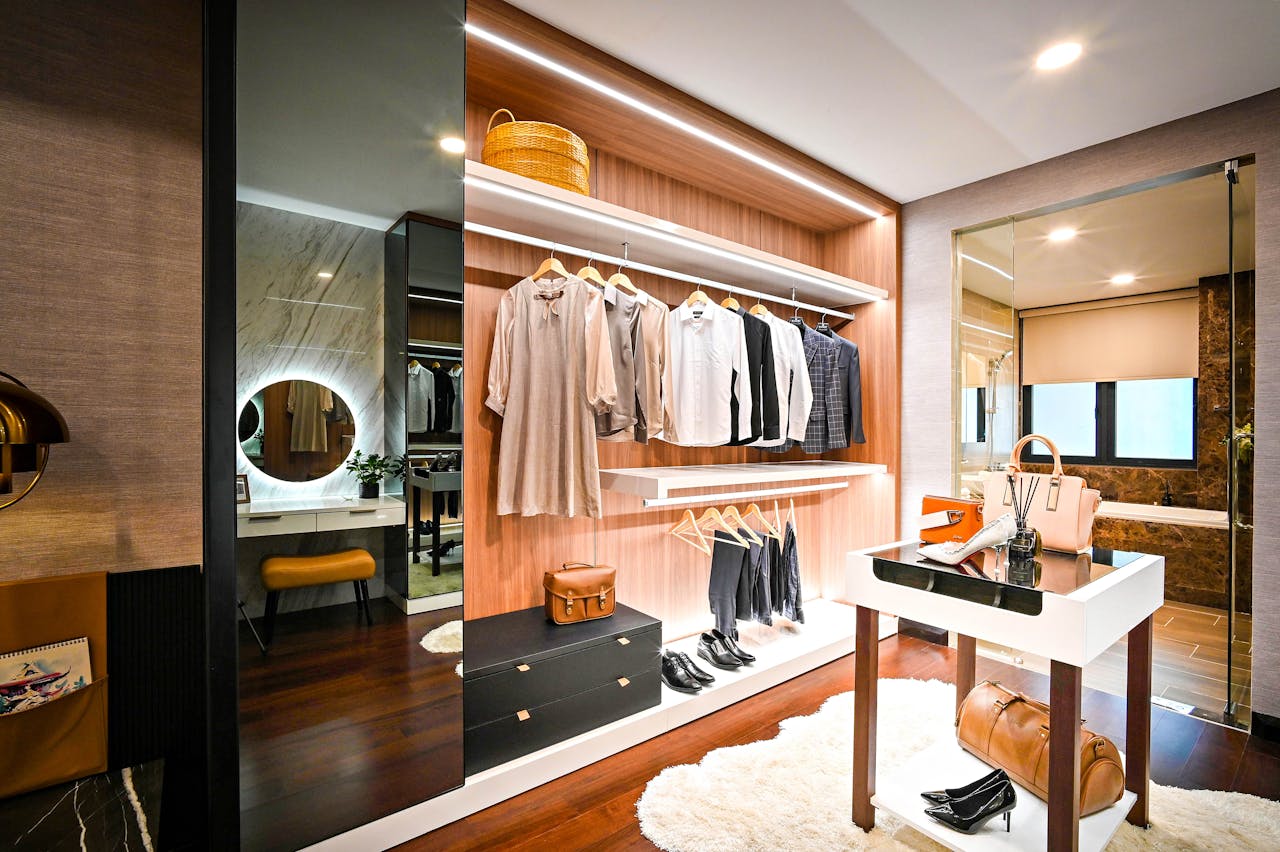
Every morning, millions of professionals stand in front of their wardrobes and face the same quiet frustration: a closet full of clothes and nothing that feels right. This is not a minor inconvenience. Research suggests the average person spends 10 to 15 minutes each day deciding what to wear. Over a year, that adds up to nearly four full days lost to a decision that could be simplified dramatically.
The capsule wardrobe concept, originally introduced in 1970s London by boutique owner Susie Faux, has evolved from a niche fashion philosophy into a practical strategy embraced by professionals, entrepreneurs, and time-conscious individuals across the UK and beyond. And the case for adopting one is not just about looking good. It is about performing better.

The Decision Fatigue Problem
The idea of decision fatigue was first thoroughly investigated by social psychologist Roy Baumeister. He found that the quality of decisions made by judges, whether they are about parole requests or in their own courtrooms, deteriorates after having made many decisions. All decisions, even tiny ones, tap into the same limited mental-energy reservoir
That is what accounts for the famously pared-down wardrobes of some of the world’s most successful leaders. The principle is simple – you take the low-value decisions out of your day, so you can bring more focus to the decisions that do matter.
To those who make life-altering decisions all day at work, ditching the morning outfit scramble is not vanity. It is about productivity.
A capsule wardrobe makes this automatic. When every piece in your closet works with every other piece, getting dressed becomes a 90-second task instead of a 15-minute negotiation with yourself.
The Financial Argument
According to the Office for National Statistics, the average UK household spends about £1,200 per year on clothing. A big chunk of that expenditure is on items that are worn less than five times before being donated, discarded or lost behind a drawer.
The capsule wardrobe paradigm turns this pattern on its head. Rather than numerous trips to the shops for relatively low-value items, the strategy is to buy rarefied items that are of higher quality and last longer, and offer more wear per pound.
Consider a practical example. A woman buys five budget tops at 20 pounds each. After six months of washing, two have pilled, one has lost its shape, and she has grown tired of the other two. Total cost: 100 pounds for roughly 30 to 40 wears across all five items. That works out to about 2.50 to 3.30 pounds per wear. Compare that with a single well-made, versatile button-down from a quality-focused brand at 70 pounds. Worn once a week for two years, that is over 100 wears at less than 70 pence per wear. The more expensive item is dramatically cheaper over its lifetime.
Women who transition to capsule wardrobes consistently report reducing their annual clothing spend by 30 to 50 percent, even while wearing better quality garments. The savings come from buying less, not from buying cheap.
Building a Capsule Wardrobe That Works for Professional Life
The makeup of a professional capsule wardrobe is quite a bit less complicated than many people anticipate. Standard base layers include a few core categories.
Baselayers: 3-4 good-quality tops in neutral colours that will work for all your types of days. A crisp white shirt, a cosy sweater in grey or navy, and a handful of options in shades that complement your skin tone. These are the pieces you grab without thinking: more so than any other place, the fit and fabric matter here.
Trousers and skirts: two to three bottoms that are good-fitting in neutral colours. Black, navy and grey are good colours to start with. Smart trousers that take you seamlessly from a client meeting to a working lunch.
Layering pieces: a tailored blazer, a good cardigan and a lightweight jacket should cover most UK weather/office temp combo scenarios. These details make outfits more cohesive and polished with minimal effort.
Dresses: A pair of multi-use dresses that can be worn by themselves or layered with a blazer. A wrap dress or fetch job in a solid colour is an easy option when you’re feeling like skipping the separates.
Shoes and accessories: two pairs of professional shoes, one structured bag, and a few accessories that add personality without complicating outfit choices. Brands like Willow and Thread have built their collections around this exact framework, designing pieces specifically meant to mix and match across a compact wardrobe rather than requiring an entirely new outfit for each occasion.
The Sustainability Dimension
The environmental case for capsule wardrobes is strong. The UK produces around 350,000 tonnes of unwanted clothing that ends up in landfill every year, according to WRAP (Waste and Resources Action Programme). The fashion industry contributes around 10% of total global carbon emissions, which is more than international flights and maritime shipping combined.
Purchasing fewer and higher-quality items and wearing them for longer is one of the single greatest things a consumer can do to reduce their fashion footprint. It doesn’t call for dramatic lifestyle modifications. It just involves a change in the way that people make their purchasing decisions.
This is something that is becoming more important to UK consumers. A 2024 survey by Deloitte revealed that 40 percent of UK shoppers now take sustainability into account when buying fashion, compared with 28 per cent in 2020. The trend is not slowing down.
Getting Started: A Practical Approach
The best way to create a capsule wardrobe is not to start shopping. It is to start with an audit.
Take everything out of your closet and divide it into three piles: things you wear regularly and want to keep, things you wear from time to time but could live without, and things you haven’t worn in at least six months. The first one is your foundation. The third category can go.
Then from there, we’re looking for the holes. Most women discover they already have plenty of ‘once in a while’ pieces but need the everyday staples in quality fabrics with cuts that flatter. You can work on those gaps slowly – just get the items you’ll use the most first.
The capsule wardrobe is not a one-weekend project. It’s a mindset that evolves over the course of a few months. Every purchase is deliberate. One product gets its place. And every morning gets a little easier.
The Bottom Line
A capsule wardrobe is not about deprivation or sacrificing personal style. It is about optimising a daily system that most people never think to improve. Less time deciding what to wear. Less money spent on clothes that do not perform. Less environmental waste. More confidence in what you put on every morning.
For professionals who optimize their schedules, budgets, and workflows, the wardrobe is simply the next system worth streamlining.
This article was contributed by Willow and Thread, a women’s fashion brand focused on versatile, quality wardrobe essentials. Explore their collections at willowandthread.shop.