

Finding the correct part is usually straightforward until the listing shows the words that stop any repair in its tracks: discontinued, no longer available, or out of stock. At that moment, the repair stops being a simple shopping task and becomes a decision problem. The right answer depends on whether the part has a newer replacement number, whether an equivalent option exists, how safe the substitution is, and whether the appliance is still worth investing in.
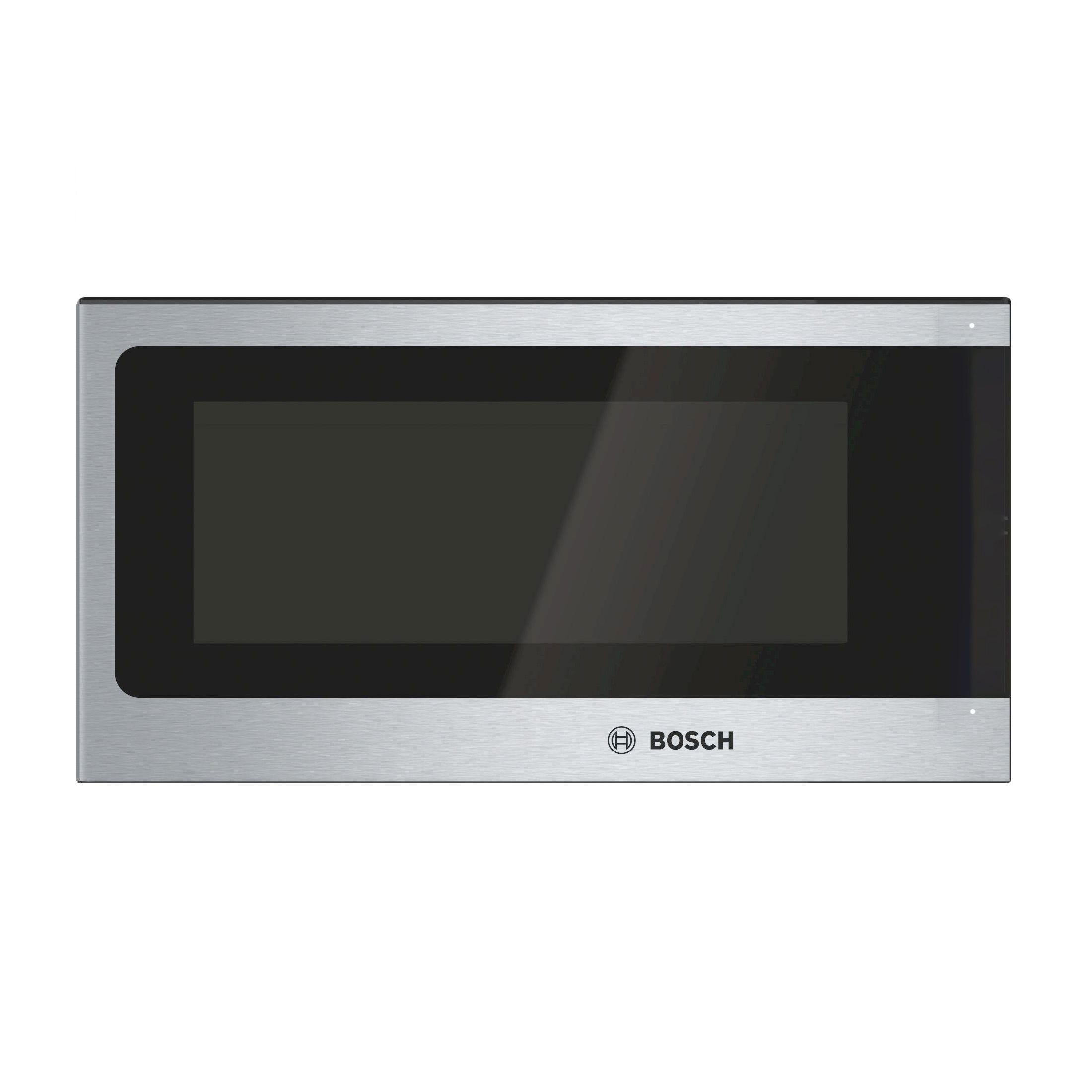
Bosch Microwave Parts are a useful reference point because microwaves combine model-specific door safety hardware with high-voltage components that should never be “close enough.” Some Bosch microwaves have discontinued cosmetic pieces that can be substituted safely, while other components must match exact specifications and approvals. The same pattern shows up across dishwashers, dryers, ranges, and refrigerators: some parts are flexible, some are not, and the smartest path starts with understanding which situation applies.
Why Parts Go Discontinued and Why It Matters
Parts get discontinued for common reasons: the manufacturer updates a design, changes suppliers, retires a product line, or consolidates inventory to newer platforms. Sometimes the part is not truly gone, it has simply been renumbered. In other cases, the part is no longer produced at all.
What matters is how the discontinuation affects compatibility. Some parts are replaced by a newer number that is fully compatible. Other parts are replaced by a kit that requires additional pieces or installation changes. Sometimes the manufacturer provides a functional substitute that changes the repair method. And sometimes the only path is a used or salvaged component.
This is why “discontinued” is not one scenario. It is a label covering multiple realities, each with different risk.
The First Step: Check for a Superseded Part Number
The most common and safest outcome is supersession. Manufacturers regularly replace an older part number with a newer one, often called a superseding or replacement part number. This happens when a supplier changes, a component is revised, or the manufacturer standardizes an improved design.
Supersession is usually documented in the parts catalog. The listing may state that the new number replaces the old one, or it may redirect searches automatically. The important detail is whether the replacement is unconditional or limited by model revision, serial range, or production date. Some replacements work for every unit. Others work only for units built after a certain changeover.
Superseded part numbers solve the “no longer available” problem without introducing guesswork, but only when the replacement is confirmed for the exact model and revision. That confirmation is not optional for parts that affect safety, heat, water sealing, or electrical behavior.
When “Out of Stock” Is Not the Same as “Discontinued”
Out of stock can mean a temporary inventory gap, a supplier delay, or a warehouse issue. Discontinued usually means production has stopped. The practical difference is time. If a part is out of stock but expected to return, it may be worth waiting when the part is safety-critical or highly model-specific and substitutes are risky.
Inventory status also varies by channel. A part can be unavailable through one supplier and in stock through another. That reality often drives the next step: searching by part number across multiple sources rather than relying on one listing.
Using Parts Diagrams and Model Number Matching to Avoid Wrong Substitutes
When the original part is unavailable, the temptation is to search by description or by appearance. That is exactly how wrong substitutes get ordered. The safer approach is to stay anchored to model number and diagram identification.
Exploded-view diagrams identify the part by location and reference number, not by a vague name like “switch” or “bracket.” This matters because multiple components can share a name. Diagrams also show related hardware and assemblies that may have changed with a superseded part. If a replacement number is actually a kit, the diagram helps clarify what is included and what is separate.
Model-number matching becomes even more important when a part is scarce because a small compatibility mistake wastes time and reduces the chance of finding the part while it is still available somewhere.
Cross-Compatibility: When It’s Real and When It’s a Trap
Cross-compatibility means a part fits multiple models. Sometimes it is legitimate and documented, especially when manufacturers reuse platforms across several models or years. Other times it is inferred incorrectly based on partial similarity.
Cross-compatibility is safest when it is supported by the manufacturer’s catalog or an authoritative compatibility mapping. It becomes risky when it is based on a photo match or informal claims. A component can look identical but have a different rating, connector orientation, or bracket geometry.
Some components are naturally more cross-compatible than others. Cosmetic pieces, knobs, and some non-critical hardware can be shared widely. Seals and gaskets can appear shared but still differ by thickness or profile. Electronic modules and safety devices are often the least suitable for cross-compatibility unless the catalog explicitly lists them as interchangeable.
Microwaves add a special caution: door interlock systems and high-voltage components should not be treated as cross-compatible without strict confirmation. The physical fit is not enough. The safety function and electrical specifications must match.
Used and Refurbished Parts: The Practical Middle Ground
When OEM production ends and no superseded number exists, used and refurbished parts become a realistic option. This path can be excellent or frustrating depending on the part type and the quality of sourcing.
Used parts are typically salvaged from donor appliances. Refurbished parts may be tested, cleaned, repaired, or reconditioned before resale. The key advantage is availability for older models. The key downside is uncertainty about remaining life.
Used or refurbished makes the most sense for parts with high replacement cost and limited new availability, especially when the part is not a high-wear consumable. It is often less suitable for items that degrade predictably over time, like some seals or wear parts, because a used version may be close to end-of-life.
The most important risk is buying a used part that was removed because it was failing. Reputable sources mitigate this with testing and clear return policies. Another risk is mismatched revisions. Even used parts must be matched by model and part number, not by appearance.
Rebuild Kits, Repair Services, and Component-Level Fixes
Some discontinued parts are not replaced by a new assembly, but by a repair method. Control boards and certain modules sometimes have rebuild services or repair kits. This can be a smart route when a new board is unavailable and a used board is unreliable.
Component-level repair can also apply to non-electronic parts, such as replacing a worn latch spring rather than the entire latch assembly, if the smaller component is still available. Diagrams help identify whether subcomponents are sold separately or only as part of an assembly.
This route is most valuable when the unavailable part is expensive and failure modes are predictable, such as a board with a common relay failure. It is less suitable for parts that fail unpredictably or where repair quality is difficult to verify.
A Practical Step-by-Step Path When a Part Is Unavailable
A consistent process reduces wasted time and prevents unsafe substitutions.
- Confirm the exact model number and any serial or production code from the appliance label.
- Identify the part in the diagram to verify the correct name, location, and orderable part number.
- Check for superseded part numbers and determine whether any serial-range limitations apply.
- Search by part number across multiple sources, not by description alone.
- Evaluate whether the part has documented cross-compatibility for the same platform or shared models.
- If new parts are unavailable, consider used or refurbished sources that test the part and support returns.
- For boards and modules, consider rebuild or repair services when replacement is unavailable and failure mode is known.
- Decide repair versus replace using total cost, expected remaining life, and safety considerations.
This sequence keeps decisions anchored to verified identifiers instead of guesswork.
Repair vs Replace: What People Actually Want to Know
When parts are discontinued, the real question becomes whether the repair still makes financial and practical sense. Most concerns fall into a few categories: cost, timing, reliability, and safety.
Cost is not only the part price. It includes shipping, additional hardware, tools, and the risk of having to repeat the repair. A part that costs little but fails quickly can create more expense than replacing the appliance.
Timing matters when the appliance is essential. Waiting weeks for a back-ordered component may not be realistic, especially for refrigerators or primary cooking appliances.
Reliability depends on the part type. Replacing a simple mechanical component can restore years of life. Replacing a major control board on an aging appliance may solve the immediate issue but leave other high-wear components close to failure.
Safety is the non-negotiable factor. Repairs involving gas ignition, high-voltage systems, door interlocks, and water leak prevention should not be handled with improvised substitutes. If the correct part cannot be sourced safely, replacement becomes the rational choice.
How to Estimate Whether the Appliance Is Worth Saving
The decision often comes down to three practical questions.
First, is the missing part a one-off issue or a sign of broader decline? A broken handle is one-off. Repeated electrical faults may indicate deeper wear.
Second, how much life is realistically left? An appliance that has already exceeded typical service life may not justify a large repair cost, especially when major components are involved.
Third, what is the worst-case consequence of failure? A dishwasher leak can damage floors. A gas ignition issue can be dangerous. A microwave interlock issue is not an area for compromised parts. Higher consequence pushes decisions toward OEM or verified replacements, and toward replacing the appliance when those are not available.
The Safe Conclusion: Replace Guesswork with Verified Compatibility
Discontinued and out-of-stock parts do not automatically end a repair, but they do change the rules. The safest path starts with superseded part numbers and diagram verification. When new parts are unavailable, used or refurbished parts can be a practical solution when sourced responsibly and matched precisely. Cross-compatibility can be valuable when documented, and a trap when assumed. Repair versus replace becomes clear when total cost, time, and safety are considered together.
The outcome that matters is not simply getting the appliance running again. It is restoring reliable operation without introducing new risk, repeated repairs, or unsafe substitutions.