

Key Takeaways
- Military education instills discipline, responsibility, and teamwork from an early age.
- Structured programs like Sainik Schools and Rashtriya Military Schools focus on developing leadership skills in children.
- Character development is a critical component of military training, influencing decision-making and performance under stress.
- Professional military education (PME) provides officers with the knowledge and skills necessary for effective leadership.
- Lessons from military leadership education can be applied to various fields, including academic medicine and corporate management.
The Foundation of Leadership in Military Education
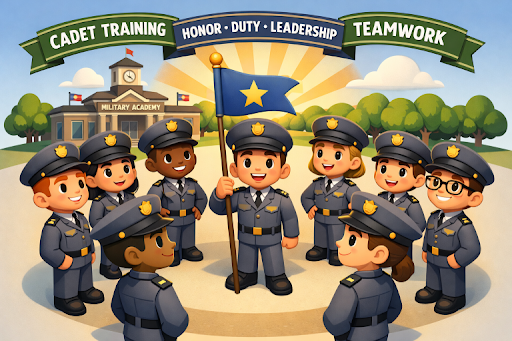
Military education plays a vital role in shaping confident and capable leaders. It focuses on discipline, accountability, and teamwork qualities essential for effective leadership in both military and civilian settings. These core principles foster personal development while preparing individuals for future professional success. Opportunities such as the Missouri Military Academy’s Summer Academy, designed as a summer camp for middle schoolers, introduce students to these values early on, providing hands-on experiences that help them practice leadership skills and build confidence during formative years.
Military education is distinct from the normal academic structure and provides a more intense and disciplined environment. Cadets are taught the value of being on time, responsibility, and how to pay attention to small things, all in an environment that promotes working together toward common objectives. This beginning foundation equips individuals to take on more and develops a commitment that lasts a lifetime.
Early Exposure to Leadership Training
Places such as Sainik Schools and Rashtriya Military Schools in India have created a conducive environment where leadership training gets a boost at a tender age. These schools focus on producing students who will someday be leaders of the military and world in the civilian sectors. By creating a culture based on dignity and ethics, students think and act honourably on a daily basis.
From our student councils to team sports and other group projects, leadership positions and opportunities abound at these institutions. There, the kids are taught the finer points of making decisions, sharing responsibility via delegation and working as a team – in ways that will help them build confidence and responsibility. Such experiences tend to separate students from the crowd later in life, as they tend to be better able to address complex challenges, especially when faced with pressure.
Character Development as a Core Component
A significant hallmark of military education is its focus on character development. Integrity, humility, and moral courage are emphasized through daily routines and formal instruction. Leaders in military institutions frequently engage in ethical discussions and are encouraged to reflect on the moral consequences of their actions, especially when faced with uncertainty or stress. By learning to weigh decisions thoughtfully, they build a habit of principled leadership.
This strong foundation in character does more than improve individual performance; it shapes the collective ethos of military units. In high-stress situations, leaders with well-honed virtues can inspire others to act decisively and ethically.
Professional Military Education (PME)
As members of the military progress in their careers, they are provided the unique knowledge and leadership skills necessary to thrive in more complex positions through professional military education. PME spans activities such as strategic thought, global affairs, crisis management, and operational design.
One persistent challenge, though, is providing appropriate assurance that one’s intellectual and educational capital will be dutifully applied in future command tours. Entities that deploy PME alumni effectively will experience not only immediate performance enhancement but will also establish a culture of competence and learning. Better matching newly trained officers to jobs makes the military as a whole more effective.
Lessons for Other Sectors
Takeaways in Non-Military Contexts The following section discusses the military leadership education models through the lens of applicability to non-military contexts: 1) in general leadership education in K-12 and higher education and 2) in general leadership education withinthe workforce. Fields like academic medicine and business management stand to gain from curricula that foster leadership development, lifelong learning, and values-based professional judgement. For instance, hospitals that adopt leadership development based on military models frequently find that team-work and patient care improve.
Other organizations, beyond the military, can also learn to build resilience and adaptability through regimented curriculums, through mentoring and character development. What they are doing is creating a line of leaders who are able to step into the unknown and lead from there.
Challenges and Opportunities in Military Education
For all that it is well built on, military education is still under strain. Among those is the challenge of translating the education and experience acquired through PME into real-world leadership positions. There needs to be the development of systems that incentivise (become better at rewarding) intellectual curiosity, critical thinking, and the will to be a lifelong learner that go well beyond traditional classroom instruction, incorporating creative training methods and cutting-edge technology.
Encouraging research and development in leadership education, as well as feedback and evolution from within the educational programs, will assist military organisations in maintaining their relevance and effectiveness. These opportunities are essential for developing leaders who will excel in a rapidly evolving global environment.
Conclusion
Military education’s influence on leadership is profound and enduring. Emphasising discipline, ethics, and continuous professional growth prepares leaders to guide teams through uncertainty and achieve collective goals. Whether in the armed forces or in civilian enterprises, the lessons learned through military leadership education hold the potential to transform organisations and inspire future generations.