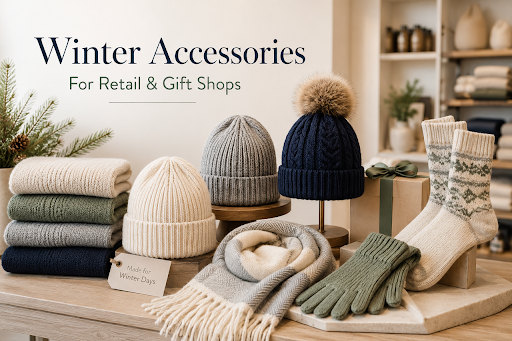
Retail and gift shops need products that are easy to display, easy to explain, and easy for customers to use. Winter accessories can be a strong category because they are practical, seasonal, and suitable for many types of shoppers.
But not every winter item sells well. A product may look nice on a shelf but still be difficult to wear, hard to match, or too specific for daily use. The best winter accessories usually combine warmth, simple design, and broad appeal.
Think Like the Customer First
Before choosing winter accessories, it helps to imagine how the customer will use them after purchase.
Is It Easy to Wear?
A wearable product should match common outfits and daily routines. Neutral colors, soft textures, and simple shapes usually work better than extreme styles.
Is It Easy to Gift?
Gift shop products need to feel safe for different ages, genders, and personal styles. Items that do not require exact sizing are often easier to sell.
Strong Winter Accessory Categories
Retail shops can build a simple winter display around a few practical items instead of carrying too many unrelated products.
Beanies
Beanies are compact, useful, and easy to display. They can work for outdoor shoppers, students, travelers, and casual winter wear.
For stores that want private-label or branded winter products, custom beanies can be a flexible option because they can be made in different colors, knit styles, and logo methods.
Scarves and Gloves
Scarves and gloves add warmth and can create a complete winter set. They are also easy to bundle with beanies for holiday gifts or seasonal promotions.
Warm Socks
Socks are practical and easy to sell as small gifts. Thicker socks, patterned socks, and comfort-focused socks can work well near checkout areas or in winter gift sections.
Choose Styles with Broad Appeal
A retail product does not need to be boring, but it should be easy for customers to imagine wearing.
Keep Main Colors Wearable
Black, gray, navy, beige, cream, and dark green are safer base colors. Brighter colors can be used as accents, stripes, labels, or small patterns.
Avoid Overly Trendy Shapes
Very unusual shapes may attract attention but can be harder to sell. Classic shapes usually work better for general retail shelves.
Use Style Variety Without Confusing Shoppers
Stores can offer variety without making the display messy. For example, one table can include cuffed beanies, pom pom beanies, fisherman styles, and simple knit hats.
A guide to the different types of beanies can help buyers understand which styles feel more classic, sporty, playful, or casual.
Classic Styles for Everyday Buyers
Cuffed beanies and fisherman beanies are usually easy to match with daily outfits.
More Seasonal Styles for Gifts
Pom pom beanies and thicker winter knits can feel more festive, especially around holiday displays.
Display and Packaging Matter
Winter accessories are small, so presentation can influence how valuable they feel.
Group Items by Color
A clean color story makes the display easier to browse. Customers can quickly compare options without feeling overwhelmed.
Create Gift Bundles
A beanie, scarf, and socks set can feel more complete than selling each item separately. This also helps increase average order value.
Final Thoughts
Wearable winter accessories should be practical, comfortable, and easy to match. For retail and gift shops, the strongest products are usually simple enough for daily use but still attractive enough for seasonal buying.
A focused mix of beanies, scarves, gloves, and socks can make a winter display feel useful, giftable, and easy to shop.