


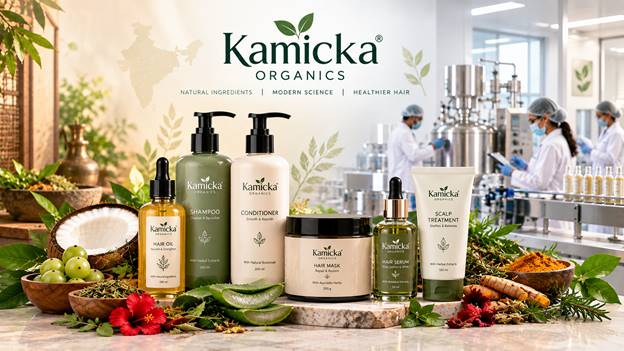
Hair care has always been an important part of India’s beauty and personal care culture. For generations, hair oils made from traditional ingredients have been a familiar part of everyday routines. However, the Indian hair care market has changed considerably over the years. Consumers today have access to a much wider range of products, including shampoos, conditioners, hair masks, leave-in treatments, scalp care products, serums, and specialized formulations.
This transformation reflects not only changing consumer preferences but also the evolution of hair care manufacturing in India. Manufacturers are increasingly combining traditional knowledge with modern formulation techniques to create products that address specific hair and scalp concerns.
The Traditional Roots of Indian Hair Care
Hair oil has been an integral part of Indian hair care for generations. Traditional formulations often incorporated ingredients such as coconut oil, amla, bhringraj, neem, hibiscus, and various herbs. These ingredients were used as part of regular hair care routines and were often associated with nourishment and scalp care.
The popularity of hair oils established a strong foundation for India’s hair care industry. As consumer expectations evolved, manufacturers began exploring ways to modernize traditional formulations while retaining the familiarity of well-known ingredients.
This transition gradually led to the development of more diverse hair care products designed for different hair types, lifestyles, and concerns.
The Shift Toward Specialized Hair Care Products
Modern consumers are becoming more conscious of the products they use and are increasingly looking for solutions tailored to their specific needs. Instead of relying on a single hair oil or shampoo, consumers may now use multiple products as part of a more personalized hair care routine.
This shift has encouraged manufacturers to develop specialized products for concerns such as dryness, frizz, hair breakage, scalp buildup, and damage caused by styling or environmental factors.
The market has consequently expanded beyond traditional hair oils to include conditioners, hair masks, scalp treatments, leave-in creams, and other targeted formulations.
The Rise of Hair Serums
One of the most noticeable developments in modern hair care has been the growing popularity of hair serums. Unlike traditional hair oils, serums are often designed to provide specific benefits while offering a lighter application and convenient use.
Hair serums can be formulated for different purposes, such as managing frizz, improving smoothness, enhancing shine, protecting hair from styling, or providing conditioning benefits. Their lightweight textures and easy application have made them popular among consumers looking for convenient hair care solutions.
The growing demand for these products has encouraged manufacturers to invest in improved formulations and develop products suited to changing consumer preferences.
Combining Traditional Ingredients With Modern Formulation
The evolution of India’s hair care industry does not mean that traditional ingredients have disappeared. Instead, many modern formulations continue to incorporate familiar botanical ingredients while using contemporary formulation approaches.
Ingredients such as amla, aloe vera, coconut-derived ingredients, hibiscus, and various plant extracts can be incorporated into modern hair care products depending on the formulation and intended purpose.
This combination allows manufacturers to create products that connect with India’s traditional beauty practices while meeting the expectations of modern consumers who are interested in convenience, texture, product experience, and targeted benefits.
Technology Is Changing Hair Care Manufacturing
Advancements in cosmetic science and manufacturing technology have also contributed to the evolution of the Indian hair care industry. Modern production processes allow manufacturers to work with a wider range of ingredients, textures, and product formats.
Formulation development can involve extensive research into ingredient compatibility, stability, texture, fragrance, packaging, and product performance. Quality-control processes are also important for ensuring consistency between different production batches.
As manufacturing capabilities continue to develop, brands have greater opportunities to create differentiated products rather than relying only on conventional formulations.
The Growth of Private Label Hair Care
The expansion of private-label manufacturing has further contributed to the growth of India’s hair care industry. New and established businesses can develop products under their own brand names without necessarily establishing their own manufacturing infrastructure.
Private-label manufacturing can cover various stages of product development, from formulation and ingredient selection to production, filling, packaging, and labeling. This gives brands greater flexibility when creating hair oils, shampoos, conditioners, serums, masks, and other products.
For emerging beauty brands, this model can make it easier to experiment with new product concepts and gradually expand their product portfolios.
Consumers Are Looking for More Than Basic Hair Care
Today’s hair care consumer is more informed than ever. Product selection is increasingly influenced by ingredients, formulation claims, product texture, packaging, brand positioning, and individual hair care requirements.
This has encouraged manufacturers to think beyond basic cleansing and conditioning. Hair care is increasingly being approached as a broader category that includes scalp care, styling protection, nourishment, repair-focused products, and specialized treatments.
As a result, manufacturers need to understand changing consumer expectations and develop products that offer a combination of functionality, convenience, and appealing product experiences.
Choosing the Right Manufacturing Partner
As the hair care market becomes more competitive, choosing the right manufacturing partner is an important decision for brands. A manufacturer should be evaluated based on its formulation capabilities, production infrastructure, quality-control procedures, customization options, packaging capabilities, and ability to support the brand as it grows.
Businesses looking to enter the hair care market can explore experienced companies such as Kamicka Organics when evaluating potential manufacturing partners. Understanding a manufacturer’s capabilities before starting production can help brands make better decisions regarding product development and long-term scalability.
When researching hair care products manufacturers in India, brands should look beyond manufacturing costs. Factors such as formulation expertise, ingredient sourcing, quality standards, production capacity, customization, and communication can have a significant impact on the success of a product.
The Future of Hair Care Manufacturing in India
The Indian hair care industry is likely to continue evolving as consumers become more aware of ingredients and increasingly seek products suited to their individual requirements. Traditional hair oils will continue to have a place in the market, but they will increasingly exist alongside modern product formats such as serums, scalp treatments, leave-in products, masks, and specialized formulations.
Manufacturers that can combine innovation with quality and an understanding of consumer preferences will be well positioned to support the next generation of hair care brands.
Conclusion
The journey from traditional hair oils to modern serums reflects the broader evolution of India’s beauty and personal care industry. What began with familiar household hair care practices has developed into a diverse market offering specialized products for different hair types, lifestyles, and consumer needs.
Modern manufacturing capabilities, advances in formulation technology, private-label opportunities, and continued interest in natural ingredients are helping shape this transformation. For brands entering this growing market, partnering with a capable manufacturer can play an important role in turning innovative hair care concepts into reliable, market-ready products.
India’s hair care manufacturing industry is therefore not simply preserving its traditional roots it is building upon them to create new possibilities for the future of hair care.