Workplace perks are often associated with flexible schedules, wellness programs, additional benefits, and professional development opportunities. Yet some of the most appreciated perks are much simpler. Employees notice the everyday details that make their working environment easier and more comfortable, including access to good coffee, convenient snacks, cold drinks, and a place where they can step away from their desks.
That is why the traditional office break room is receiving more attention. What was once a small room with a coffee pot and vending machine can now serve as a practical part of the overall employee experience. As businesses compete for talent and look for ways to make workplaces more appealing, modern break rooms are becoming an increasingly useful workplace perk.
The Break Room Has Changed With the Workplace
For many years, the break room was treated as a functional space rather than an important part of workplace design. Employees could make coffee, eat lunch, and return to work, with little thought given to the quality of the environment.
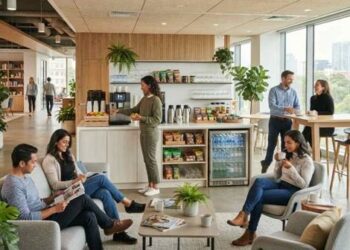
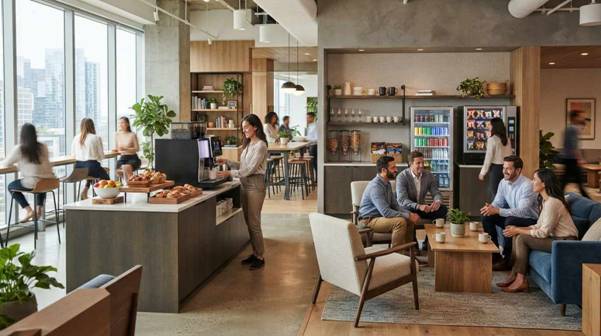
That approach is changing. Companies have become more aware that employees spend a large part of their day at work, and the spaces surrounding them can influence how they feel about that experience. A comfortable break room can provide a clear separation from a workstation and give employees somewhere to pause during a busy day.
The change is not necessarily about making break rooms luxurious. It is about making them useful. Better food and beverage choices, comfortable seating, clean surroundings, and reliable equipment can make a modest space feel considerably more valuable.
Why Employees Notice Workplace Amenities
Employees interact with workplace amenities regularly, which means small improvements can become noticeable over time. A dependable coffee station, well-stocked snack area, or convenient place to get a cold drink can remove minor frustrations from the working day.
These conveniences are especially valuable when employees have limited time. Someone with a short break may not have enough time to leave the building to buy a snack or drink. Having options nearby allows them to use their break in the way that works best for them.
There is also a psychological element. A workplace that provides comfortable shared spaces can communicate that employees are expected to take reasonable breaks rather than remain at their desks continuously. That can contribute to a healthier rhythm throughout the working day.
Modern Break Rooms Offer More Choice
The traditional vending machine has not disappeared, but the concept of workplace refreshments has expanded. Businesses now have access to a wider range of formats and services that can give employees more choice.
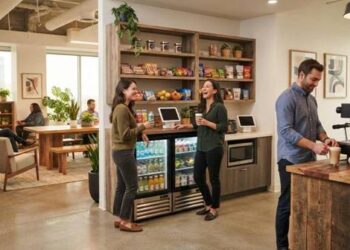
Empire markets are one way businesses can create a self-service retail environment within the workplace. Instead of selecting from a relatively small number of products in a conventional vending machine, employees can browse a broader selection of snacks, drinks and, in some locations, fresh or refrigerated food.
This approach can be particularly useful in larger workplaces where employee demand justifies the additional space. It can also make the break room feel more like a genuine amenity rather than simply a place where equipment has been installed.
However, more choice is not automatically better. The selection should reflect the workforce and the type of workplace. A small office may need a simple solution, while a large facility with several shifts may benefit from a much broader program.
Coffee Remains One of the Most Valued Staples
Despite all the changes taking place in workplace refreshments, coffee remains central to many break rooms. For some employees, it is an important part of their morning routine. For others, it provides a reason to step away from their workstation and interact with colleagues.
The modern workplace coffee setup can go well beyond a basic coffee pot. Depending on employee preferences and available space, businesses can provide brewed coffee, single-cup systems, tea, hot chocolate, and a variety of creamers and related supplies.
Reliability is just as important as variety. Employees quickly notice when supplies regularly run out, or equipment stops working. A workplace perk only creates value when people can depend on it.
That is why ongoing service matters. Businesses should think about restocking, maintenance, and product availability rather than focusing only on the equipment itself.
Healthy Options Are Becoming More Important
Employees do not necessarily expect every snack in the workplace to be healthy, but many appreciate having choices that fit different lifestyles. A break room stocked exclusively with sugary drinks and traditional snacks may not meet the expectations of today’s diverse workforce.
A more balanced selection can include nuts, granola bars, fruit-based snacks, protein options, bottled water, and other products alongside familiar treats. The goal is not to dictate what employees should eat but to give them enough variety to make their own choices.
Healthy options can also become particularly useful in workplaces where employees spend long periods on-site. If the nearest store or restaurant is several minutes away, having alternatives available inside the workplace can make it easier for employees to find something suitable during a short break.
Businesses can use purchasing patterns and employee feedback to refine the selection. What works for one workforce may not work for another, so flexibility is important.
Break Rooms Can Support Social Interaction
A good break room is not only about food and drinks. It can also create a natural setting for informal conversations between employees.
Workplace relationships are often built through small interactions rather than scheduled meetings. Two employees from different departments might meet while making coffee. A group may have a quick conversation over lunch. These moments are not usually planned, but they can contribute to a stronger sense of connection.
This does not mean companies should design break rooms as forced social spaces. Employees should be able to use them however they prefer, whether that means talking with colleagues, eating quietly, or simply taking a few minutes away from their usual workstation.
Providing a comfortable shared environment gives employees the choice to interact without requiring another formal company initiative.
Convenience Can Save More Than Time
One of the simplest benefits of a modern break room is convenience. Employees can access refreshments without having to leave the property, which can be particularly useful in large office buildings, industrial facilities, and workplaces located away from commercial areas.
For employers, the same convenience can reduce the number of interruptions associated with employees managing their own refreshments. While a short trip to a nearby store may seem insignificant, repeated trips across an entire workforce can add up.
The goal should not be to prevent employees from leaving the workplace. People need time away from work, and getting lunch outside the office can be perfectly reasonable. Rather, an improved break room gives employees another option when they want something quick and accessible.
That flexibility is one reason workplace refreshment programs have become increasingly attractive to businesses.
Technology Is Making Break Rooms More Convenient
Modern workplace refreshment programs are also benefiting from technology. Cashless payments, digital inventory management, automated ordering, and other systems can make the experience easier for both employees and businesses.
Employees may be able to pay using cards or mobile payment methods instead of carrying cash. Service providers can monitor inventory and identify products that need to be restocked. Purchasing information can also help businesses understand which products employees actually prefer.
This data can make product selection more responsive. Instead of relying entirely on assumptions, providers can use real purchasing patterns to adjust inventory.
Technology should remain in the background, however. The best systems are usually the ones employees barely notice because they make the experience simpler rather than more complicated.
Break Room Design Matters Too
Even the best refreshment program can lose some of its value if the surrounding environment is uncomfortable. A break room should be clean, organized, and large enough for employees to use without unnecessary congestion.
Seating is another consideration. Not every break room needs lounge furniture, but employees should have somewhere appropriate to sit and eat or drink when space allows. Good lighting and sensible organization can also make a significant difference.
Businesses should think about how the space functions during busy periods. If dozens of employees use the room around the same time, equipment placement and traffic flow become important.
These details may seem minor, but they contribute to the overall perception of the workplace. A well-organized room feels more intentional and easier to use.
Modern Break Rooms Can Strengthen the Employee Value Proposition
Companies often compete for employees based on salary, benefits, flexibility, and career opportunities. Those factors remain much more important than snacks or coffee, but workplace amenities can complement them.
A thoughtful break room can become one small part of a broader employee value proposition. It demonstrates that the company has considered what employees need during an ordinary working day, not just what is required to perform their jobs.
This can be particularly relevant for businesses trying to bring employees back into physical workplaces. If employees have grown accustomed to the convenience of working from home, companies may need to think more carefully about what makes the workplace worth returning to.
Food, coffee, and comfortable shared spaces will not solve every workplace challenge, but they can contribute to a more appealing environment.
Choosing the Right Refreshment Partner
Creating a modern break room does not necessarily mean that an internal office manager should be responsible for every detail. Stocking products, maintaining equipment, and responding to service issues can become an ongoing administrative burden.
A dedicated refreshment provider can handle many of these responsibilities. Businesses may be able to combine vending, micro markets, coffee, snacks, and other services according to the size and needs of their workplace.
Providers such as Empire Vending offer workplace refreshment options designed around different business environments. When evaluating a provider, businesses should look beyond the number of machines or products available and consider service reliability, maintenance, product variety, and responsiveness.
A good provider should also be willing to adjust the program when employee preferences change. A break room should evolve alongside the workplace rather than remain locked into the same products and setup indefinitely.
A Workplace Perk Does Not Need to Be Complicated
The best workplace perks are often the ones employees can use without much thought. They fit naturally into the working day and provide value without requiring employees to sign up, learn a system, or change their routines.
A modern break room can work in exactly this way. Employees can grab coffee before a meeting, pick up a snack in the afternoon, fill a water bottle, or sit down with a colleague for a few minutes.
For businesses, the investment can also be relatively practical compared with larger workplace initiatives. The right combination of services can improve convenience while requiring less internal effort to manage.
The important thing is to focus on usefulness rather than appearances. A break room does not have to look like a luxury hotel lounge to be appreciated. It simply needs to provide reliable options in a clean and comfortable setting.
The Future of the Workplace Break Room
As workplace expectations continue to change, break rooms are likely to remain part of the conversation around employee experience. Businesses are becoming more interested in spaces that support collaboration, flexibility, and well-being, and the break room naturally fits into that broader picture.
Future refreshment programs may offer greater personalization, healthier choices, smarter technology, and more flexible purchasing options. At the same time, some of the fundamentals will remain unchanged: employees will still appreciate good coffee, convenient snacks, cold drinks, and a comfortable place to take a break.
The value of the break room ultimately comes from how well it serves the people using it. Businesses do not need to copy another company’s setup or invest in every available amenity. They need to understand their employees and provide options that make sense for their workplace.
A modern break room is therefore more than a collection of vending equipment and refreshments. Done well, it becomes a practical workplace perk that supports convenience, informal interaction, and a better day-to-day experience for employees.
Frequently Asked Questions
What makes a modern break room different from a traditional one?
A modern break room typically offers more choice, convenience, and flexibility. It may include improved coffee options, healthier snacks, micro markets, cashless purchasing, better seating, and professionally managed refreshment services.
Are break room amenities important for employee retention?
They are unlikely to be a primary reason someone stays with a company, but they can contribute to overall workplace satisfaction. Employees often notice the small conveniences and conditions that shape their daily experience.
What should a workplace break room include?
The right combination depends on the workforce. Common options include coffee, water, snacks, cold beverages, and seating. Larger workplaces may also consider micro markets or expanded food options.
Are micro markets suitable for every workplace?
No. Micro markets generally make more sense when a workplace has enough employee traffic and physical space to support them. Smaller businesses may find vending, pantry, or coffee services more appropriate.
How can a company improve an existing break room?
Start with employee feedback. Look at the products people want, the equipment they use, the condition of the space, and the times when the room becomes busiest. Small improvements to cleanliness, seating, refreshments, and convenience can make a noticeable difference.