

You have found a ring you like, but you would prefer yellow gold and a different centre stone. Does that mean commissioning a bespoke design, or simply choosing options from an existing range?
The distinction matters because it changes what you need to decide, what you approve and how the order moves into production. “Made to order”, “custom” and “bespoke” can sound interchangeable on a website, but they do not necessarily describe the same service.
Made-to-order, bespoke and personalised: what’s the difference?
Made to order usually means the jeweller produces the ring after you place an order, often using an existing design with your selected size, metal and stone. It does not automatically mean the design has been created exclusively for you.
Bespoke generally involves developing or substantially adapting a design to an individual brief. A bespoke ring can also be made to order: one term describes production, the other describes the design service. Personalisation might simply mean engraving a message or changing a detail on an established ring. Ask what the jeweller includes rather than relying on the label.
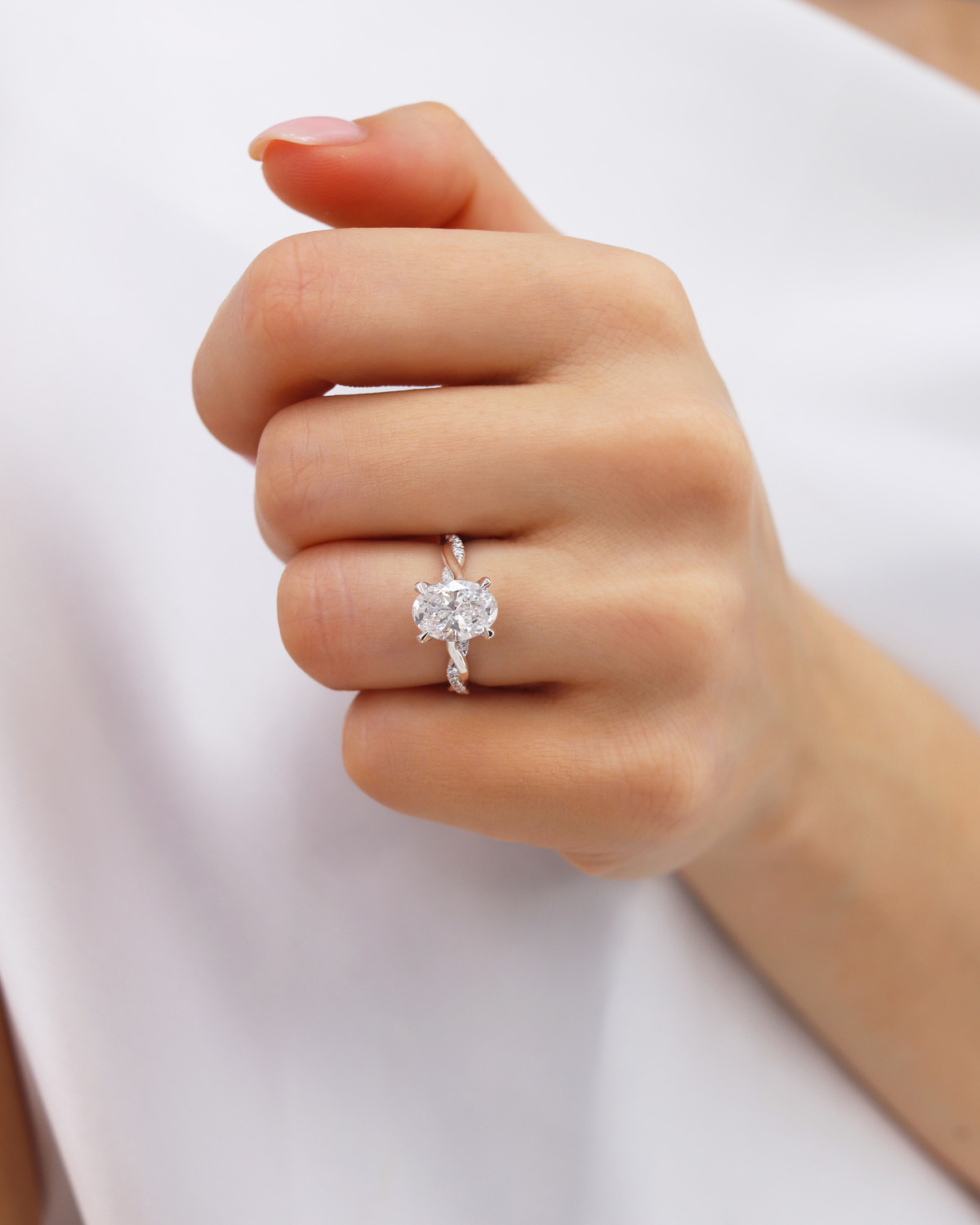
Start with an engagement ring you like from Lily Arkwright’s collection and identify the detail you would change. Choosing a listed metal option is a different request from asking for a new arrangement of stones. Explaining that difference helps a jeweller tell you whether an existing design, an available alteration or a bespoke commission is the appropriate starting point.
Decide whether you need a new design
Write down what is missing from the rings you have already seen. Be specific: “I want this shape with a plain band” gives a designer more to work with than “something unique”.
If an existing ring already has the outline you want, investigate its available options first. A new design process may be useful when your preferred features cannot be combined within that range, or when the arrangement itself is the point of the commission.
There are intermediate routes too. GIA’s explanation of building a ring with a semi-mount describes a mounting with smaller stones already set, ready for a suitable centre stone to be added. Selecting a stone for an existing mounting is another way to make a personal choice without designing every component from scratch.
Ask the jeweller to separate what can be selected, what can be altered and what would require new design work. That gives you a useful comparison before the conversation turns to price.
Understand what you will approve before production
For an existing design, confirmation may centre on the order specification. A bespoke process may include sketches, computer-aided design images, known as CAD renders, or a physical prototype. Establish which of these you will receive and whether there is a separate charge.
A render is a design preview, not a photograph of the finished ring. Use it to discuss proportions and construction. Ask for top and side views, the finished band width and setting height, and an explanation of anything that will look different after casting, setting or polishing.
If a prototype is offered, ask what it is intended to demonstrate. A resin model can help you understand the shape, but it cannot reproduce the weight of the final precious metal or the sparkle of the chosen stone.
Before approving anything, confirm which design version the jeweller will make. If you request a change, ask for the revised drawing or specification rather than assuming an earlier image now represents the new instruction.
Compare the complete quote
A design fee and a finished-ring price are different things. Ask whether the quote includes the design work, any prototype, the centre stone, smaller stones, metal and setting work. Check whether the design fee is separate or credited towards the completed ring. Confirm the deposit, when any further payments are due and what each payment covers.
Revision terms matter too. Find out how many design changes are included, when further changes become chargeable and what happens if you decide not to proceed after seeing the initial design.
Neither route guarantees a lower price. The stones, materials and work involved determine the quote. Compare the complete specifications: a bespoke quotation for one stone and a collection price based on another do not show you the cost of the design work alone.
Ask when the production clock starts
If a quote says “six weeks”, find out what starts that clock. Is that from paying a deposit, selecting the stone or signing off the design? The time spent discussing revisions may come before the workshop’s production estimate.
Ask for the stages in writing, including the point after which changes could affect the cost or completion date. If you have a proposal date in mind, explain when you need the ring in your hands, allowing for delivery rather than treating dispatch as arrival.
Read the cancellation and returns terms for the exact order before paying, and ask how any personalisation affects them. Also confirm what resizing and aftercare are available for the finished design.
Choose the route that solves the design problem you actually have. If the right ring already exists with the options you want, a clear order specification may be enough. If its defining detail still needs to be designed, make sure the process gives you a proper chance to review it before the ring is made.