


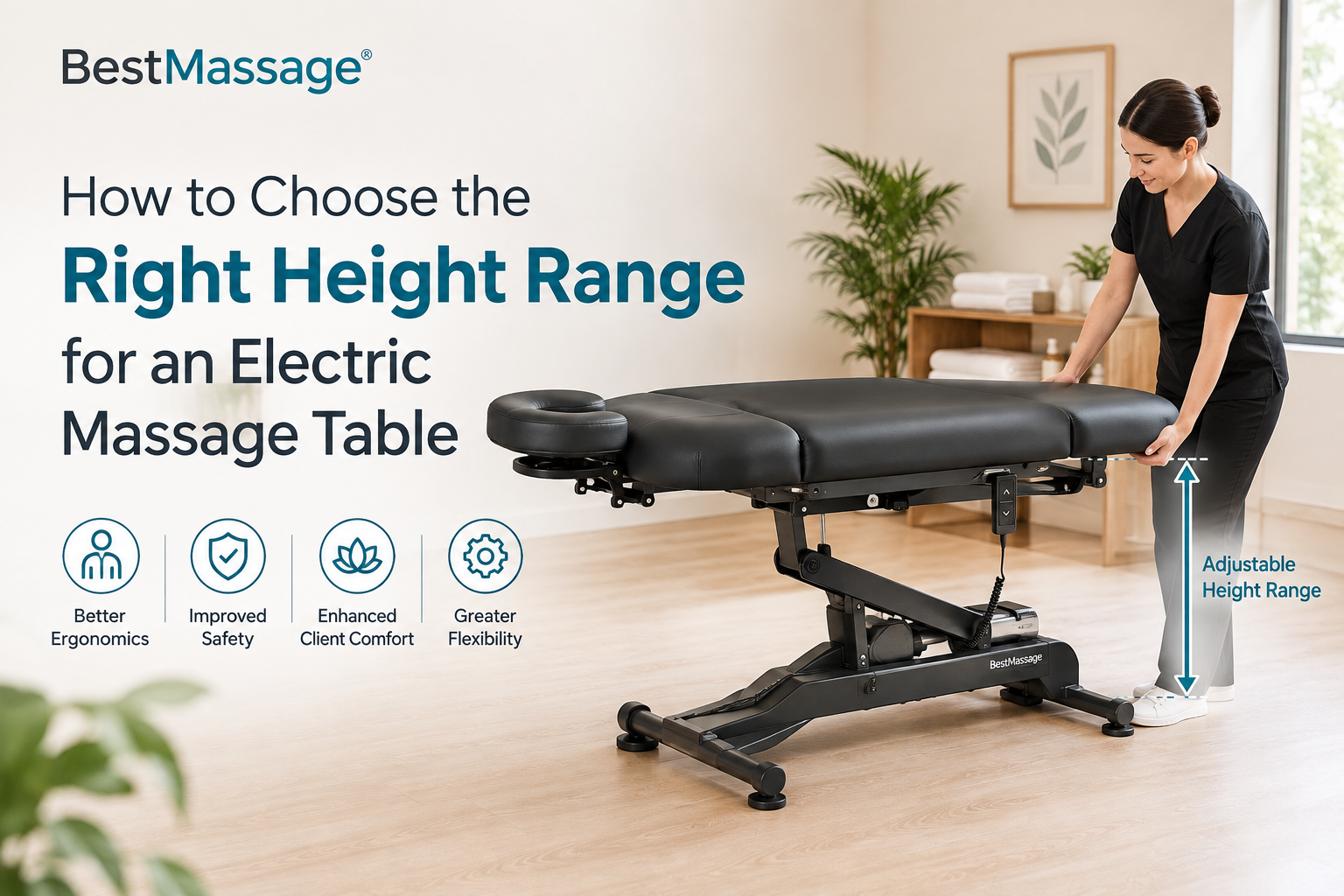
A varied height range plays an essential role in choosing an electric massage table. Massage therapists can position themselves comfortably, adapt to different treatment techniques, and accommodate clients with the correct working height and varying mobility needs. Selecting a table with a suitable adjustment range can also improve day-to-day workflow for spas, wellness centres, and professional clinics.
Look beyond the lowest and highest measurements when comparing BodyChoice’s best massage tables. Consider how the table’s height range fits your body mechanics, treatment style, and business requirements.
1. Understand Why Height Adjustment Matters
An overly high table can cause shoulder strain or awkward arm positioning, and an excessively low table can cause excessive forward bending. The therapist’s height, the method used, and the client’s position affect the optimal working height.
When choosing professional massage tables, the American Massage Therapy Association states that table height, width, and adjustability are critical ergonomic factors.
Therapists can adjust the working height of electric massage tables using powered controls, which is more convenient than manually moving a fixed-height table.
2. Check the Minimum and Maximum Height
Examine the minimum and maximum heights specified by the manufacturer before making a purchase. While the maximum setting should support the therapist’s preferred working position, the minimum setting is important when assisting clients in getting onto the table.
Don’t assume that a table is the best option just because it has a larger adjustment range. If multiple therapists share a treatment room, make sure the range is suitable for the tallest and shortest therapists using it.
3. Match Table Height to Your Treatment Style
Different treatments require different working positions. To effectively use body weight, deep tissue massage therapists may favor a lower setting. For some treatments, a more upright posture or a higher position for close-up work.
Select an electric table that can adjust to your usual treatment methods if your practice provides a variety of services. When switching between therapists, clients, and procedures, the ability to change height can be especially helpful.
4. Consider Client Access and Comfort
Some clients, particularly those who have trouble stepping up onto a higher surface, may find it easier to get onto the table if the minimum height is appropriate. Consider the room layout, client mobility, and transfer assistance, as height alone does not ensure accessibility.
Analyse the entire client experience, comparing electric massage tables from getting onto the table to shifting positions during treatment.
5. Evaluate the Complete Table, Not Just Its Height
The height preference of an electric massage table is just one aspect of the purchase. Check the massage table’s dimensions, upholstery, padding, motor controls, frame stability, working weight capacity, warranty, and maintenance needs.
Check if accessories like face cradles, arm supports, and positioning bolsters are included or sold separately if you require a massage table with accessories.
Choose the Right Massage Table for Your Practice
The ideal table should fit your treatment area, clients, working style, and long-term business requirements. Make sure the adjustment range fits your daily workload by comparing the specifications of available massage tables before making a purchase.
Instead of depending on a single height measurement, look into BodyChoice professional electric massage table options, go over the manufacturer’s specifications, and select equipment that works for your practice.