


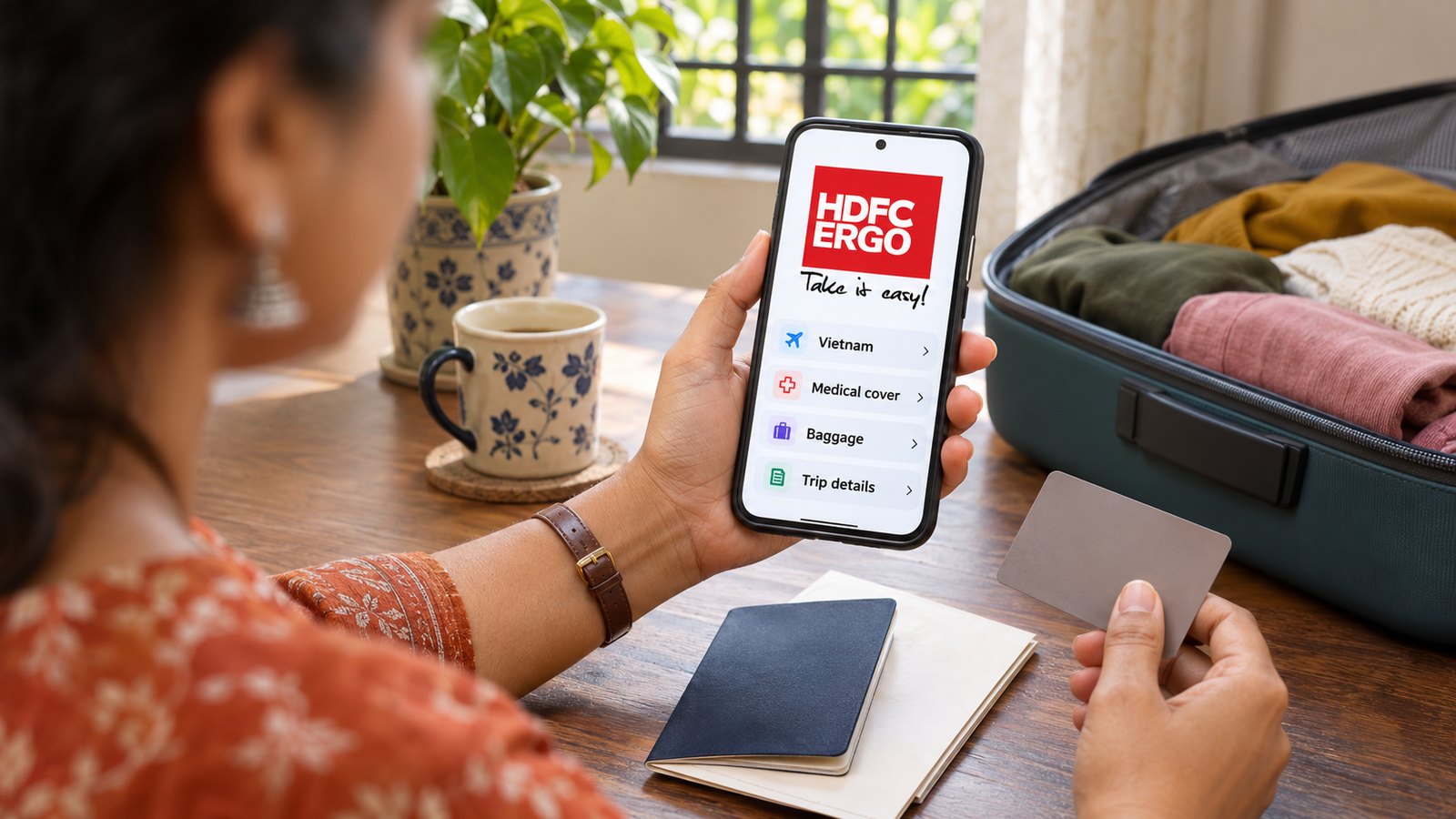
A credit card with complimentary travel cover sounds useful when planning a Vietnam holiday. Why pay for another plan when your card already offers protection? The answer depends on what that benefit actually covers.
A delayed suitcase is inconvenient, but an unexpected hospital visit can be far more serious. For most travellers, separate travel insurance offers more control over medical and travel benefits. Still, a card may be enough in certain situations.
Here is how to decide before leaving India.
What Does Credit Card Travel Cover Usually Include?
Some credit cards provide insurance benefits as part of their features. However, the cover can be limited and may not apply automatically.
Depending on your card, benefits might include:
- Flight problems: Compensation for certain delays or missed connections.
- Baggage issues: Help with eligible lost or delayed checked-in luggage.
- Travel accidents: A fixed benefit for specific accidents during a journey.
- Medical emergencies: Cover on some cards, but not necessarily every card or situation.
For instance, a card that helps with baggage loss might offer no medical cover for an illness during your holiday.
There may also be conditions. You might need to pay for your flight using that card, keep it active or meet other requirements. Read the insurance document, not just the card’s promotional page.
Why Buy a Separate Plan for Vietnam?
The travel insurance India residents choose for Vietnam should reflect the trip they are actually taking. A separate policy lets you select suitable medical protection and check whether useful travel benefits are included.
Look for cover relating to emergency treatment, hospital stays, medical evacuation, lost baggage and trip interruption. Not every plan includes everything, and limits can differ.
This matters beyond major cities. If you fall ill while visiting a smaller town or an island, reaching suitable medical care may involve additional travel. Medical evacuation cover can be important when local treatment is not enough.
Credit Card Cover vs Separate Travel Insurance
Here are the main differences worth checking before your trip.
| Feature | Credit Card Travel Cover | Separate Travel Insurance |
| Availability | Included with eligible cards, subject to conditions | Purchased specifically for the trip |
| Medical emergencies | May be absent or limited | Can include hospitalisation and emergency treatment |
| Baggage and delays | Often covers selected incidents | Available depending on the chosen plan |
| Family protection | May cover only the cardholder | Can include eligible family members |
| Coverage choice | Usually fixed by the card provider | More choice in benefits and coverage limits |
| Claims | Subject to card insurance terms | Subject to the selected policy’s claim rules |
Neither option covers everything. Always read the exclusions, limits and requirements before relying on it.
Travelling With Parents? Check Their Needs
A family holiday can involve travellers with very different health requirements. Card benefits may have age limits or restrictions that make them less useful for older adults.
Dedicated travel insurance for senior citizens may offer suitable options, but check the entry age, medical limits, exclusions and any amount the traveller must pay towards treatment.
Tell the insurer about existing conditions when requested. Do not assume ongoing medication or treatment for a known illness will be covered. Get the answer in writing before the trip.
Read These Details Before Departure
Before your flight, open the actual insurance wording and check:
- Who is insured: The cardholder alone, or family members too?
- How cover starts: Does paying for tickets with the card matter?
- Medical support: Are hospital care, evacuation and assistance included?
- Activities: Are scooter riding, water activities or excursions excluded?
- Claim process: Whom should you contact, and which documents are needed?
Also check whether you must pay the hospital first and claim later, or whether direct payment is available for eligible treatment. Save the emergency contact details and policy documents on your phone. Keep another copy somewhere accessible without internet.
Final Thoughts
For a Vietnam holiday, separate travel insurance is usually the safer choice when your credit card offers only limited protection. It gives you an opportunity to choose benefits that match your route, health needs and travel plans. A credit card can still be useful, especially when its insurance terms are clear and suitable. The important thing is not whether the cover is free. It is whether you can actually use it when something goes wrong.