
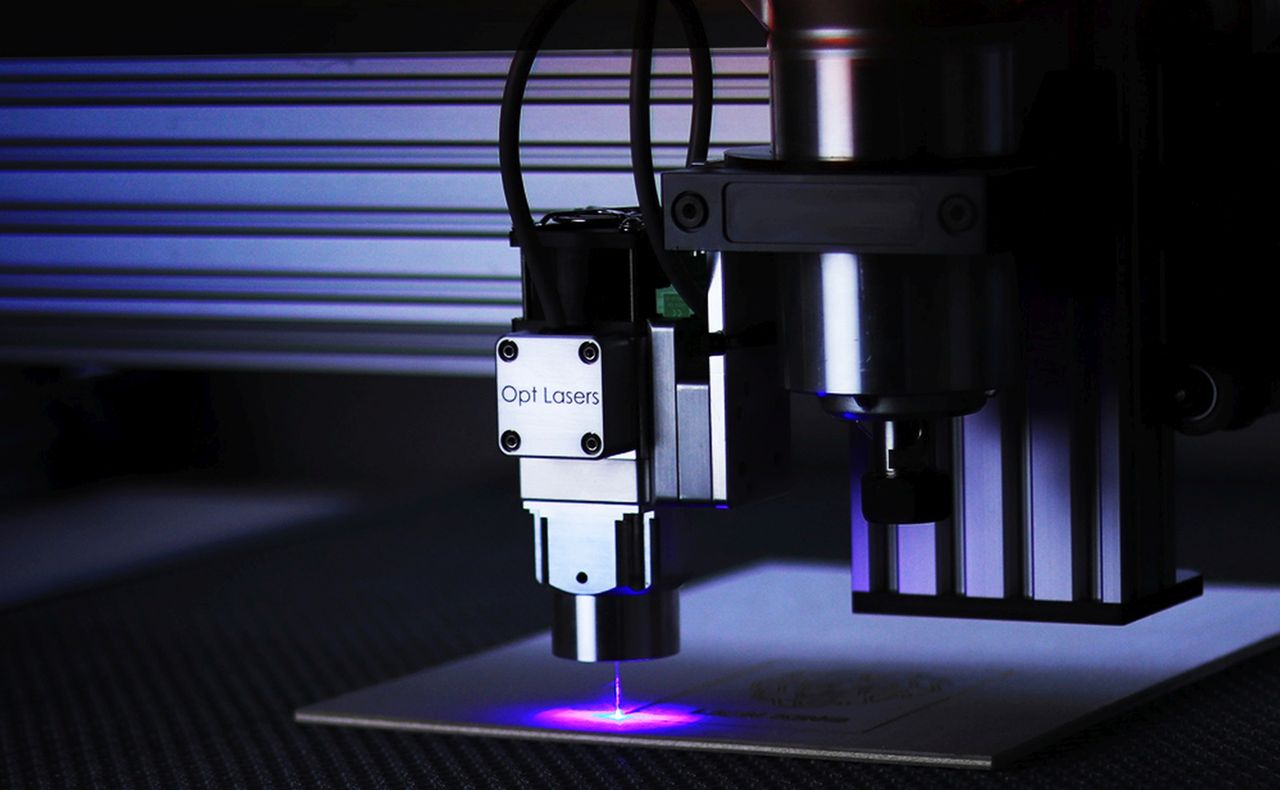
Laser technology has emerged as a key component of the world of modern manufacturing. It’s used in business to name products and develop permanent designs. It consists of assisting in the improvement of production precision and efficiency. But the laser marking, engraving, and etching techniques are distinct. They are different in action and are used in certain industries.
Knowing the differences can guide manufacturers in selecting appropriate machinery. The right process is dependent on the types of materials and applications. Other factors, such as production requirements and desired results, are also relevant.
Understanding Laser Marking
Laser marking is a process in which the laser interacts with a product’s surface (does not remove much material). Visible marks are made by the laser by heating in a controlled manner. These marks can be dark, light, or coloured.
Automotive and electronics are some of the fields where laser marking is used. It is also used in medical equipment production for product tracking. It is very fast and thus appropriate for high-volume production. Another great thing is its accuracy. Can print fine legible marks on complex parts. In this way, businesses can keep traceability of their products.
Understanding Laser Engraving
Laser engraving is an etching process that cuts or blanks away the surface material. The laser beam forms a deeper cavity or design. This will create a visible mark.
Engraving is used for an identification that will last for life by manufacturers. It can be used in decorative designs and industrial labels as well. Engravings can be made of stainless steel, aluminum, wood, or acrylic.
When it comes to durability, Engraving is the next best thing to something written with a natural calligraphy marker. It can last a long time even after frequent use, due to its deeper mark. It is useful for tools, equipment, and machine parts.
Engraving can also be a time-consuming process compared to regular marking, however. More laser passes will be necessary for deeper designs. The thickness of the material and Laser power will also affect the processing time.
Understanding Laser Etching
Laser etching is an engraving process that affects only the surface. It alters the properties of the material by directing controlled heating. It may result in a slightly raised or roughened look.
Etching is a good compromise between speed and durability. It can form clear designs with little material removal. These results, however, will vary depending on the material and the laser conditions.
Key differences between all processes
All of these techniques require laser energy, but with different outcomes.
Laser marking: Modifying or altering the appearance of the surface. Generates identifiable marks, with minimal removal of material. It can be used for serial numbers, bar codes, etc.
Conventional engraving: The standard way of making marks.Gives permanence to names and designs. It is suitable for manufacturing industrial parts.
Laser etching: Modification of the surface texture by the laser. Makes shallow marks that are easily seen due to contrast. It’s also good for labeling and product branding.
The main distinction is the way in which each process works with the material: The depth and look of the product should be considered before making the choice by manufacturers.
To select the appropriate product for industrial use.
The needs for identification vary depending on the industry. Hence, it is important to choose the appropriate laser process.
Laser marking is commonly used in the automotive industry. It aids in finding parts during the manufacturing process. Orders can also be managed by serial number, which can be used as a quality control and tracing mechanism.
When choosing engraving for specific parts, consider companies within the aerospace industry. Under harsh exposure, a deep mark will be legible. But this process should be subjected to certain material requirements.
For engraving, it can be selected by manufacturers who create the tools that are used in manufacturing industries. It leaves deeper marks that serve as lasting identification. This is especially beneficial for equipment used repetitively.
There are a number of factors to take into account prior to choosing the laser equipment.
It takes careful consideration to ensure you select the right equipment. The first step in identifying the primary materials is to know the organization’s primary products and/or services. Different metals and coated surfaces react differently.
Another crucial factor is laser power. There are known differences in the energy envelope of different applications. The speed at which the product is to be processed and how much of the product will be produced also affects equipment selection.
Investigating depth and surface finish should be in the interest of the business. Simple identification is required for some applications. There are also those that need to be deeply carved or have effects added to the design.
When considering available industrial laser solutions and equipment capabilities, companies should consider laser providers like Hispeed Laser. Reading the guidelines and application forms gives customers the information they need to make a decision.
Conclusion
There are various benefits to be derived from laser marking, engraving, and etching. Changes in the appearance of the material are highlighted; material is removed in engraving. Etching alters the surface for the purpose of producing designs that stand out.
Each method is applicable in certain industrial processes. Material compatibility, durability, precision, and production should all be taken into account by the manufacturer. In this way, businesses understand the differences and are able to choose the right laser technology. By selecting the appropriate option, you can enhance product identification, production efficiency, and product quality.