
Key Takeaways
- Inspect your fireplace and chimney before the first fire of the season, even if they have been unused for months.
- Atlanta’s humidity, rain, leaves, and animal activity can contribute to moisture damage, blockages, and chimney deterioration.
- Watch for warning signs such as smoke entering the room, unusual odors, cracked masonry, excessive soot, and poor draft.
- Annual professional chimney inspections can help identify hidden damage, buildup, and ventilation concerns.
- Wood-burning fireplaces, gas fireplaces, stoves, and inserts have different maintenance requirements.
- Burn only approved fuel, keep combustible materials away from the hearth, and maintain working smoke and carbon monoxide alarms.
- Schedule inspections and necessary repairs before colder weather increases fireplace use and service demand.
- Regular maintenance, proper burning habits, and timely professional attention can help reduce preventable hazards from fireplaces and chimneys.
Atlanta homeowners may not need a fireplace every day, but cool evenings, damp weather, falling leaves, and sudden cold snaps can make the first fire of the season tempting. Before lighting it, take time to look for problems that may have developed during the warmer months. Scheduling a chimney inspection in Atlanta, GA, is a practical way to identify issues that cannot be seen from the firebox or the ground. A chimney that sat unused through spring and summer can still collect moisture, debris, nesting material, and residue from earlier fires. A few careful checks, working alarms, and safe fuel habits can help Atlanta households enjoy their fireplace with greater confidence when fireplace season arrives.
Why Seasonal Chimney Checks Matter
Chimneys face year-round exposure, even when no fire is burning. Atlanta rain and humidity can reveal weaknesses around flashing, caps, crowns, mortar joints, and masonry. Leaves, twigs, and animal activity may also restrict the flue. Inside, leftover soot and creosote can remain from prior use. Small defects can interfere with draft, allow water into the home, or contribute to smoke entering the living area. For wood-burning systems, the EPA notes that annual professional checks can identify cracks and other concerns that affect safe operation, making annual chimney and appliance inspections a sensible part of seasonal home maintenance.
What to Check Before Lighting the First Fire
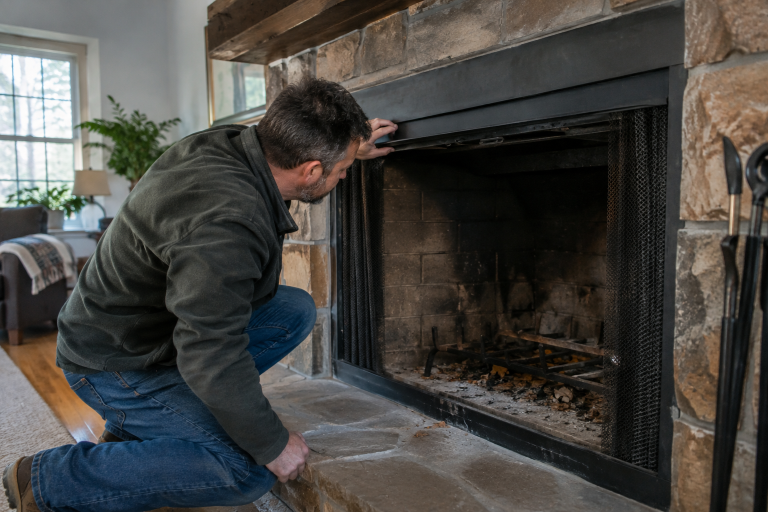
A homeowner’s visual review is not a substitute for a full inspection, but it can reveal clear reasons to pause before using the fireplace. Start indoors, then inspect visible exterior areas from the ground.
- Look for water stains, peeling paint, or discoloration near the fireplace and chimney chase.
- Check visible bricks and mortar for cracking, gaps, or loose material.
- Make sure the damper opens and closes without sticking.
- Look inside the firebox for fallen debris, nesting material, or damaged firebrick.
- Confirm that the chimney cap appears attached and is not buried under leaves or branches.
- Clear rugs, décor, furniture, and stored items away from the hearth.
- Test smoke alarms and carbon monoxide alarms before the heating season begins.
Warning Signs That Need Attention
Do not treat unusual fireplace behavior as normal. Smoke entering the room, a persistent smoky or musty smell, black flakes in the firebox, or an unusually weak fire can indicate a draft, blockage, moisture, or buildup issue. Other warning signs include animal sounds inside the chimney, rust on visible metal components, missing mortar, damaged flashing, or damp patches on nearby walls and ceilings. Stop using the system if these conditions appear, especially if the cause is unclear. A chimney should also be evaluated after a suspected chimney fire, roof leak, lightning strike, or significant storm damage.
Choosing the Right Inspection Level
The appropriate inspection depends on the chimney’s history, condition, appliance type, and any changes made to the system.
- Level One: A review of readily accessible components when the fireplace, fuel, and use have not changed.
- Level Two: A more detailed evaluation that may be appropriate after buying a home, changing an appliance, experiencing a chimney fire, or noticing possible hidden damage.
- Level Three: A deeper investigation when a serious concern may exist behind walls, finishes, or inaccessible areas.
How Checks Differ by Fireplace Type
Wood-Burning Fireplaces
Wood-burning fireplaces need attention to ash, soot, creosote, draft, and obstructions. Burn dry, properly seasoned firewood, and watch for changes in smoke production or flame behavior. Frequent use can mean buildup develops more quickly.
Gas Fireplaces
Gas fireplaces still need periodic service. Check the glass, venting, burner area, pilot operation, and surrounding clearances according to the manufacturer’s instructions. A gas fireplace may look cleaner than a wood-burning unit, but venting and carbon monoxide safety still matter.
Wood Stoves and Inserts
Stoves and inserts require attention to liners, connector pipes, clearances, gaskets, and internal buildup. Do not modify venting components or connect a new appliance to an existing chimney without qualified guidance.
Safe Burning Habits
- Use only fuel approved for the appliance.
- Never burn trash, plastic, painted wood, or treated lumber.
- Open the damper before starting a wood fire.
- Use a screen or keep appliance doors closed as designed.
- Keep children, pets, and combustible items away from the hearth.
- Allow ashes to cool completely in a covered metal container.
- Store ash containers outdoors on a noncombustible surface away from the home.
Regular maintenance, the right fuel, and working alarms remain central to preventing chimney fires and smoke-related hazards. If a chimney fire is suspected, leave the home, call emergency services, and do not use the fireplace again until it has been evaluated.
When to Call a Professional
Arrange professional help before using a fireplace that has been inactive for a long period, when the chimney has not been checked within the past year, or when visible damage has no obvious explanation. A professional evaluation is also wise after purchasing a home, installing a stove or insert, or noticing odors, smoke problems, poor draft, or recurring water intrusion.
A Simple Year-Round Maintenance Plan
Late Winter and Spring
Make notes about smoke, odor, draft, or water issues from the season. Check for visible exterior damage after storms and schedule needed repairs before the next cold-weather rush.
Summer and Early Fall
Inspect visible caps, flashing, crowns, and masonry from the ground. Trim nearby branches, clean the hearth area, test alarms, review the appliance manual, and prepare suitable dry fuel before the first cool Atlanta evening.
Frequently Asked Questions
Do chimneys need checks if the fireplace is rarely used?
Yes. Moisture, debris, animals, and structural wear can affect a chimney whether or not it is used often.
Is a chimney inspection the same as chimney cleaning?
No. An inspection evaluates condition and safety, while cleaning removes soot, ash, creosote, and other buildup. One appointment may include both services when needed.
Can homeowners inspect a chimney themselves?
Homeowners can look for visible warning signs from the firebox and ground level. Flue condition, roof-level components, and hidden defects may require specialized equipment and training.
How early should a seasonal inspection be scheduled?
Late summer or early fall is often a practical time to schedule service, before colder temperatures increase demand and before the first fire is needed.
Final Thoughts
A safer fireplace season begins before the first match is struck, especially as Atlanta homeowners prepare for cooler temperatures and increased fireplace use. A quick visual review of the fireplace and chimney, good burning habits, clear space around the hearth, working smoke and carbon monoxide alarms, and timely professional care can all contribute to a safer home environment. Check for visible cracks, loose masonry, unusual odors, excessive soot, or signs of moisture, and avoid burning unseasoned wood or materials that can produce excessive smoke and residue. Keeping furniture, decorations, and other combustible items away from the fireplace is equally important. Routine chimney inspections and cleaning, when needed, can help identify buildup, blockages, and other concerns before they become more serious. By making fireplace maintenance part of your seasonal home checklist, you can enjoy the warmth and comfort of your fireplace while staying more mindful of fire hazards, ventilation issues, and your chimney’s condition throughout the winter.