


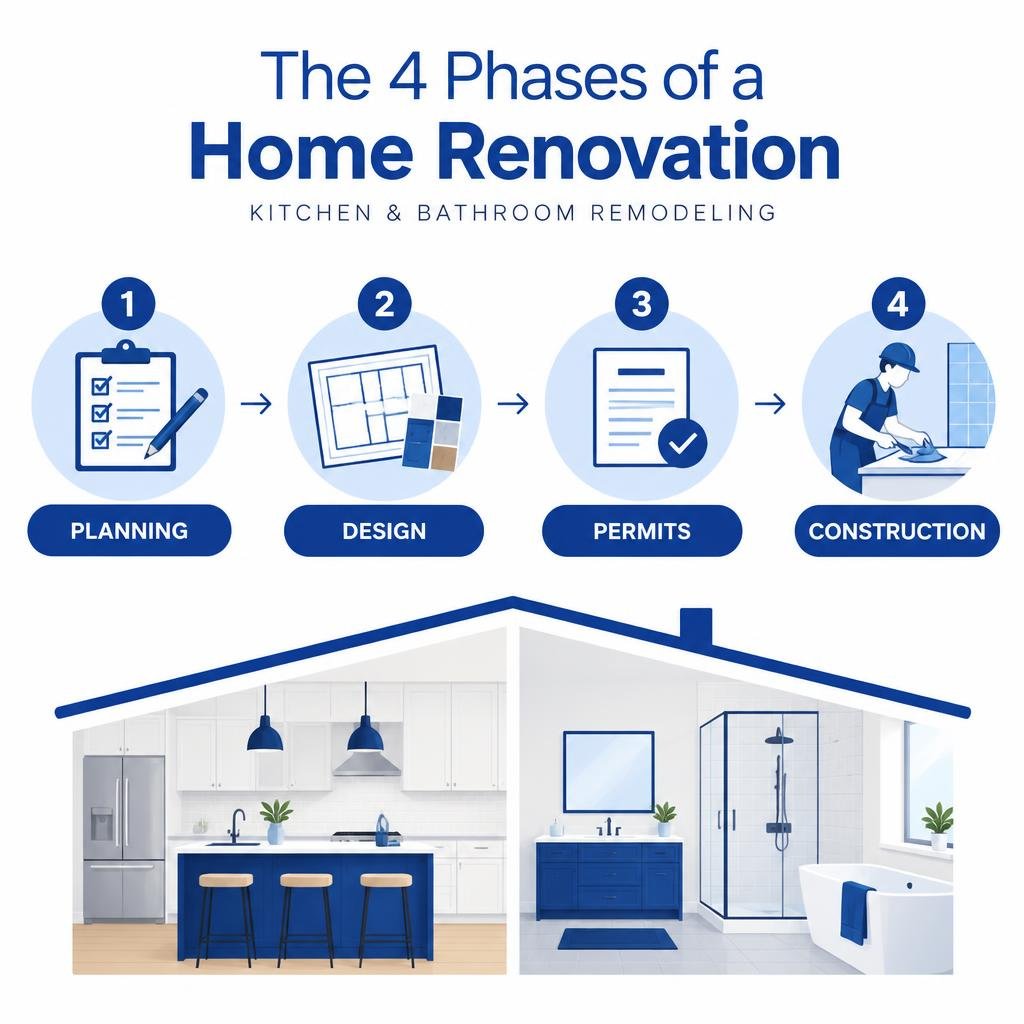
Before you break ground or purchase a single fixture, you must define the scope of your project. Remodeling projects generally fall into three distinct tiers: cosmetic, pull-and-replace, and custom. Understanding these categories is essential for setting realistic budgets and timelines.
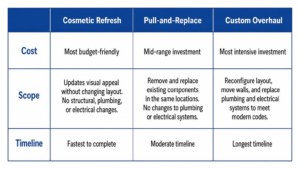
Cosmetic, Pull-and-Replace, and Custom Renovation Tiers
A cosmetic refresh is the most budget-friendly approach. It focuses on updating the visual appeal of a space without altering its structural layout. This might include painting cabinets, replacing hardware, swapping out light fixtures, or installing a new backsplash. Because the plumbing and electrical infrastructure remain untouched, this tier is the fastest to complete.
Pull-and-replace projects involve removing existing components—such as old countertops, vanity units, or appliances—and installing new ones in the same locations. This is an excellent middle-ground option that provides a significant aesthetic and functional upgrade without the expense of moving gas lines or water supply pipes.
Custom overhauls represent the most intensive tier. These projects often involve moving walls, reconfiguring floor plans, or completely replacing plumbing and electrical systems to meet modern codes. This is where you might incorporate universal design features, such as curbless walk-in showers or wider doorways, to ensure long-term accessibility.
Material Selection for Long-Term Durability
The longevity of your remodel depends heavily on the materials you choose. In the kitchen, quartz countertops have become a standard for their non-porous, stain-resistant nature. In the bathroom, moisture is your greatest adversary. Opting for porcelain tile over ceramic and ensuring you use waterproof sub-flooring are critical steps.
When you are ready to move from planning to execution, consulting with experts who specialize in professional bathroom remodeling services can help you select high-performance fixtures that stand up to daily use. Whether you are installing low-voltage LED lighting to enhance ambiance or choosing water-saving fixtures to improve efficiency, focusing on quality materials ensures your investment remains pristine for years to come.
2026 Renovation Cost Benchmarks and Expected ROI
Budgeting for a remodel in 2026 requires an understanding of both national averages and regional economic factors. Labor costs have seen steady growth due to skilled-trade shortages, while material costs have largely stabilized.
Estimating Costs for Kitchen and Bathroom Remodeling
When calculating your budget, labor typically accounts for roughly half of the total project cost. Economy-tier projects prioritize functional updates with standard-grade materials, while mid-range projects often include semi-custom cabinetry and higher-end fixtures. Upscale renovations involve luxury materials, professional-grade appliances, and extensive structural changes that can push costs significantly higher. Always remember to apply a regional multiplier to national data, as construction costs in major urban centers can be 30% to 50% higher than in rural areas.
Return on Investment and Avoiding Neighborhood Over-Improvement
A common mistake is “over-improving” for the neighborhood. If your home’s value is significantly lower than the average in your area, a minor kitchen remodel—which often offers the highest return on investment (ROI)—is likely a safer bet than a massive, high-end custom renovation that may not be fully recouped at resale. A helpful rule of thumb is the 1% maintenance rule: aim to allocate roughly 1% of your home’s total value annually toward maintenance and improvements to keep your property competitive.
Financing Strategies and Budget Management
Most homeowners utilize some form of financing to bring their vision to life. Whether you are tapping into home equity or utilizing contractor-backed payment plans, having your finances in order before work begins is vital.
Securing Renovation Loans and Equity Lines
Home Equity Lines of Credit (HELOCs) are popular for remodels because they allow you to draw funds as needed during the construction process. Alternatively, a cash-out refinance can provide a lump sum of capital, often at a fixed interest rate. If you prefer to keep your equity intact, personal loans or financing programs offered directly by your contractor can bridge the gap, though it is important to review the interest rates and repayment terms carefully.
Managing Labor Splits and Unexpected Contingencies
Even the most meticulously planned project can encounter surprises, such as hidden water damage behind a shower wall or outdated electrical wiring that requires an upgrade to meet current safety codes. We strongly recommend setting aside a contingency buffer of at least 20% of your total budget. This fund protects you from the stress of “change orders” and ensures that if a problem is discovered, you have the resources to address it immediately without halting progress.
The Step-by-Step Remodeling Timeline and Execution
The journey from a rough idea to a finished room is a structured process. It begins with design and ends with a final walkthrough.

3D Visualization and Planning in Kitchen and Bathroom Remodeling
Modern planning relies heavily on technology. Before demolition begins, utilize 3D renderings to visualize how your new layout will function. Many homeowners and professionals now use a digital platform for kitchen-cabinet businesses to browse styles, compare configurations, and see how specific cabinetry will look in their unique space. These tools are invaluable for catching design flaws—like a dishwasher that blocks a walkway—before the construction team ever arrives.
Permitting, Demolition, Construction, and Final Walkthrough
The construction phase follows a strict sequence:
- Permitting: Ensure all necessary local building permits are secured.
- Demolition: The removal of old materials.
- Rough-ins: Plumbing, electrical, and HVAC professionals install the “hidden” infrastructure.
- Inspections: Local authorities verify that the work meets safety codes.
- Finishing: Drywall, flooring, cabinetry, and fixture installation.
- Final Walkthrough: A detailed inspection to ensure every detail meets your expectations and the contractor’s quality standards.
Hiring the Right Remodeling Contractor
The contractor you choose is your most important partner. A great contractor brings not only technical skill but also the ability to manage the logistics of tradespeople, deliveries, and inspections.
Vetting Credentials, Licenses, and Workmanship Warranties
Always verify that your contractor holds a valid state license, general liability insurance, and workers’ compensation coverage. A reputable firm will be happy to provide proof of these credentials. Beyond the paperwork, look for a company that offers a clear workmanship warranty, which provides peace of mind that they stand behind their labor long after the project is complete.
Essential Questions to Ask Before Signing Contracts
When interviewing potential contractors, ask:
- “Who will be my primary point of contact during the project?”
- “How do you handle unexpected issues or change orders?”
- “Can you provide a detailed, written schedule of project milestones?”
- “What are your policies regarding job-site cleanliness?”
Frequently Asked Questions About Home Renovations
What are the earliest signs that a kitchen or bathroom needs a remodel?
Look for recurring plumbing leaks, persistent mold, cabinets that no longer close properly, or a layout that makes daily tasks difficult. If your fixtures are outdated and require frequent repairs, a remodel is often more cost-effective than continuous maintenance.
How long does a typical kitchen or bathroom renovation take to complete?
A simple cosmetic refresh might take a few weeks. A pull-and-replace project typically spans one to two months. A full custom renovation, particularly one involving structural changes, can take anywhere from three to six months depending on the complexity of the design and the availability of materials.
How can homeowners avoid over-improving their home for the local real estate market?
Research the “price ceiling” of your neighborhood. If your home is already at the top end of the market value for your area, focus on functional, high-quality finishes rather than ultra-luxury upgrades that won’t see a return at the time of sale. Consult with a local real estate professional to understand which features are most in-demand in your specific market.
Conclusion
Remodeling your kitchen or bathroom is an exciting endeavor that can significantly enhance your quality of life. By clearly defining your project scope, budgeting with a contingency buffer, and partnering with a licensed, experienced contractor, you can navigate the process with confidence. The best renovations are those that balance your personal aesthetic goals with the practical realities of your home’s value and functionality. With careful planning, your home will not only look better but will also serve your needs for years to come.