

Human error remains one of the most significant risks in aviation maintenance. Even experienced technicians can miss early signs of engine deterioration, subtle defects, or hidden damage when relying solely on visual checks that require partial disassembly. So these new requirements for inspection of modern aircraft are more focused on procedures that are more defined, measurable, and repeatable, supported by RVI (Remote Visual Inspection) tools such as borescopes. Aviation safety sources state that the inclusion of inspection cameras has become vital in reducing maintenance errors, and industry literature illustrates how leading-edge diagnostic technology equates to superior decision-making and improved flight safety.
Giving technicians a look inside engines without disassembly, borescopes have revolutionized how maintenance crews spot problems. These devices help eliminate uncertainty, enable evidence-based decisions and provide technicians the ability to clearly document the condition of an engine in ways not possible a generation ago.
How Borescopes Strengthen Inspection Accuracy
Aviation engines contain tight spaces, rotating components, and high-temperature sections that simply cannot be fully inspected through unaided vision. Borescopes — including rigid scopes, flexible fiberscopes, and high-definition videoscopes — allow technicians to access areas such as:
- Turbine blades and vanes
- Compressor stages
- Combustion chambers
- Oil passages and bearing housings
- Internal seals and heat-exposed surfaces
Human error is common when technicians make assumptions or have partial visibility. Borescopes take out that guessing game. Combined with illumination, articulation and crystal clear image capture, today’s borescopes detect cracks, pitting, carbon build up, burn patterns, blade rubbing, corrosion and even foreign object damage and can reveal these and other conditions that may be hidden from view.
Airline engines rely on finding these problems fast. A methodical borescope inspection makes certain that the process is uniform, that all angles are viewed, and that every anomaly is recorded.
Reducing Guesswork Through Structured Inspection Protocols
Engine manufacturers and maintenance organizations increasingly incorporate structured borescope inspection checklists into their manuals. These protocols ensure that technicians follow the same systematic approach every time they evaluate an engine.
A structured borescope process reduces human error through:
1. Repeatable Image Paths
Technicians follow guided pathways through compressor and turbine stages, ensuring no area is skipped.
2. Consistent Light and Angle Positioning
Modern borescopes provide adjustable lighting and articulation, creating consistent viewing conditions that reduce the chance of visual misinterpretation.
3. Objective Image Recording
High-quality videos and still images eliminate guesswork. When footage is clear, the probability of misjudging a defect dramatically decreases.
4. Multi-Technician Review
Because images are recorded, multiple technicians — or even OEM representatives — can evaluate findings. This collaborative process further reduces individual error.
5. Accurate Historical Comparison
Recorded footage becomes part of an engine’s long-term inspection history. This allows technicians to compare current conditions to previous inspections to detect trends, progressive wear, or worsening defects.
These elements create a safety-driven workflow where conclusions are evidence-based, not assumption-based.
Improving Maintenance Decision-Making with Visual Evidence
Human memory and judgment can add risk. Two technicians here is possible to get two different interpretations of the same condition, especially when dealing with verbal descriptions or hand written notes.
Borescope video recording removes this uncertainty.Clear visual proof that leads to better decisions through:
Objective assessments
Images show exactly what is present — the shape of a crack, the thickness of carbon buildup, the color of a burn pattern. This leads to faster, more consistent repair decisions.
Independent verification
Footage can be shared with supervisors, engine manufacturers, or MRO partners for secondary evaluation.
Streamlined troubleshooting
Instead of troubleshooting through trial and error, technicians can pinpoint the root cause of a performance issue directly inside the engine.
Accurate documentation
Visual logs support warranty claims, maintenance reports, and compliance audits — reducing administrative error.
In aviation maintenance, better decision-making directly translates to higher safety margins.
How Borescopes Strengthen Flight Safety
When they happen, engine pinch-off–type failures are seldom one event — usually they consist of a series of unnoticed minor events working towards collapse. Borescopes help to eradicate these blind spots by revealing hidden engine conditions.
Borescope inspections enhance flight safety by:
Flagging early-stage defects
Hairline cracks and thermal distortion are often invisible externally. Detecting them early prevents catastrophic failure.
Monitoring wear progression
Structured inspections allow technicians to compare data over time and catch dangerous trends.
Avoiding unnecessary teardown
Removing components introduces additional risk. Borescopes help reduce the need for disassembly, lowering the chance of maintenance-induced damage.
Supporting predictive maintenance
Detailed visual records enable technicians to anticipate future failures and address issues before they impact aircraft performance.
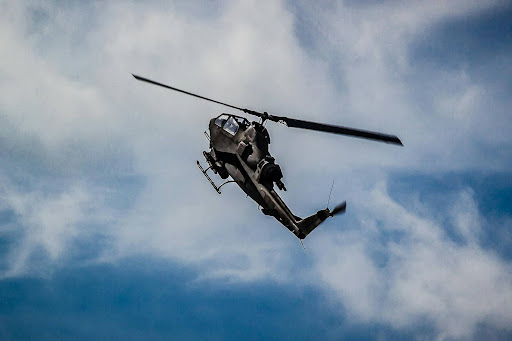
For helicopter engines — which require extreme precision due to high operating RPMs — borescope inspections have become indispensable. Business jet and private jet operators are likewise increasingly dependent on remote visual inspection to ensure ongoing aircraft reliability.
How USA Borescopes Supports Safety-Focused Inspections
USA Borescopes offers solutions optimised for today’s inspection workflows, including aviation quality videoscopes with 4mm diameters, 1.5mitr working lengths and 360° articulation. These systems allow for image capture and video recording — a must for structured, safety-centric inspections.
They also offer:
- No-cost repair evaluations for any make or model
- Borescope rentals anywhere in the continental U.S.
- Overnight delivery when available through FedEx
For aviation professionals striving to reduce error and enhance safety, dependable inspection tools are non-negotiable — and USA Borescopes provides solutions tailored to exactly those needs.
USA Borescopes – Remote Visual Inspection Specialist
Browse the wide selection of industrial videoscopes, pipe cameras, rigid borescopes, intrinsically safe systems, and fiberscopes at USA Borescopes. Aviation professionals can explore their full range of inspection tools through the products catalog and rely on their expert borescope repair services with no-cost evaluations. Many units are in stock, supported by fast worldwide shipping and exceptional service. Need help choosing the right tool? Call now for guidance on the best borescopes for hard-to-see engine areas.
Author Bio
Written by Tyler J. Rosenfield, an aviation safety writer and former aircraft engine maintenance technician with more than eight years of experience in turbine diagnostics and inspection workflows. Tyler specializes in remote visual inspection technologies, borescope integration, and human-factors risk reduction in aircraft maintenance environments. Passionate about improving aviation reliability, he develops educational content that helps technicians adopt clearer, safer inspection practices.