

Key Takeaways
Let’s cut through the noise and get to what actually matters.
- Today’s roofing materials can seriously boost durability, energy savings, and environmental performance.
- Options have expanded fast. Reflective coatings, green roofs, and even power-generating systems are now in play.
- The “best” choice depends on your building, your climate, and what you’re trying to achieve long term.
Choosing the right roofing material is a critical decision for industrial buildings, where durability, energy efficiency, and long‑term performance are key considerations. As industrial facilities continue to evolve, so too do the materials and technologies used to protect them from the elements. From traditional metal decking to advanced membrane systems, modern roofing solutions offer a range of benefits and trade‑offs that can impact maintenance costs, structural integrity, and overall operational resilience. Understanding these options helps facility managers and stakeholders make informed decisions that align with both budget and functional requirements.
In exploring the latest trends and innovations in industrial roofing, it’s useful to consider real‑world applications and examples. Resources like https://www.deltaservices.com/ provide insight into how different materials perform in varied environments and under specific industry demands. By examining factors such as thermal performance, weather resistance, and life‑cycle cost, this overview aims to offer a balanced perspective on how contemporary roofing materials can meet the diverse needs of industrial buildings.
Cool Roof Coatings
Let’s start with something simple but surprisingly effective.
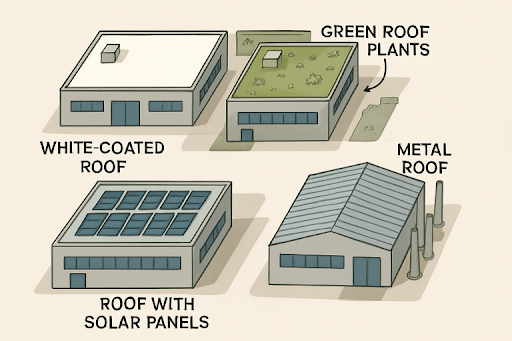
Cool roof coatings are designed to reflect sunlight instead of absorbing it. Sounds basic, right? But the impact is huge. Less heat gets into the building, which means your cooling systems do not have to work overtime.
These coatings usually have high solar reflectance and strong thermal emittance. In plain terms, they bounce heat away and release whatever they absorb quickly.
One product that gets talked about a lot is Cool Roof Coat by NanoTech Materials. It uses ceramic particles to cut down HVAC energy use. Since its wider rollout in 2023, many facilities have reported noticeable drops in indoor temperatures and energy costs.
There is another benefit people often overlook. Heat damages roofs over time. Reduce the heat, and you slow down that wear and tear. That means fewer repairs and a longer lifespan.
If your facility is in a hot region or generates a lot of internal heat, this is not just a nice upgrade. It is a smart move.
Green and Living Roofs
Now let’s flip the script.
Instead of reflecting heat, what if your roof absorbed it naturally?
Green roofs do exactly that. They turn your rooftop into a layered system with soil, plants, and drainage support. It sounds unconventional for an industrial setup, but it works.
And not just a little.
Studies have shown cooling energy savings reaching up to 43.8 percent in certain climates. That is not a small number.
But energy savings are only part of the story. These roofs also:
- Manage rainwater better
- Improve air quality
- Add a touch of green to otherwise dull industrial spaces
I once visited a facility that installed a green roof mainly for compliance reasons. A year later, the team told me their indoor temperature swings had dropped significantly. That was not even the original goal.
Of course, they require planning. Structural load, maintenance, and irrigation all need attention. But when done right, they deliver value on multiple fronts.
Smart Roofing Technologies
This is where things get a bit futuristic.
Modern roofing is no longer just about materials. It is about data.
Smart roofing systems come with embedded sensors that track temperature, moisture levels, and even structural movement. Instead of reacting to problems, you see them coming.
Think about that for a second. A small leak can be detected before it turns into a major repair job. That alone can save a lot of money.
Many manufacturers are now including these sensors as part of their standard offerings. It is becoming less of a luxury and more of a practical tool.
For large industrial setups, this shift toward “predict before it breaks” is a game changer.
Stone-Coated Metal Roofing
If you want something tough and reliable, this option deserves attention.
Stone-coated metal roofing combines steel panels with a layer of stone chips. The result is a roof that handles rough weather without flinching.
Heavy rain. Strong winds. Even hail. These systems are built to take a hit.
The stone layer also adds a visual touch. It can mimic tiles or shingles, which is useful if appearance matters alongside performance.
Another advantage is weight. These panels are relatively lightweight compared to traditional materials, which helps when structural limits are a concern.
For industrial buildings, where durability is non-negotiable, this option checks a lot of boxes.
Recycled Plastic Roofing
Here is something that surprises a lot of people.
Roofing made from recycled plastic is not just an eco-friendly idea. It is actually practical.
These materials are created from reclaimed plastics and engineered into strong, flexible roofing systems. Some designs even use reinforced patterns for added durability.
You get:
- High impact resistance
- Lightweight structure
- Reduced environmental waste
It is a win on both performance and sustainability.
For large industrial roofs, where weight and adaptability matter, this option fits nicely. Plus, it aligns well with companies trying to reduce their environmental footprint.
Solar-Integrated Roofing
Now we are talking about roofs that do more than protect.
Solar-integrated systems turn your roof into a power source. Instead of installing panels on top, the solar cells are built directly into the roofing material.
Companies like Tesla have pushed this idea forward with products like solar shingles. They look clean. They function like regular roofing. And they generate electricity.
It is a neat package.
For industrial facilities, the benefits stack up quickly:
- Lower energy bills
- Reduced carbon footprint
- Better use of existing space
Installation has also become smoother over time, making it easier to include in both new builds and upgrades.
Conclusion
Industrial roofing is not what it used to be. And that is a good thing.
You now have options that do more than just cover a building. They save energy. Extend lifespan. Even generate power.
The key is not chasing trends. It is choosing what fits your building and your goals.
Look at your climate. Think about your energy use. Consider long term maintenance. When those pieces come together, the right roofing choice becomes obvious.
And when you get it right, you are not just protecting a building. You are improving how it performs every single day.