Maintaining cleanliness across expansive industrial environments directly impacts safety, productivity, and operational efficiency. Warehouses, manufacturing plants, logistics hubs, and large outdoor facilities all face the same challenge of removing heavy debris, dust, and waste efficiently across vast floor areas. This is where choosing the right large floor sweeper becomes essential.
With a wide range of machines available, selecting the most suitable sweeper for industrial use requires careful consideration of multiple factors. This guide breaks down everything you need to know to make an informed decision.
Why Industrial Facilities Need a Large Floor Sweeper?
Traditional cleaning methods or smaller machines quickly become inefficient in large-scale environments. A large floor sweeper is specifically designed to cover extensive areas in less time while handling heavier debris such as metal shavings, wood chips, packaging waste, and dust buildup.
Key benefits include:
- Faster cleaning cycles for large spaces
- Reduced labour costs and manual effort
- Improved workplace safety by minimising slip and dust hazards
- Consistent cleaning performance across indoor and outdoor surfaces
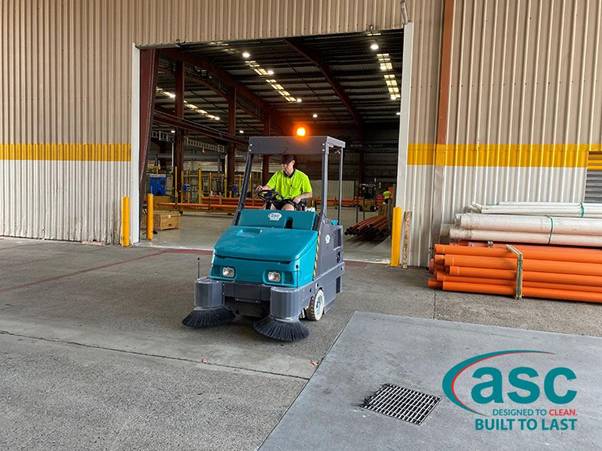
For high-traffic or heavy-duty environments, a ride-on or large-capacity sweeper ensures productivity is not compromised.
Why Do You Need to Assess Your Facility Size and Layout?
Before selecting a sweeper, evaluate the total floor area and layout of your site. Facilities with wide open spaces benefit from machines with larger sweeping paths and high-capacity hoppers, while locations with aisles or obstacles require good manoeuvrability and steering control.
Consider:
- Total square metres cleaned daily
- Width of aisles and access points
- Indoor vs outdoor usage
- Surface types (concrete, asphalt, tiles)
Larger facilities often benefit from rider-style sweepers designed to handle continuous operation without frequent emptying.
Is The Large Floor Sweeper for Indoor, Outdoor, or Combined Use?
Not all industrial sweepers are built for the same environments. Some are optimised for indoor dust control, while others are engineered to manage outdoor debris and uneven surfaces.
If your operation involves both indoor and outdoor areas, choose a versatile large floor sweeper capable of transitioning between environments. Look for features such as robust filtration systems for dust control and durable brushes for heavier debris.
What is The Hopper Capacity and Debris Handling?
Hopper size plays a crucial role in productivity. A small hopper requires frequent emptying, leading to downtime and inefficiency. For industrial applications, larger hopper capacities allow longer cleaning cycles and improved workflow.
Additionally, consider the type of debris your facility generates:
- Fine dust and powder
- Larger solid waste
- Mixed industrial debris
Machines designed for industrial use should handle both fine particles and bulky waste without clogging or loss of performance.
What Kind of Dust Control and Filtration System Does The Machine Have?
Dust management is a critical consideration, especially in enclosed industrial environments. Poor dust control can affect air quality, employee health, and sensitive equipment.
High-quality filtration systems help capture fine dust during operation, preventing it from becoming airborne. If your facility operates in regulated industries or food-adjacent environments, this feature becomes even more important when selecting a large floor sweeper.
What Is The Power Source and Runtime of The Cleaning Machine?
Industrial sweepers are available with different power options, each suited to specific operational needs.
Key considerations include:
- Runtime required per cleaning shift
- Access to charging or refuelling points
- Noise and emission restrictions
For facilities operating multiple shifts, extended runtime and quick turnaround between cleaning cycles can significantly improve efficiency.
What About Operator Comfort and Ease of Use?
Since large sweepers are often used for extended periods, operator comfort should not be overlooked. Ergonomic seating, intuitive controls, clear visibility, and smooth steering all contribute to safer and more productive cleaning operations.
Machines that are easy to operate reduce training time and minimise the risk of operator error, especially in busy industrial environments.
What About Maintenance and Long-Term Reliability?
An industrial sweeper is a long-term investment. Choosing a machine with accessible components, straightforward maintenance requirements, and durable construction can significantly reduce downtime and service costs.
When evaluating options, consider:
- Ease of brush and filter replacement
- Availability of service support
- Durability of components in harsh environments
Reliable machines maintain consistent performance even under demanding daily use.
Final Thoughts
Selecting the perfect large floor sweeper for industrial use is about balancing performance, efficiency, and reliability. By understanding your facility size, debris type, operating conditions, and long-term maintenance needs, you can confidently choose a machine that delivers consistent results and supports a safer, cleaner workplace.
A well-chosen sweeper streamlines operations, reduces costs, and enhances overall site efficiency.