


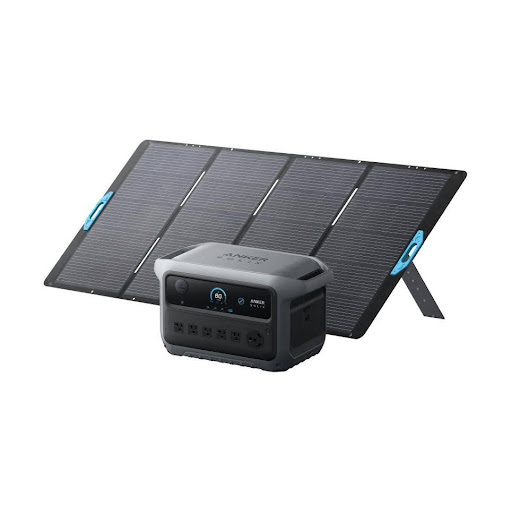
Portability defines whether a solar power generator is genuinely useful for camping, road trips, home backup, or mobile work setups. Real-world portability goes beyond a lightweight label: users evaluate how easily the generator moves, how quickly the solar panel deploys, how much space the system requires, and how well it performs once it reaches its destination. A truly portable system allows people to stay powered without depending on grid access or constant fuel runs. The Anker SOLIX C2000 Gen 2 with its 400W solar panel exemplifies a modern approach to portable power by combining high output, fast solar recharging, and compact design without adding operational complexity. This makes it a practical choice for everyday mobility rather than a device used only in emergencies.
What Defines Portability in Real-World Power Scenarios?
Mobility Depends on Weight, Shape, and Transport Requirements
Portability starts with the ease with which an individual can roll, transport and place a generator. A weight issue, but also a size issue, balance, and integrated handles. A smaller body is more suitable in the trunk of cars and RVs, and travelling with it is less frictional. The C2000 Gen 2 balances this with the form factor of being easy to move: it remains at 41.7 lb and the footprint remains steady to allow the product to be placed safely on rough terrain. Portable systems are most commonly used when people are sure that they will be able to carry them without any special apparatus or several members of the team, and that is why shape and ergonomics determine the real-life portability as much as the mass does.
Setup Speed Affects How Often Users Deploy the System
Versatile Recharging Options Expand Real-Use Portability
True portability means freedom from fixed charging points. A solar power generator that can recharge through multiple methods adapts better to unpredictable circumstances. The C2000 Gen 2 recharges six different ways, including AC, solar, and vehicle input, allowing users to regain power almost anywhere. Its ability to reach 80% in 45 minutes through fast charging keeps downtime short, while its solar compatibility means it can recover energy during outdoor activities without draining other resources. These capabilities reduce the need to plan routes around outlets or service stations, a key advantage for travelers seeking true off-grid independence.
How Solar Panels Influence Real-World Portability?
On-the-Go Charging Changes How Users Plan Power Consumption
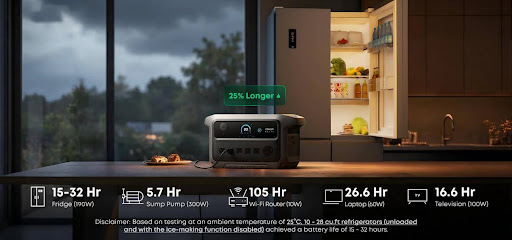
Portable generators are more convenient when it is possible to charge it during travel or off time instead of in an assigned camp location. The solar panel will be 400W, which allows meaningful recharge as users hike, work, or rest and this will make energy management more intuitive. The PS400 panel has a maximum conversion efficiency of up to 23% and can convert the available sunlight into useful power within a very short period of time even on shorter days. This allows individuals to operate fridges, lights or work devices without worrying of reaching an energy limit too soon. The practical portability is further enhanced by efficient panels and a low 9W idle consumption on the C2000 Gen 2, which also increases the reach of the run time.
Durability Determines Whether Users Take Panels into Challenging Environments
Outdoor power usually has to be exposed to dust, rain and rough ground. A portable system should be able to put up with such conditions without compelling users to guard it at all times. The PS400 is IP67 waterproof and is therefore resistant to damage in wet conditions or humidity. This allows individuals to use it with a lot of confidence when they are out camping, fishing, or when they are caught in an emergency storm. The panels that resist natural conditions eliminate the fears of damage and enable the user to concentrate more on the sunlight utilization. Portability is not theoretical, especially because of durable construction.
Adaptability to Different Locations Makes Power More Accessible
Portable solar generators have to be functional in driveways, beaches, forests, cabins and open fields. The support on which the panels are placed is not usually smooth and that is why the adjustable angles are important. The four-angle system of the PS400 panel enables users to adjust to the varying sun positions, topography, or objects casting shadow in the shortest time. TT-30 port of the generator also assists the RV users to access stable power without having to do extensive rewiring. The factors enable the system to operate effectively in temporary configurations as well as semi-permanent roles enhancing its applicability in diverse settings.
Conclusion
Solar power generators deliver real portability when they combine manageable weight, fast deployment, durable solar panels, and flexible charging methods. Systems like the Anker SOLIX C2000 Gen 2 with a 400W solar panel showcase how modern engineering enhances mobility: low idle consumption extends runtime, multiple charging paths reduce downtime, angle-adjustable panels improve daily energy harvest, and rugged construction supports outdoor reliability. Portability becomes more than a specification—it becomes an experience shaped by ease of transport, confidence in durability, and consistent recharging opportunities. When users choose a generator that supports these qualities, they gain dependable power wherever their plans take them.