

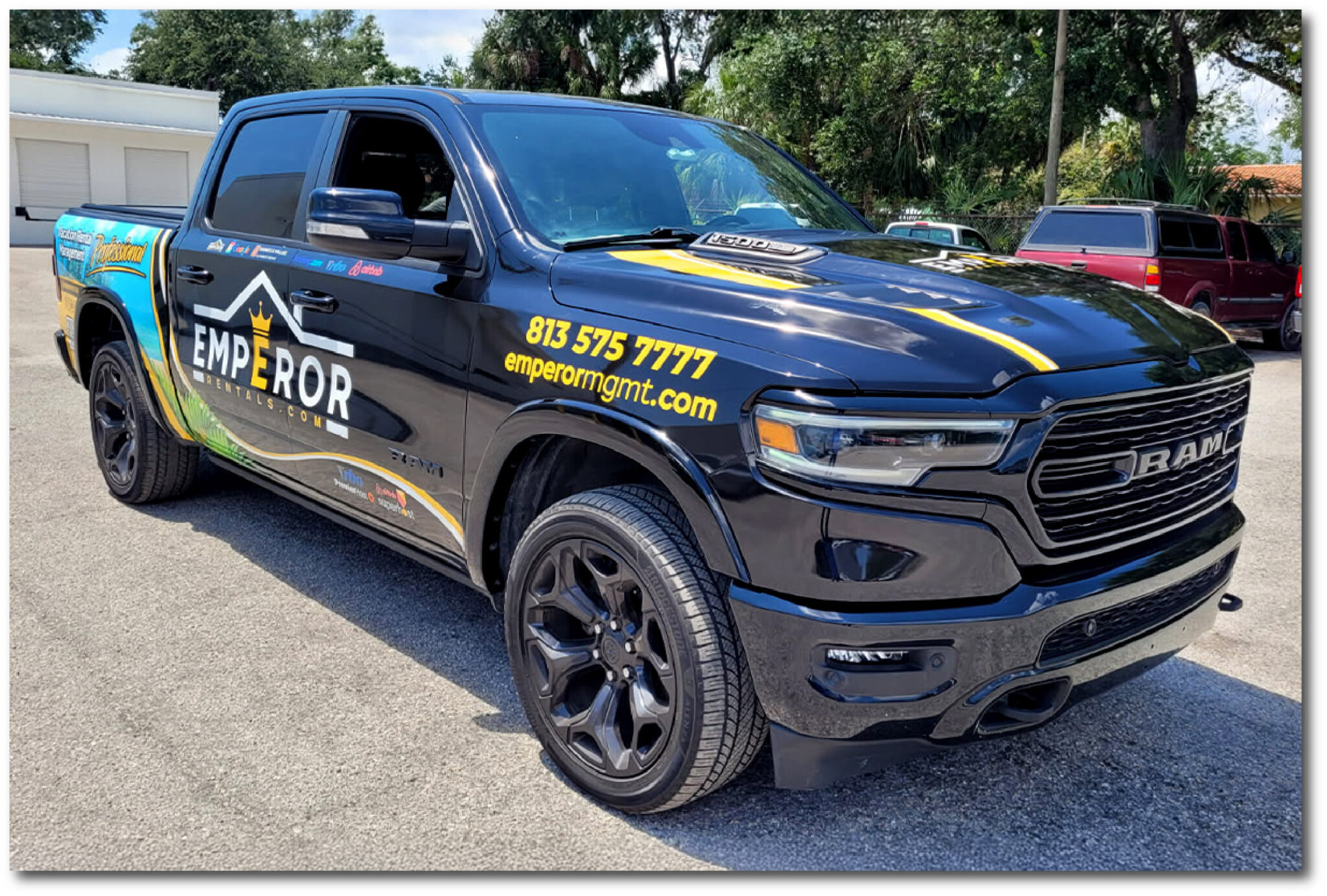
Vehicle wraps give brands wheels, literally transforming cars, trucks, and vans into moving media that travels routes and reaches neighborhoods consistently. When the material is strong, flexible, and stunning up close, every drive becomes publicity. This vinyl conforms to curves without bubbling, grips through weather without peeling, and turns fleets into mobile advertising that works twenty-four hours a day, seven days a week.
A wrapped vehicle is impossible to ignore. Unlike a billboard that people drive past, a vehicle wrap travels to where your customers are. A delivery truck wrapped in your brand colors passes through residential neighborhoods, parks near businesses, and stops at customer locations. People see it repeatedly across different contexts. The visibility compounds because the vehicle goes places your traditional advertising never reaches.
Cheap vinyl looks terrible quickly. It bubbles, fades, cracks at edges, and peels in ways that make brands look neglected. Quality vinyl maintains pristine appearance for years, protecting the original paint underneath while projecting professionalism and permanence. The material difference determines whether a wrap looks like a professional marketing asset or a desperate gamble.
Wraps That Look Custom-Made
Complex vehicle contours challenge lesser materials. A wrap needs to conform to curved surfaces, navigate around mirrors and door handles, and stretch smoothly across corners without visible wrinkles or seams. Cheap vinyl either bubbles at curves or tears when stretched. Premium vinyl like 3M’s formulation conforms perfectly to complex geometry without compromising appearance or durability. The wrap looks like it was painted on, not applied over.
This conformability matters because first impressions happen in seconds. Someone glances at a wrapped vehicle at a stoplight. They have maybe two seconds to register the message and the professionalism of the execution. A wrap that looks sloppy or poorly executed damages brand perception instantly. One that looks flawlessly applied enhances it. The material quality directly impacts that perception because it’s visible in how perfectly the wrap hugs the vehicle’s curves.
The installation process itself benefits from premium vinyl’s properties. Professional installers can work with responsive materials that forgive minor application imperfections. Lesser materials require perfect installation conditions and leave no margin for error. When materials are forgiving, installation costs decrease and results improve. Quality vinyl makes the entire wrap process smoother, from design through application to long-term maintenance.
Built for Motion and Miles
Vehicles accumulate miles and weather exposure that stationary advertising never faces. Wind, rain, salt spray, UV radiation, temperature swings from extreme heat to freezing cold—all assault a vehicle wrap continuously. Cheap vinyl fades noticeably within a year. The colors become pastel versions of the original, and edges start peeling. Premium vinyl maintains vibrant colors and structural integrity through years of exposure. A wrap applied today can still look intentional and professional three years from now.
Fade resistance is partly about the vinyl formulation but also about the adhesive and protective overcoat that quality systems include. The best wraps use multiple layers: the printed vinyl, a UV-protective clear coat, and a specialized adhesive engineered for automotive use. That engineering prevents the color degradation that occurs when UV light breaks down ink molecules directly. A vehicle that’s been wrapped for three years shouldn’t look significantly different from one wrapped yesterday, and premium materials ensure that outcome.
Durability extends to handling too. A quality wrap can be cleaned, waxed, and maintained like normal paint. Lesser wraps degrade with aggressive cleaning. Premium vinyl withstands the same maintenance routines people apply to their vehicles’ paint without deteriorating. That resilience means the wrap maintains appearance through actual use rather than requiring special handling that most vehicle owners won’t provide.
Marketing That Goes Everywhere
The reach of a vehicle wrap depends on the vehicle’s actual usage pattern. A delivery truck that covers fifty miles daily reaches exponentially more people than a vehicle parked most of the time. A service vehicle visiting customer locations three counties over expands exposure geographically. The beauty of vehicle wraps is that you’re not paying for impressions. You’re paying once for the wrap and then benefiting from every route the vehicle travels.
Frequency builds recognition. If a vehicle wrapped in your brand colors regularly drives through neighborhoods or commercial areas, people see it repeatedly across different days and contexts. That repetition builds recall in ways that single encounters can’t match. Someone might not remember the specific message on a wrap they saw once, but seeing the same wrapped vehicle multiple times creates cumulative brand awareness.
The local focus of vehicle wraps also means you’re reaching people in your actual market. A service business wrapping their vehicles targets customers in the geographic areas they actually serve. A distributor with a fleet of wrapped trucks reaches retailers and businesses in their territory. Unlike broad-reach advertising, wrapped vehicles concentrate visibility where conversion is actually possible.
Conclusion
Branding shouldn’t sit still when it can move. Vehicle wraps represent one of the highest-impact visibility investments available because they work continuously, reach concentrated geographic areas effectively, and maintain professional appearance when executed with quality materials. The difference between a fleet wrapped in cheap vinyl and one wrapped in premium materials is immediately apparent to anyone who sees them.
For service businesses, delivery operations, and any organization with vehicles already traveling customer-heavy routes, wraps transform vehicles from anonymous transportation into marketing assets. The message goes everywhere the vehicle goes, repeatedly reinforcing brand presence in the exact markets where conversion matters.
Quality materials ensure that every mile driven generates marketing value instead of damaging brand perception through deteriorating appearance.