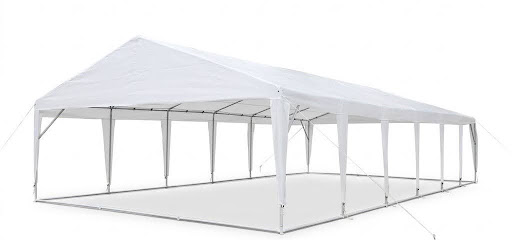
The roof is the part that wants to fly
Anyone hosting an outdoor wedding, birthday or club day in Australia soon learns that the weather decides how the day goes, and a party tent is usually the first thing the wind tests. For a structure like TMG Industrial’s heavy-duty party tent, the main risk is rarely that it tips over sideways. It is that wind gets underneath the roof and lifts it, and understanding why makes anchoring far easier to get right.
Wind under an open side
A tent with open sides lets air flow underneath the roof. When a gust passes over the top, it speeds up around the curve, and faster-moving air presses down less than the slower air trapped below. The difference pushes the roof upward, much like the lift on a kite or a wing. Because the steel frame is joined together, the whole party tent tends to rise as a unit rather than one panel at a time.
That is why the ground connection matters more than the frame. Each leg and corner needs to be held down, not just stood up straight, and the anchors on the windward side carry the most load when a gust arrives. Checking them again once guests have arrived, and after any strong gust, catches pegs that have started to work loose.
Choosing anchors for the surface
Lawns and paddocks take pegs and ground anchors well. Hard surfaces such as pavers, concrete or bitumen do not, and a marquee tent set up on a driveway or courtyard needs weight instead. Common options include:
- Steel stakes and cable anchors on turf
- Water barrels strapped to each leg
- Concrete blocks or purpose-made leg weights
- Tie-downs to fixed, solid structures
The heavier and closer to the ground the weight, the better it resists lift. Loose sandbags stacked on a foot plate do much less than weight strapped securely to the leg, because a strong gust can lift the leg and let the bags slide off before anyone notices.
A tight roof sheds rain
Spring in many parts of Australia brings sudden afternoon storms. If the roof fabric sags between trusses, rain collects in pockets, and the weight of pooled water can stretch the cover or bend a purlin. Tensioning the fabric evenly during setup, and checking it again after rain, keeps water running off the edges.
Planning the space inside
A 6×12 marquee covers 72 square metres. Tables, a dance floor, a serving area and clear walkways all compete for that space, so sketching the layout before hiring furniture avoids crowding. Keeping heaters, barbecues and candles well away from the fabric is essential, since the cover is not designed to handle open flames or high heat.
Packing down a party tent properly
Polyethylene covers shed water well, but folding one away while it is still damp traps moisture and can lead to mildew and staining. Letting the cover dry fully, even if that means packing down the next day, protects it for the following event.
A party marquee that is anchored for its surface, kept taut and dried before storage will be ready for many more gatherings. The TMG Industrial 6 by 12 metre model uses a 370 gsm UV-protected polyethylene cover over a powder-coated steel frame, with cable anchors at the corners and stakes along the sides, which suits lawn setups for gatherings of up to about 100 people.