


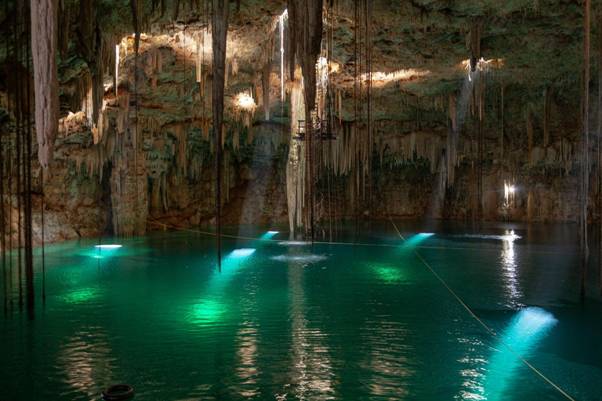
If you’ve been researching things to do in the Dominican Republic, you’ve probably come across the term and wondered: what is a cenote in Punta Cana? Technically, a cenote is a natural sinkhole created when limestone bedrock collapses, exposing the pristine groundwater underneath.
In the Punta Cana region, these freshwater pools offer a refreshing escape from the Caribbean heat, hidden away by lush vegetation and towering rock walls. Unlike the crowded beaches, these cenotes provide a serene, almost otherworldly setting where you can swim in crystal-clear water naturally filtered through layers of stone.
How Cenotes Form in the Dominican Republic
The origin of caves, cavities, sinkholes, depressions, and cenotes follows a sequence of steps in a process called karstification, which consists of the combination of at least three mechanisms: dissolution, collapse, and recrystallization of limestone.
Rainwater, which is slightly acidic due to carbon dioxide absorption, seeps through cracks in the porous limestone bedrock over thousands of years. This slow chemical process dissolves the rock from within, creating underground cave systems and voids filled with groundwater, resulting in formations such as the Punta Cana cenote.
Eventually, the roof of these underground chambers becomes too weak to support its own weight and collapses, exposing the freshwater pool below. The water in cenotes comes from rainwater filtration through the porous limestone. This natural filtering process is what gives cenotes their signature clarity—the water is often so transparent that you can see every detail of the rocky bottom, even at significant depths.
What Makes Punta Cana Cenotes Different from Those in Mexico
While Mexico’s Yucatán Peninsula is famous for having thousands of cenotes, the Dominican Republic offers a more intimate and less commercialized experience. In Mexico, the Yucatán Peninsula alone has an estimated 10,000 cenotes, water-filled sinkholes naturally formed by the collapse of limestone. In contrast, Punta Cana’s cenotes are fewer in number but equally stunning, often tucked within private eco-parks or nature reserves that limit visitor numbers and prioritize conservation.
The cenote experience in Cap Cana tends to be more structured and family-friendly, with well-maintained trails, safety features like wooden platforms and ladders, and staff present to ensure a safe visit. The depth also varies—while some Mexican cenotes plunge over 40 meters deep, many cenotes in the Punta Cana area are shallower and more accessible for casual swimmers.
Another key difference is the surrounding environment. Cenotes in Punta Cana are often integrated into adventure parks that combine multiple activities—zip lines, cultural trails, wildlife encounters—making them part of a broader day of exploration rather than a standalone destination.
What to Expect When Visiting a Cenote
Water Clarity and Temperature
One of the most striking features of any natural sinkhole in Punta Cana is the water quality. Because the water is fed by underground springs and filtered through layers of limestone, it’s incredibly clear and free of sediment.
The stunning clarity and cool temperature of cenote water comes from rainwater that has been meticulously filtered through dozens of meters of limestone rock, which acts as a natural purification filter, stripping away sediment and impurities.
Depth and Swimming Conditions
Depth varies depending on the specific cenote. Most cenotes reach about 12 feet (approximately 3.6 meters) at their deepest point. This makes them accessible for most visitors, including families with children. You don’t need to be an advanced swimmer to enjoy the experience—many cenotes have shallow areas near the edges and deeper sections in the center, allowing you to choose your comfort level.
Life jackets are often available or recommended, especially for those who aren’t confident swimmers. The water is calm, with no currents or waves, so the experience feels safe and controlled.
Lighting and Surroundings
The atmosphere inside a cenote depends on its type. Open cenotes are exposed to the sky, allowing full sunlight to illuminate the water and create vibrant turquoise hues. Semi-open cenotes have partial roof coverage, which creates dramatic light beams filtering through openings in the rock—perfect for photography. Cave cenotes are more enclosed, offering a cooler, darker, and quieter environment.
Most open cenotes reach about 3 meters deep and are surrounded by towering limestone walls covered in green moss and roots. The natural setting is lush and tropical, with native plants, hanging vines, and the sounds of birds and insects creating an immersive jungle experience.
Trail Access and Facilities
Most cenotes in the Punta Cana area require a short walk along a maintained trail. The walk is typically about 15 minutes but well worth it. The paths are usually well-marked and include features like hanging bridges, small waterfalls, and interpretive signs about the local ecosystem. Facilities such as changing rooms, lockers, and showers are typically available at the entrance or nearby visitor center.
Do You Need Prior Swimming Experience or Special Gear
You don’t need to be an experienced swimmer to enjoy swimming in a cenote in the Dominican Republic. The calm, freshwater environment is beginner-friendly, and many cenotes have shallow areas where you can stand comfortably. If you’re not confident in the water, life jackets are typically provided or available for rent.
As for gear, most visitors only need a swimsuit, towel, and water shoes or sandals with good grip—the rocks around cenotes can be slippery. Snorkeling gear is optional but can enhance the experience, allowing you to observe underwater rock formations and small fish. Waterproof cameras or phone cases are highly recommended, as the clarity of the water makes for stunning photos.
Sunscreen should be biodegradable to protect the delicate ecosystem. Some cenotes prohibit regular sunscreen because the chemicals can harm the water quality and aquatic life. Insect repellent is also useful, especially if you’re walking through forested trails to reach the cenote.
Why a Cenote Visit is Worth Adding to Your Itinerary
A cenote offers something fundamentally different from a beach day. It’s a chance to connect with the geological history of the region, experience the cooling embrace of freshwater, and explore an environment that feels untouched and timeless. The combination of natural beauty, accessibility, and the sense of discovery makes it a highlight for many travelers.
For families, cenotes provide a safe and engaging activity that appeals to all ages. For couples, the serene atmosphere and dramatic scenery create a romantic backdrop. For solo travelers or adventure seekers, it’s an opportunity to step off the typical tourist path and experience the Dominican Republic’s natural side.
In short, if you are looking for the ultimate hidden gem, what is a cenote in Punta Cana but a perfect escape into nature? It is more than just a swim; it’s a chance to experience the island’s raw beauty, geological history, and crystal-clear waters all in one trip. Whether you’re seeking adventure or tranquility, adding a cenote to your itinerary ensures your Dominican Republic vacation is truly unforgettable.