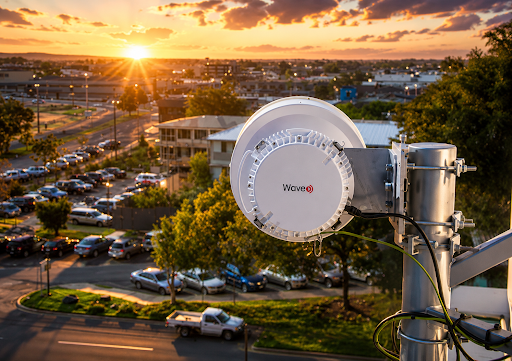
In the realm of telecommunications, a wireless microwave link is a critical technology, especially in the context of modern connectivity solutions. As society increasingly leans towards seamless communication, microwave links present themselves as invaluable for both commercial and private applications by efficiently bridging digital communications across vast distances.
What is a Wireless Microwave Link?
A wireless microwave link refers to a communication system that uses microwaves to transmit data between two points. Typically, this system operates over short to medium ranges, utilizing various frequency bands in the microwave spectrum. It serves as an effective solution for point-to-point communications in areas where cable installations may be impractical or cost-prohibitive.
How Does Microwave Technology Work?
The fundamental operation of microwave technology is based on the transmission of radio waves at microwave frequencies. These waves are directed through highly focused antennas from a source to a destination point. This directional transmission allows for the efficient delivery of information, mainly because the waves can travel through space without requiring a physical medium.
Types of Microwave Links
There are several types of microwave links used in modern communication infrastructure. The most common are terrestrial microwave links, satellite microwave links, and mobile backhaul links. Each type serves different purposes and is used in various environments according to the unique requirements of the application.
Advantages of Using Wireless Microwave Links
Wireless microwave links offer numerous benefits that make them an attractive choice for telecommunications. They provide high-capacity data transfer, are relatively quick to deploy compared to traditional cabling methods, and are cost-effective over large areas. Additionally, they are resilient to environmental factors such as heavy weather conditions, making them reliable for continuous operations.
Applications of Microwave Technology
Microwave technology finds its applications in numerous fields beyond basic communication. It is crucial in mobile network backhauling, where it connects various base stations to the core network, enhancing the overall network performance. Furthermore, it is extensively used in broadcasting and emergency services to ensure swift and effective communication channels.
Challenges and Limitations
While wireless microwave links are highly beneficial, there are certain limitations to consider. One of the primary challenges includes the necessity for line-of-sight between transceiver units. Any obstructions in the transmission path, such as buildings or trees, can significantly degrade signal quality. Spectrum management is also a critical consideration, given the finite frequency allocations.
Regulatory Considerations
Deploying a wireless microwave link often requires adherence to specific regulatory frameworks. Frequency bands used in microwave communications are typically allocated and controlled by national regulatory bodies to avoid interference and ensure efficient spectrum use. Hence, operators must comply with local and international standards when designing and implementing these systems.
Future of Wireless Microwave Link Technology
The future of wireless microwave link technology looks promising, with constant advancements in equipment and methodologies. Innovations such as higher frequency band utilisation and more sophisticated modulation techniques are paving the way for even faster and more reliable wireless connections. Such developments are particularly significant as the demand for robust connectivity solutions continues to grow with emerging technologies like 5G.
Conclusion
In sum, the use of a wireless microwave link is indispensable for modern telecommunications. It provides a viable solution for a multitude of connectivity challenges, particularly in regions where traditional infrastructure may be lacking. As technology continues to advance, the efficiency and capability of microwave systems will likely expand, further solidifying their role in global communications infrastructure.