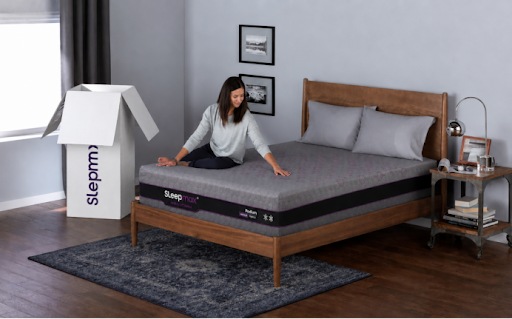
To most people buying a mattress in a box is a modern convenience. In fact, it’s a logistical revolution that has reshaped our ideas about quality. What started as a technique to compress memory foam and lower shipping costs has now evolved into a complete option to traditional mattress stores. But convenience is not the only reason that about 45% of mattress sales in the United States now happen online.
This article have a explore what is the best mattress in a box.
What Is a Mattress in a Box?
A mattress in a box is a foam or hybrid mattress that is compressed, vacuum-sealed, and rolled into a compact cylinder. It is typically packaged in a cardboard box. Once unpacked, it expands to its original size within a few hours. This technology has been around since the mid-2000s—but it was e-commerce that truly drove the explosive growth of this category.
Most mattress-in-a-box brands provide standard sizes (from twin to California king) with free shipping, and their compact packaging makes it possible to bring the mattress straight from the door into your home. If you’ve ever had to lug a king-size mattress up a flight of stairs, you’ll realize this is more significant than you might imagine.
How It Differs From a Traditional Mattress
The old model has a long chain: the manufacturer sells to the distributor who sells to the retailer, and then retailer marks up the product 40–100% to cover the costs of rent for the showroom and sales commissions. A mattress in a box eliminates most of that chain. You’re buying closer to the source.
| Factor | Mattress in a Box | Traditional Mattress |
| Delivery | Self-service, compact box | White-glove delivery, two workers |
| Price (all-foam, comparable specs) | $400 – $1,000 | $1,200 – $2,000 |
| Price (hybrid, comparable specs) | $600 – $1,200 | $1,500 – $2,500 |
| Price difference | 50–67% cheaper | — |
| Peak performance period | 2–3 years | 3–4 years |
| Average lifespan | 6–8 years | 7–10 years |
| Return policy | 100-night trial, 0–$99 fee | Often non-refundable |
| Setup effort | Unbox and wait | Delivery team sets up |
| Price per year of use | $75–$150/year | $150–$300/year |
| Coil system | Simpler pocketed coil | Higher-gauge, hand-tied, or offset |
| Comfort layers | Can match or exceed | Often thicker quilted pillow tops |
Conventional mattresses generally have more intricate zoned construction—fatter quilted pillow tops, separate lumbar support, and edge reinforcement that retains its form for 10 years. Still, a well-made “box spring” mattress can provide comfort layers that live up to those standards. The spring system is the major difference. Some “box spring” companies employ simpler independent pocketed spring systems, while traditional manufacturers may utilize springs with a higher wire gauge or nested spring arrangements. This difference is imperceptible to the majority of sleepers.
Keep in mind that the foam layers in many in-a-box mattresses are compressed not just once, but twice – before they leave the factory, and while they are being shipped. Repetitive compression may accelerate softening slightly on surface layers. They are generally 2-3 years versus 3-4 years of peak performance. Given the difference in cost, that tradeoff makes sense to most buyers.
What to Watch For When Buying Online
Price
There is a significant price difference of the foam mattress in a box on different online-store. The mattresses that sell on Amazon cost about $300.
You should be aware that the price on advertisement is usually not the real price. Many brands have always-on “sales,” where the $1,000 mattress is perpetually “on sale” for $600. That’s not a sale, that’s the price. Compare the true checkout price between brands. A higher-priced mattress isn’t always better.
Sleep Trial and Return Policy
Many provide 100-night trials, with some brands even offering a 365 night trial. But the fine print is more important than the headline. Do they give you a full refund or charge a restocking fee? Do they send someone to take it, or do you donate it and send proof? The latter is inconvenient, and may involve a charity that actually doesn’t want your used mattress. The top brands take care of the entire return process — they dispatch a team to retrieve your mattress and issue a refund within a week.
Materials and Construction
Mattresses in a box are generally classified as two types. Memory foam mattress and hybrid mattress. The hybrid mattress is more supportive. The amount of foam matters just as much in both types of mattresses.
As a rule of thumb, a 1.8 pcf or higher density polyurethane foam core is considered the minimal standard for support. A 1.5 pcf base will indent in 2-3 years. For the comfort layer, 3–4 pcf is the sweet spot.
Certifications and Transparency
Watch for certification from CertiPUR-US (no ozone depleters, heavy metals or toxic flame retardants). For latex, the gold standards are Oeko-Tex Standard 100 or GOLS. If a brand doesn’t tell you foam density or ILD numbers, it’s either hiding something or has never heard the question. Either way, it’s a red flag.
Where to Find Authoritative Ratings
Review sites for mattresses such as Sleepopolis and Mattress Clarity are very affiliate laden. The most objective consumer rating is Consumer Reports, who do real pressure-mapping and durability testing. For professional evaluations you preview PubMed’s. Trust data, not narrative.
Why the “Best” Mattress Is a Personal Question, Not a Universal Answer
There is no best mattress in a box. There is only the best mattress for you.
Every “top 10” teaser is just compiled by looking at a generic “average sleeper” — someone who weighs 160 pounds, sleeps on their back, and has no chronic pain. That person does not exist. A firmer mattress made with higher-density foam or a hybrid is best for heavier sleepers (over 230 pounds). Soft mattresses are what lighter sleepers (under 130 pounds) think are too firm for them, and for good reason: they usually need a softer top layer. Side sleepers require deep pressure relief at the shoulders and hips. Lumbar support is essential for back sleepers, and it needs to help keep the hips from sinking. Stomach sleepers need a firm, flat surface. If you are a warm sleeper, stay away from dense traditional memory foam — opt for open-cell or gel-infused foams, or a hybrid.
Sleep disorders do too. Acid reflux does well with a slight incline. A zoned support system is more effective for people with chronic back pain than a flat surface. And the temperature of the room affects how foam feels — a memory foam mattress in a 65-degree room will be more firm than the same mattress in a 75-degree room.
Why Factory-Direct Matters More Than the Brand Name
Here’s what the industry fails to tell you: Most mattress brands aren’t actually mattress makers. They’re marketing companies. A handful of factories in the U.S., China, and Southeast Asia make the overwhelming majority of mattresses that are sold under hundreds of different brand names. The same factory can make a high-end brand with a glossy website and celebrity spokesperson, and a no-name brand on Amazon. The difference is the mattress, not the markup.
When you purchase from a company that actually owns the factory, you’re buying materials and construction, not the brand story. Traditional retail markup is 100-200%, direct-to-consumer “brands” (OEM) markup is 50-100%, and factory-direct markup is less than 40%. If a brand can’t tell you the density of the foam in the base layer, they are not making your mattress.
Take Sleepmax for example—a mattress brand that owns its original factory already makes that different from the vast majority of bed-in-a-box brands. Their hybrid consists of a 6-inch base of individually pocketed coils, a 2-inch transition layer of high-density poly foam (2,5 pcf) a 3-inch comfort layer of viscoelastic gel foam (3,5 pcf) — all CertiPUR-US certified, with zoned coils and a 2-inch foam encasement for edge support. Total thickness: 11 inches. The queen size sells for less than $800. That same spec sheet from a branded retailer? From $1,200 minimum, sometimes $1,800 once you add on marketing overhead. They are often made with the same materials. The warranty is 10 years, the trial is 100 nights full refund and free pick-up. But the real benefit wasn’t the price tag—it’s that, when the company manufactures it, a warranty claim doesn’t get bounced between a brand and a third-party factory.
The idea is that factory-direct building allows you to have transparency and know exactly what you’re paying for, and the quality of materials compete with brands that are twice as much.
Practical Takeaway
Buying a mattress in a box has simple requirements: evaluate it at home for more than a 100 nights, free return, recorded foam densities that can be confirmed (1.8+ pcf for base, 3–4 pcf for comfort), body type- and sleeping position-matched construction, and a cost reflective of materials rather than company narrative. With the exception of extremely hot sleepers and sleepers who require a lightweight mattress, most people will benefit from a hybrid with a pocketed coil support layer topped with at least 3 inches of comfort foam, rather than an all-foam mattress to get the best in support, breathability, and longevity. You can usually find the same mattress for 40 to 60% less if you find a factory-direct model that meets those specifications.
A mattress is not a lifestyle product. It’s gear. The only question is: Does it work — for your body, for your sleep, and for your budget? Don’t be derailed by marketing messages, celebrity endorsements, or social media. Check the spec sheet, look at the foam densities, investigate the trial policies, and determine the cost per year of ownership. That’s how you make an intelligent decision instead of an emotional decision.