


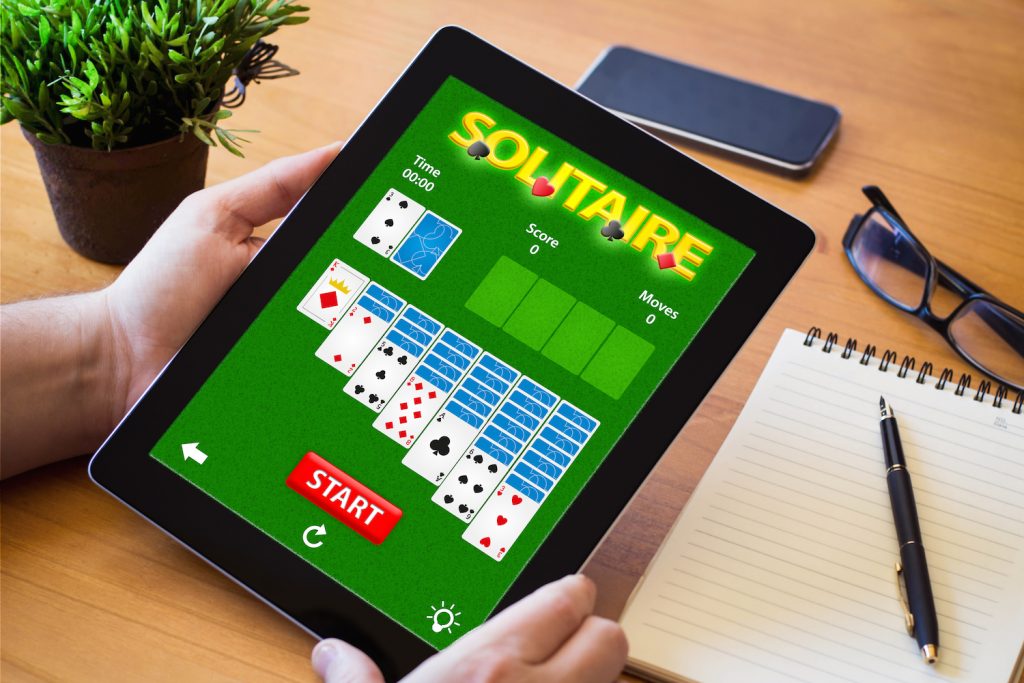
Simple games can create surprisingly engaging mental challenges when every decision affects what happens next. Solitaire is a good example because its straightforward structure requires players to observe available options, consider consequences, and maintain attention throughout a session. Spider Solitaire, available through Solitaire.net, adds further depth by requiring players to organize multiple sequences while adapting to changing possibilities.
What Is Solitaire?
Solitaire is a family of single-player games built around arranging and moving cards according to specific rules. Classic variations such as Klondike, Freecell, and Spider Solitaire differ in their layouts and mechanics, but each requires players to evaluate the current position before deciding what to do next.
Spider Solitaire is particularly structured around managing several tableau columns at once. The standard version uses 104 cards arranged across 10 columns, with only some cards initially visible. Players gradually uncover hidden cards, build descending sequences, and ultimately arrange complete sequences from King through Ace.
The combination of visible information and hidden possibilities gives Solitaire a natural decision-making element. A move that looks useful immediately may create fewer options later, encouraging players to consider both the current position and what it could lead to.
Key Benefits of Solitaire for Focus and Strategy
One reason Solitaire remains engaging is that the game requires sustained attention without demanding a complicated rule set. Players can understand the basic objective relatively quickly, while the arrangement of the tableau creates different situations that require different responses.
Focus becomes particularly important when several possible moves are available. In Spider Solitaire, moving one sequence can expose a previously hidden card, create an empty column, or change which groups can be reorganized. Keeping track of these changes requires players to pay attention to the evolving layout rather than focusing on a single move.
Solitaire can also provide practice in evaluating consequences. Players naturally begin asking whether a move will create more useful options, restrict future movement, or reveal information that could change the next decision. This makes the game less about simply completing a sequence and more about managing a changing set of possibilities.
How Solitaire Encourages Strategic Thinking
Strategic thinking in Solitaire develops from the relationship between individual moves. Each decision changes the position of the game, meaning players cannot always judge a move independently from what comes afterward.
Spider Solitaire illustrates this particularly well. Players can move cards onto others in descending order, while complete same-suit sequences can eventually be removed from the tableau. Building useful sequences therefore involves more than finding an immediately legal move; players must also consider how the resulting arrangement affects future movement.
Another important element is the use of empty columns. An empty tableau column can provide valuable space for rearranging cards, but creating one does not automatically solve the position. Players still need to determine how that space can be used effectively and whether moving a sequence into it will reveal better opportunities.
Different difficulty levels can also change the strategic demands of Spider Solitaire. One-suit play presents a more accessible structure, while two-suit and four-suit versions introduce additional constraints that make organizing sequences more demanding.
Solitaire as a Focused Digital Activity
Digital Solitaire offers a structured activity that can be started without learning a complex control system. A player can concentrate on the layout, examine available moves, and proceed at an individual pace rather than responding to an opponent or a fixed timer.
That structure can make Solitaire suitable for short periods of focused play. A single position provides a contained problem with a clear objective, allowing players to concentrate on the immediate task without needing to manage a larger multiplayer environment.
The visual organization of digital Solitaire can also make changes easy to follow. When a card is moved, a sequence is built, or a hidden card becomes visible, the player receives immediate visual information about how the position has changed. This keeps attention centered on the evolving problem.
For players interested in trying a more sequence-oriented version of the game, https://solitaire.net/spider-solitaire provides an online version that can be played directly in a browser.
Use Cases and Applications of Solitaire
Solitaire is often associated with casual entertainment, but its structure can support several types of focused activity. Players may use a short session as a way to engage with a structured puzzle, practice evaluating alternatives, or simply enjoy an activity that requires attention without complicated preparation.
For beginners, Solitaire provides an approachable introduction to rule-based decision-making. The objective is clear, but completing a game successfully requires players to recognize patterns, organize information, and adjust their choices as the position changes.
More experienced players can approach the same game differently. Instead of concentrating only on whether a move is legal, they may examine how efficiently the available space is being used, when hidden information should be revealed, and how different sequences can be reorganized.
This progression gives Solitaire an interesting balance between simplicity and depth. The basic rules remain accessible, while the number of possible positions creates room for players to develop more deliberate approaches over time.
Solitaire.net and Other Solitaire Experiences
Solitaire exists across many digital platforms, from dedicated websites to desktop programs and mobile applications. The main difference between these experiences often comes down to presentation, accessibility, game selection, and how easily players can begin a session.
A browser-based option can be convenient because it does not require players to install a separate application before starting. For someone specifically looking for Spider Solitaire, an online version can provide direct access to the familiar format while keeping the focus on the gameplay itself.
The broader Solitaire family also offers different types of challenges. Klondike emphasizes one style of tableau management, Freecell provides greater visibility of the cards from the beginning, and Spider Solitaire places greater emphasis on constructing and reorganizing sequences.
These differences make the variations useful for different preferences. A player who enjoys working with visible information may approach Freecell differently from someone who prefers the gradual discovery and sequence management found in Spider Solitaire.
Why Simple Games Can Require Complex Decisions
The appeal of Solitaire comes partly from the contrast between its simple presentation and the number of decisions that can emerge from a single position. Players do not need dozens of rules to create a challenging situation; a limited set of movement rules can produce many possible arrangements.
In Spider Solitaire, for example, a single move can affect several parts of the tableau. It may uncover a hidden card, change the available sequence, create or remove usable space, or influence whether a complete sequence can eventually be formed.
This creates a useful distinction between understanding rules and applying them effectively. Knowing what moves are permitted is only the beginning. Players must also recognize which available move makes sense within the particular position they are facing.
That is why Solitaire can remain interesting even after the basic mechanics become familiar. The rules may stay consistent, but the arrangement of the game continually changes the decisions that need to be made.
Frequently Asked Questions
Can Solitaire help with focus?
Solitaire requires players to maintain attention on a changing layout and evaluate available moves. A typical Spider Solitaire position can involve multiple columns and hidden cards, giving players several details to monitor at once.
Why does Spider Solitaire require strategy?
Spider Solitaire requires players to organize descending sequences while managing limited tableau space. The standard version uses 10 tableau columns and 104 cards, creating many possible arrangements as the game develops.
Is Solitaire difficult to learn?
The basic rules of Solitaire are generally straightforward, but different variations can create very different levels of challenge. Spider Solitaire becomes more demanding when players move from one-suit play to two-suit or four-suit formats.
What makes Spider Solitaire different from regular Solitaire?
Spider Solitaire focuses heavily on building and reorganizing sequences across multiple tableau columns. Unlike some other Solitaire variations, standard Spider Solitaire uses two decks, giving the game a 104-card structure.
Can Solitaire be played in short sessions?
Yes. A Solitaire game can be started and played without requiring a multiplayer commitment or lengthy setup. A browser-based version such as Spider Solitaire allows players to focus on a single puzzle whenever they have time for a session.
Does Solitaire involve decision-making?
Solitaire involves continuous decision-making because players must choose between available legal moves. In Spider Solitaire, those choices can determine which cards become accessible and how much usable space remains in the tableau.
Why do people continue playing simple Solitaire games?
The rules of Solitaire are easy to understand, but individual layouts create different decision-making situations. That combination allows the basic activity to remain familiar while still presenting new arrangements and challenges.
Is Spider Solitaire suitable for beginners?
One-suit Spider Solitaire is generally easier to approach than two-suit or four-suit versions because there are fewer sequence constraints to manage. Players can become familiar with the basic movement system before exploring more complex variations.