

eFoiling is a low-risk water sport for beginners who wear a helmet and an impact vest, ride in deep, uncrowded water and keep their speed down during the first sessions. Most injuries come from two sources: falling onto the foil, and contact with the drive after a fall. Both can be managed with the right equipment and a few fixed habits.
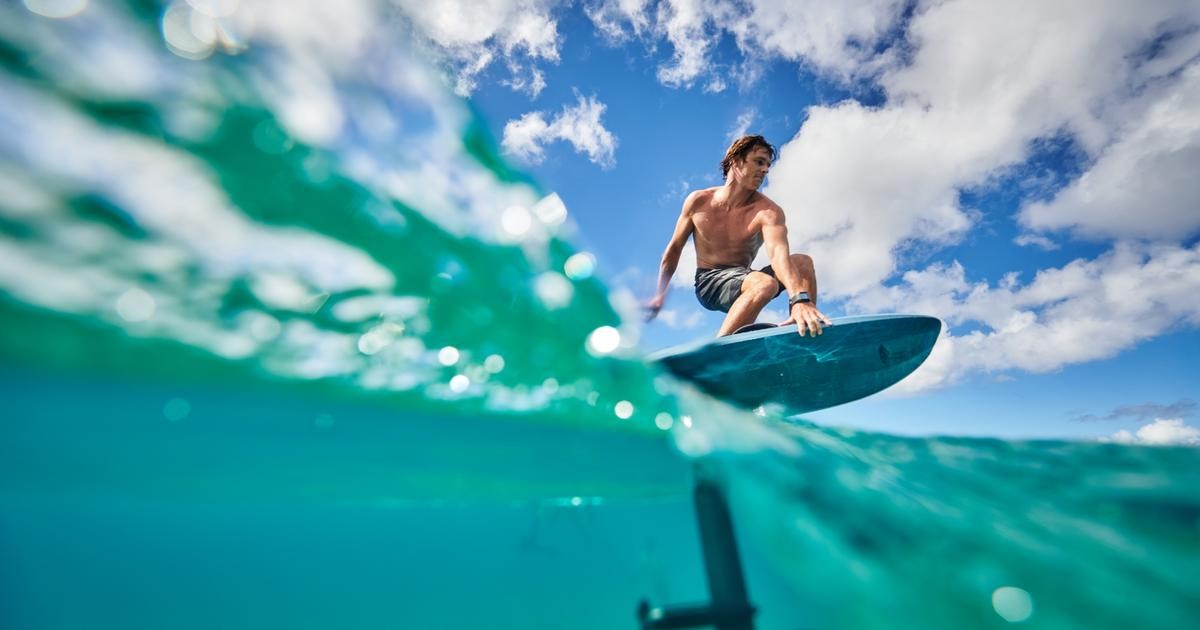
An eFoil is a board with an electric motor and a hydrofoil wing mounted on a mast below the waterline. At speed, the wing lifts the board clear of the surface, and the rider controls thrust with a handheld remote. That combination sets the sport apart from surfing or kitesurfing: there is a motor, a rigid wing sits under the rider’s feet, and sessions often take place alone and some distance from shore.
Key takeaways
- A helmet and a buoyancy or impact vest belong on every ride, including short ones.
- The water should be at least about 1.5 metres deep across the whole riding area.
- The three main risks are foil contact, drive contact, and being stranded far from shore or in cold water.
- Beginners stay at low speed and close to the surface for the first sessions.
- The drive type is the main safety difference between boards.
How safe is eFoiling compared with other water sports?
eFoiling is comparable in risk to other board sports, with one difference: the fall itself is rarely the problem, the hardware under the board is. A beginner falls at moderate speed into water, which is forgiving. The mast, the wing and the drive are not.
Reliable injury statistics for eFoils do not exist yet. Researchers who review water sports injuries describe hydrofoil disciplines as less studied than surfing or sailing, and point to patterns linked to the equipment and to falls at speed. Anyone quoting a precise injury rate for eFoiling is estimating.
General boating data is clearer, and it applies to anyone on a motorised board. In the US Coast Guard’s 2024 statistics, drowning accounted for about three-quarters of recreational boating deaths, and 87% of the drowning victims whose life jacket status was known were not wearing one. The figures come from the Coast Guard’s annual recreational boating report. The conclusion for eFoil riders is simple: buoyancy on the body matters more than any other single measure.
What are the main risks of eFoiling?
The main risks of eFoiling are contact with the foil, contact with the drive, shallow water, collisions, stranding and battery handling. Each has a specific cause and a specific countermeasure.
| Risk | How it happens | How to reduce it |
| Foil and mast contact | The rider falls onto or next to the wing | Fall away from the board, release the throttle, wear a helmet and vest |
| Drive contact | Arms or legs come near an exposed propeller after a fall | Shielded drive, automatic throttle cut-off, no restart near swimmers |
| Shallow water | The mast strikes the bottom and the board stops abruptly | Minimum depth of about 1.5 metres, scout the area first |
| Collisions | Boats, swimmers or other riders cross the path | Wide safety distance, right-of-way rules |
| Stranding and cold water | The battery runs empty far from shore | Stay within swimming distance, watch the battery level, wear a wetsuit |
| Battery handling | A damaged pack is charged or used | Inspect before charging, stop using a dropped battery |
The typical beginner fall is a breach. The wing rises too high, breaks the surface and loses lift, and the board drops back onto the water. It usually happens when a rider stands too far back or accelerates too quickly. Staying low over the board and shifting weight forward keeps the wing under water. Riding only a few centimetres above the surface at first makes any drop short and harmless.
What safety equipment do beginners need?
Beginners need five items in addition to the board: a helmet, a vest, a wetsuit, a secured remote and a way to call for help.
- Helmet. A water sports helmet protects against contact with the board, mast or wing during a fall.
- Impact or buoyancy vest. It keeps the rider afloat after a fall and cushions the ribs. Some countries require a certified life jacket on motorised craft.
- Wetsuit. It prevents cooling during long periods in the water and protects the skin from scrapes.
- Remote with wrist leash. The motor stops when the trigger is released, and the leash keeps the remote within reach.
- Phone in a waterproof pouch or a whistle. Either one makes it possible to call for help away from shore.
Water temperature deserves more attention than air temperature. The RNLI sets the threshold for cold water shock at 15°C and below and advises floating for the first minute rather than swimming immediately. Its guidance on cold water shock is worth reading before the first session on a lake in spring or autumn.
The board itself is part of the safety equipment. Large boards with high volume are stable at low speed and forgive mistakes. The drive differs most between models. Many eFoils use a propeller on the mast, with or without a guard. On an efoil board by Aerofoils, for example, the fully shielded jet drive keeps the impeller inside the housing rather than exposed in the water. This design difference matters most to beginners, families and schools, because they spend the most time in the water next to the board.
Which safety rules matter most on the water?
Six rules cover most situations a beginner will meet.
- Check the spot before launching. Confirm depth, boat traffic, swimmers and obstacles, and look at the forecast for wind and storms.
- Keep a wide distance. Stay well clear of swimmers, boats, buoys and the shoreline. A fallen rider and a drifting board both need room.
- Stay within swimming distance of shore. If the board fails, the rider has to get back without it.
- Plan the return. Ride time depends on rider weight, speed, wing size, wind and current. Turning back with a clear battery reserve avoids a long paddle.
- Do not ride alone at first. A second person on shore or on the water can help or raise the alarm. Experienced riders tell someone where they are going and when they expect to return.
- Know the local rules. Registration, licences, speed limits and restricted zones differ by country and by body of water.
How should beginners start safely?
Beginners start safely by progressing in stages at low speed, ideally with an instructor. The usual sequence is lying on the board, then kneeling, then standing with the board still on the surface, and only then the first short flights.
Conditions matter as much as technique. Flat water, light wind and little traffic make the first sessions predictable. A large board with a large wing lifts at low speed, so the first flights happen slowly.
Falling is part of learning, and it can be practised:
- Release the throttle the moment balance is lost.
- Fall to the side or backwards, away from the board and the wing.
- Cover the head with the arms when surfacing, because the board may be close.
- Approach the board from the side or the nose, never from the rear where the drive sits.
A lesson shortens this process and reduces the number of falls. Many schools also provide a helmet and vest, so equipment can be tried before it is bought.
Frequently asked questions
Is eFoiling dangerous for beginners?
eFoiling is not dangerous for beginners who wear protective gear, ride in deep and open water and stay at low speed. The realistic risks are bruises and cuts from contact with the foil or the drive. A lesson and a stable beginner board reduce both.
Do you need a helmet and life jacket for eFoiling?
A helmet and a buoyancy or impact vest are needed for eFoiling at every skill level. Manufacturers specify both in their safety instructions, and several countries require a life jacket by law on motorised watercraft.
How deep does the water need to be for an eFoil?
The water needs to be at least about 1.5 metres deep for an eFoil, across the whole riding area and not only at the launch point. Manufacturers typically specify this figure because the mast and wing reach well below the board.
Can you eFoil alone?
Experienced riders can eFoil alone if they stay within swimming distance of shore and tell someone their plan. Beginners should ride with a second person nearby until falls, restarts and the return to shore are routine.
Conclusion
Safety in eFoiling is decided before the board touches the water. Protective gear, a deep and quiet spot, and a board with a stable shape and a protected drive remove most of the risk. What remains is managed by starting slowly and staying within reach of the shore.