


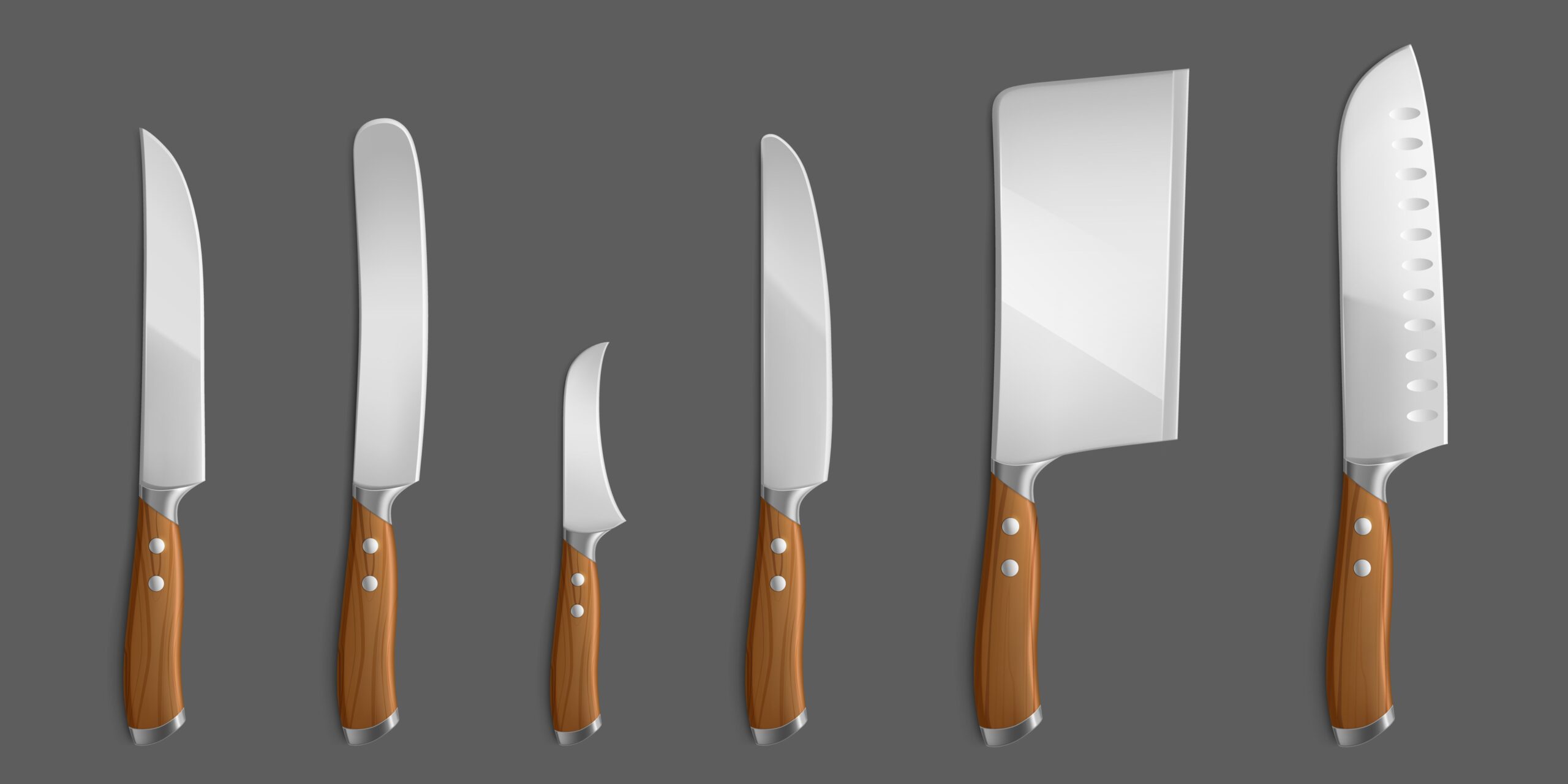
Custom knives give you a tuned tool instead of a generic compromise, matching steel, geometry, and ergonomics to how you actually use a blade.
Many production knives are built to satisfy the average user and an accounting department. A good custom is built for one person and one set of tasks, even if that task is “EDC for 10 years in jeans pocket.” That is why you feel the difference after a week, not just on day one.
A well-built custom handcrafted knives is not a safe-queen. It is a personal tool that records your trips in its scratches, while still cutting like a precise instrument decades later.
How is a handcrafted knife different from a factory knife?
Handcrafted knives differ in fit, heat treatment, geometry, and the maker’s willingness to adjust all of that specifically for you.
Factory knives use fixed grinds, batch heat-treat recipes, and tolerances designed for speed. A custom maker can, for example, thin a hunting blade behind the edge by 0.05–0.1 mm compared with a typical production knife. That small shift often reduces cutting effort in dense game tissue by 15–25% in real use tests.
Choosing a custom also changes the failure profile. Instead of random factory variability, you get a knife whose weaknesses you discussed in advance: more toughness at the cost of edge life, or the reverse. You decide where the compromise lies.
Steel choices and blade geometry
Steel and geometry matter more than any logo; they determine edge life, toughness, and how the knife behaves in real work.
Modern steels like CPM-3V, Magnacut, CPM-S35VN, and Elmax let a maker push hardness and corrosion resistance much further than classic 1095 or 440C, but each has a price. Choosing steel is like choosing a truck engine: torque, fuel use, and service costs never peak at the same time.
Typical choices:
- CPM-3V: very high toughness, great for batoning and prying; edge holding is good but not extreme, and you must wipe it to avoid light staining.
- Magnacut: corrosion resistance similar to marine steels with edge retention close to S35VN; the tradeoff is higher grinding time and more expensive abrasives.
- CPM-S35VN / Elmax: balanced edge life and toughness for EDC and light outdoor use; they cost 20–40% more than simple carbon steels in small-shop quantities.
Geometry multiplies or kills the steel’s potential. Dropping edge thickness from 0.6 mm to 0.3 mm at the same angle can cut cardboard with about 30–35% less effort, measured by force on the cut. The reverse side of that gain is reduced tolerance for lateral abuse. Thinner cuts better; thicker forgives more stupidity. You pick which behavior you want.
Handle ergonomics and materials
A well-designed handle lets you work 30–60 minutes longer before fatigue compared with a pretty but poorly shaped one.
Shape matters more than material. A neutral, slightly oval cross-section with a soft swell behind the index finger spreads pressure and keeps hot spots off your joints. For a full day of camp work, that often means fewer blisters and better control once your hand is wet or cold.
Materials bring their own tradeoffs: stabilized woods and micarta give warmth and grip but gain 5–10% more thickness to avoid cracking; G-10 and carbon fiber allow slimmer profiles but feel harsher in cold. For a five-hour hunt in gloves, a thicker micarta handle usually wins. For jeans-pocket EDC, a thinner G-10 or titanium frame saves 20–30% pocket bulk.
Engineering nuances: what really changes performance
Small engineering choices in heat treatment, grind, and construction shift durability and cutting efficiency far more than collectors’ myths.
1) Heat treatment window
Taking Magnacut from 60 to 63 HRC can extend edge life on cardboard by roughly 40–60% in lab tests. The downside is a narrower margin before microchipping on bone or staples. The maker chooses a hardness band based on your tasks, not a brochure.
2) Differential thinning
A blade thinned a little more near the tip and left stouter near the heel gives you faster slicing in food and cleaner vaping cuts, while still letting you twist lightly near the handle. Think of it like tuning suspension: softer at one end, firmer at the other, so the whole thing feels composed instead of vague.
3) Hidden vs full tang
A full-tang outdoor knife typically survives about 20–30% more prying torque before failure than a slim hidden tang of the same steel. The tradeoff is weight. On long hikes, dropping 40–60 grams with a well-executed hidden tang actually matters.
4) Grind style
Scandi grinds bite wood aggressively but wedge in food. Full flat grinds glide through vegetables and cardboard but chip sooner if you twist hard in a knot. The main compromise: wood control versus general slicing.
How to choose or order your custom knife
Start from tasks, then choose steel, geometry, and ergonomics that solve those tasks, not the other way around.
Use this simple sequence:
1) Define use: EDC, hunting, fishing, camp, kitchen, or a mix with percentages (e.g., 70% hunting, 30% camp).
2) Decide cutting media: flesh, bone, rope, cardboard, plastic, food. The more abrasive the media, the more edge retention matters.
3) Choose steel: match your sharpening skill and environment (wet, salty, cold) to the steel’s corrosion resistance and hardness.
4) Pick geometry: ask the maker for target edge thickness and grind style based on your main media.
5) Specify handle: hand size, glove use, and carry method (sheath, pocket, pack) dictate thickness and material.
6) Agree on maintenance: if you only have a basic stone, avoid ultra-hard “super steels” above ~63 HRC.
This process sounds formal, but in practice it is just a structured conversation with the maker. Like fitting a good pair of boots, you measure, talk about terrain, and only then pick leather and sole.
Practical care and real-world use
Minimal, regular care extends a custom knife’s working life by many years and preserves the maker’s geometry.
Simple habits are enough:
- Wipe the blade after wet or acidic work; light rust can cut edge life by 10–20% over time.
- Strop lightly every few uses to maintain keenness instead of grinding away metal.
- Sharpen on stones that match the steel; for high-vanadium steels, quality diamond or CBN saves 30–50% time.
- Store in a dry place, outside leather sheaths for long-term storage.