

Work comes easily in places that feel quiet, clean, and sharp. Window curtains can help you significantly to set this mood more than most think. The wrong cloth, shade, or drop can make a room seem mixed up or weighed down, even if all else is light. To style drapes for a simple look, it’s about picking parts that help the room rather than fighting for focus. This guide shows how to do that in a hands-on, real way.
Why Minimalist Office Curtains Need a Different Approach?
Minimalist does not mean having less; it means choosing carefully. For office curtains Dubai, this means controlling light and privacy, plus seeming visually light. When curtains are used more for decoration than support, the room falls out of balance.
1. Start With Function Before Appearance
For a minimalist office, curtains should control daylight and soften glare while not dominating the wall. Such functional clarity helps narrow choices of fabric right at the beginning and prevents over-styling later on. Think about what the office wants during the day before getting to color or fabric.
2. Get Fabrics That Feel Clean and Controlled
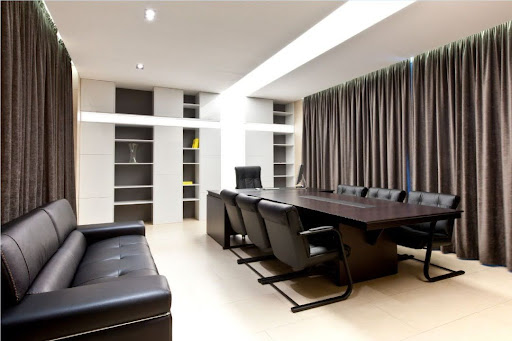
Fabric choice sets the immediate tone. Heavy, textured fabrics are normally out of place in minimalist offices. They add visual weight and break the clean flow of the room. Linen mixes, airy cotton, or sleek synthetic fabrics work better.
They drape well and take to crisp lines easily. If linen is chosen, it should be fine and lightly lined so that it does not seem too casual. The aim is for softness without slackness, and that’s why you should stay away from glossy or too patterned stuff.
3. Choose Within A Limited Color Range
Color matters much more than people give it credit for. Minimalist workspaces love neutrals that throw soft light around the room, such as white, off-white, and light grey, beige, or some muted stone shade are popular choices for a reason.
Where there are sharp breaks in color, the space gets too busy; there should be a small palette. The less separation seen by the eye, the calmer the room feels.
4. Length and Fit Should Look Intentional
If your office window curtains are too short, too long, or uneven, they grab focus for the wrong cause. Workroom curtains should fall just above the ground or meet it in a neat line.
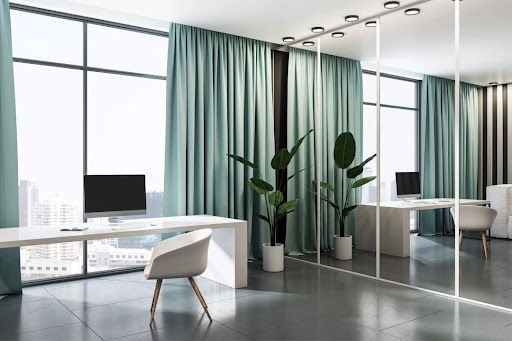
Extra cloth makes lines and shadows. It can look messy in a neat room. Do not pull the drapes tight at once. A small amount of bulk lets the cloth stay easy but not seem weighty. In such rooms, accuracy is much higher since nothing else can distract attention from faults.
5. Choose Simple Hanging Styles
How curtains fall changes both motion and look. In simple spaces, basic systems are best. Wave tracks, straight pleats, or clean eyelet styles keep lines steady and sure.
Do not use decorative rods or oversized rings. Hardware is not meant to decorate the wall. In many cases, ceiling-mounted tracks would work because the window itself would feel taller and cleaner.
6. Layer Only When Necessary
It does not always mean a single layer, but purposeful layering. In combination with sheers, light-filtering panels will adequately control brightness in offices exposed to strong sunlight without fully blocking light. If you are using layers, both should stay within the same color family. Mixing textures or colors too much breaks minimalism, and each curtain layer has to have a role: never for decoration.
7. Avoid Patterns or Keep Them Subtle
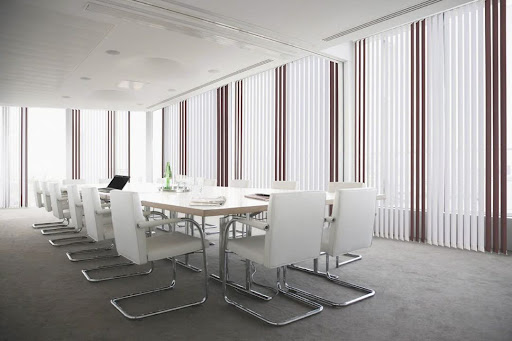
Patterns do read in the minimalist office, but must be extremely subtle. If they are fine textures, such as a very soft linear weave rather than a visible design, they are excellent. But bold prints, strong stripes, or decorative motifs usually overpower the space. Surfaces that look calm at a quick glance belong to minimalist offices. If you notice the curtain pattern immediately, it is likely too much.
8. Maintenance Is Part of the Look
Minimalism relies on neatness and tidiness. Therefore, you should select fabrics that keep their shape and are easy to clean so that your workplace curtains are as good on day thirty as they were on day one. Regular cleaning and simple care make the place feel purposeful rather than forgotten.
9. Don’t Over-Decorate the Window Area
In minimalist spaces, the opening should stay as part of the wall, not becoming or turning into a feature spot. Do not put tiebacks, trims, or decorative add-ons. Let the curtain just work. When this area stays clean, the rest of the space seems more open and focused.
Conclusion!
To style office curtains minimally is to practice clarity of design and style. The right curtains control light and help with focus in your workspace (functional benefits). They disappear into space rather than jump out of it. The fabric quality, color discipline, fit, and hanging systems are much more important than any fashion trend. When office blinds and curtains have been styled properly, you don’t even notice them anymore.