


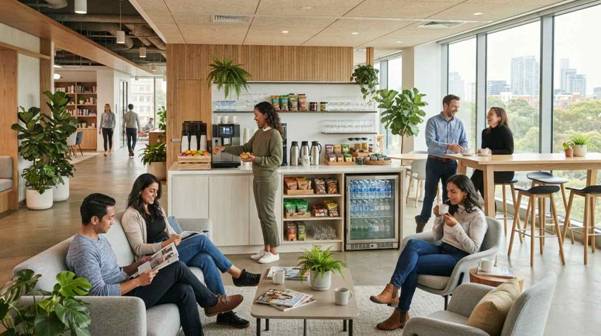
Employee well-being is often discussed in terms of workload, flexible schedules, mental health support, and physical activity. Those areas are important, but the smaller details of the working day also shape how people experience their workplace. What employees have access to during a busy morning, where they can take a short break, and whether basic refreshments are readily available can all influence comfort and satisfaction.
A well-planned workplace refreshment program can be one of those practical details. It does not replace good management, fair compensation, or a healthy company culture, but it can make the everyday working environment more comfortable and convenient. For businesses looking at ways to improve the employee experience without introducing complicated initiatives, the break room can be a useful place to start.
Why Everyday Workplace Amenities Matter
Employees spend a significant portion of their day at work, which means seemingly minor workplace experiences can add up over time. A break room that is poorly stocked, difficult to use, or consistently missing basic supplies can become another source of frustration. By contrast, a clean and accessible space with dependable refreshments gives employees somewhere to pause and reset during the day.
The value is not necessarily in offering expensive or elaborate perks. In many workplaces, employees simply want convenient access to coffee, water, snacks, and light food without having to leave the building. When those basics are handled consistently, employees can spend less time worrying about small practical needs and more time focusing on their work.
This is particularly relevant for workplaces where employees have demanding schedules or limited access to nearby shops and restaurants. Manufacturing facilities, warehouses, medical workplaces, offices, and other locations may have employees working different shifts or taking breaks at different times. A refreshment program can give those employees a more consistent experience regardless of when they are working.
A Better Break Room Can Support Daily Wellbeing
The break room is more than a place where employees grab a drink. It can become a natural transition point between periods of focused work. Someone might step away from a computer to make coffee, have a snack before a meeting, or sit for a few minutes with a colleague.
These short pauses can help break up long periods of work and give employees an opportunity to recharge. The physical environment matters too. A clean, organized, and comfortable break area is more inviting than a cramped space with empty shelves and outdated equipment.
Refreshments can also encourage employees to use the break room instead of treating every break as a reason to leave the workplace. That can be particularly useful when employees have short breaks or when the nearest food and beverage options are several minutes away.
The goal should not be to keep people at their desks for longer. It should be the opposite: create a workplace where taking a reasonable break is easy and where employees have a comfortable place to step away from their immediate responsibilities.
Food Access Can Make the Workday More Convenient
Food and beverage access is one of the most practical parts of employee well-being. Employees may arrive without breakfast, need something between meetings, or simply want a quick snack during the afternoon. Having useful choices available on-site can make those situations easier to manage.
An office pantry service can provide a structured way for employers to offer snacks, beverages, and other everyday refreshments without requiring office managers or employees to handle regular shopping trips. The exact selection can vary depending on the workplace but a well-managed pantry may include a mixture of familiar snacks, healthier options, beverages, and basic break room supplies.
This type of program can also give employees more choice. Not everyone has the same preferences, dietary needs, or schedule. Offering a reasonable variety is often more useful than trying to decide on one type of food that everyone should eat.
For employers, the key is to treat food access as part of the overall workplace experience rather than as a standalone perk. The best program is one that fits the workforce, the available space, the budget, and the way employees actually use the workplace.
Coffee Is Often a Central Part of the Workplace Routine
Coffee has a unique role in many workplaces. It can be part of an employee’s morning routine, a reason for colleagues to step away from their desks, or a practical addition to meetings and shared spaces.
A dependable coffee setup also removes some of the small frustrations associated with managing supplies internally. Employees should not have to discover that the coffee is empty, the cups are gone, or the creamer has disappeared every time they visit the break room.
A good workplace coffee program can provide consistency while giving employees some choice. Traditional coffee, single-cup options, tea, hot chocolate, and other beverages can be considered depending on the size and preferences of the workplace.
The important point is not simply having coffee available. It is creating a reliable setup that employees can use without adding another maintenance responsibility to an already busy office team.
Hydration Deserves Equal Attention
Coffee and snacks often receive the most attention when companies discuss break rooms, but hydration is just as important to the daily workplace experience. Employees need access to drinking water throughout the workday, particularly in physically active workplaces or environments where employees spend long periods away from a desk.
Easy access to water can also make the break room more useful. A well-designed refreshment area can bring together coffee, water, snacks, and other beverages in a way that allows employees to choose what suits them at different points during the day.
Some workplaces may use filtered water systems, bottled water, or other beverage solutions depending on their facilities and employee needs. There is no single setup that works for every company.
The better approach is to look at how employees actually use the workplace and then build a refreshment program around those habits. Practicality should come before novelty.
Variety Can Make Workplace Refreshments More Inclusive
One of the challenges with workplace food programs is that employees rarely have identical preferences. Some people may want healthier snacks, while others prefer traditional treats. Some may avoid certain ingredients, while others may need higher-protein options during long shifts.
A refreshment program does not need to satisfy every possible preference, but it should offer enough variety to avoid making the break room feel designed for only one type of employee. A balanced selection can include fruit, nuts, granola bars, protein-focused snacks, traditional packaged foods, bottled water, sparkling beverages, and other popular choices.
Product selection can also change over time. Employers can pay attention to what employees actually use and adjust the range accordingly. Items that consistently disappear may deserve more space, while products that remain untouched can eventually be replaced.
This creates a more responsive workplace amenity. Instead of choosing refreshments once and leaving the same products in place for years, companies can treat the program as something that develops with their employees.
Refreshment Programs Can Reduce Small Workplace Frictions
Employee well-being is not always about adding another formal initiative. Sometimes it means removing small inconveniences that employees encounter repeatedly.
Consider an employee who needs to leave the building every afternoon to buy a drink. Another employee may spend part of a morning searching for coffee supplies. An office manager may have to spend an hour every week checking snack levels and placing orders.
None of these tasks seems significant on its own. Over weeks and months, however, repeated small inconveniences can consume time and create unnecessary friction.
A managed refreshment program can take some of that responsibility away from employees and internal teams. Instead of making the workplace responsible for every delivery, restocking decision, and equipment issue, businesses can work with a provider that manages the service according to the workplace’s needs.
That allows office managers, HR teams, and facilities staff to focus on their primary responsibilities while employees still have access to everyday refreshments.
The Right Solution Depends on the Workplace
There is no universal refreshment program that every business should adopt. A small professional office may need little more than coffee, water, and a modest snack selection. A large manufacturing facility with several shifts may need a much broader selection of food and beverages.
Workplace size is only one consideration. Employee schedules, available floor space, nearby food options, budget, traffic patterns, and the type of work being performed can all affect the right solution.
A workplace with hundreds of employees may benefit from an open self-service market, while a smaller office may find that traditional vending or a compact pantry setup makes more sense. In another location, a managed coffee and water program could address most of the demand.
The important thing is to avoid choosing a refreshment solution simply because it is popular elsewhere. A program should solve a real problem for the people who will use it.
Convenience Should Not Come at the Expense of Choice
Convenience is one of the strongest reasons companies invest in workplace refreshment programs, but convenience should not mean limited options. Employees appreciate being able to find something that works for them without having to leave the building.
This is where modern workplace refreshment models can be useful. Micro markets, for example, can provide a wider selection of snacks, beverages, and refrigerated food than a traditional vending machine. A pantry can provide employer-supported refreshments, while coffee and water services can address specific daily needs.
Different formats can also work together. A workplace might have a coffee station for morning routines, water access throughout the building, a pantry for employer-provided snacks, and a self-service market for additional food and beverage choices.
The combination should be based on actual demand rather than the number of services a provider can offer. More amenities do not automatically create a better workplace. The right amenities do.
Workplace Refreshments Can Support Company Culture
Culture is shaped by everyday experiences as much as formal policies. The way a company maintains shared spaces can communicate something about how it views its employees.
A thoughtfully maintained break room can show that the business recognizes employees need time away from their desks and access to basic conveniences during the workday. It can also create a natural place for informal conversations that would not happen in a conference room.
Businesses such as Bfoods have built workplace refreshment programs around this broader idea, combining food, beverage and break-room services to support the daily needs of employees. The important lesson for employers is not that every company needs the same program, but that workplace amenities work best when they are designed around how employees actually spend their day.
A break room does not need to become a luxury lounge to make a difference. It simply needs to be clean, useful, dependable, and appropriate for the people who use it.
How Employers Can Build a More Useful Refreshment Program
The best starting point is to understand employee needs before selecting products or equipment. A short survey can help identify popular snacks, preferred beverages, coffee habits, and the times when employees most often use the break room.
Employers should also look at the physical space. There needs to be enough room for people to move comfortably, access refreshments, and dispose of waste without creating congestion. Storage and restocking requirements should be considered before adding new equipment or services.
Budget should be treated as an ongoing consideration rather than a one-time installation cost. A program that looks impressive during its first month but becomes difficult to maintain is unlikely to provide lasting value.
Finally, employers should review the program periodically. Employee preferences change, teams grow, work schedules shift and workplace layouts evolve. A refreshment program should be flexible enough to change with those conditions.
Small Improvements Can Have a Lasting Effect
Workplace wellbeing does not always require a major investment or a completely new employee benefits strategy. Sometimes, improvements begin with the ordinary parts of the workday that employees interact with repeatedly.
A dependable supply of coffee, accessible drinking water, useful snacks and a comfortable place to take a break can make the workplace more convenient. When these elements are managed properly, they can also reduce small frustrations for both employees and office teams.
The strongest refreshment programs are therefore not about offering the largest possible selection. They are about understanding what employees need, providing those essentials consistently and creating a break area that feels like a functional part of the workplace.
For businesses looking at employee wellbeing from a practical perspective, the break room is a good place to begin. Small improvements to everyday experiences can help create a workplace that feels more thoughtful, comfortable and supportive.
Frequently Asked Questions
What is a workplace refreshment program?
A workplace refreshment program provides employees with convenient access to food and beverages during the workday. Depending on the workplace, it can include coffee, water, snacks, vending, pantry services, micro markets, or fresh food options.
Can workplace refreshments improve employee wellbeing?
They can contribute to a more comfortable and convenient work environment. Refreshments are not a replacement for broader wellbeing initiatives, but convenient access to food, beverages, and a place to take a break can support the everyday employee experience.
What should an employer include in a break room?
The right combination depends on the workplace. Common options include coffee, drinking water, snacks, cold beverages, and seating. Larger workplaces may also consider pantry programs, vending, or micro markets.
Should workplace refreshments be free for employees?
That depends on the company’s goals and budget. Some employers provide pantry snacks and beverages as an employee benefit, while others use vending or micro markets where employees purchase individual items.
How can companies choose the right refreshment program?
Start by looking at employee numbers, work schedules, available space, current food access, budget, and employee preferences. The goal should be to select services that solve actual workplace needs rather than simply adding more amenities.