


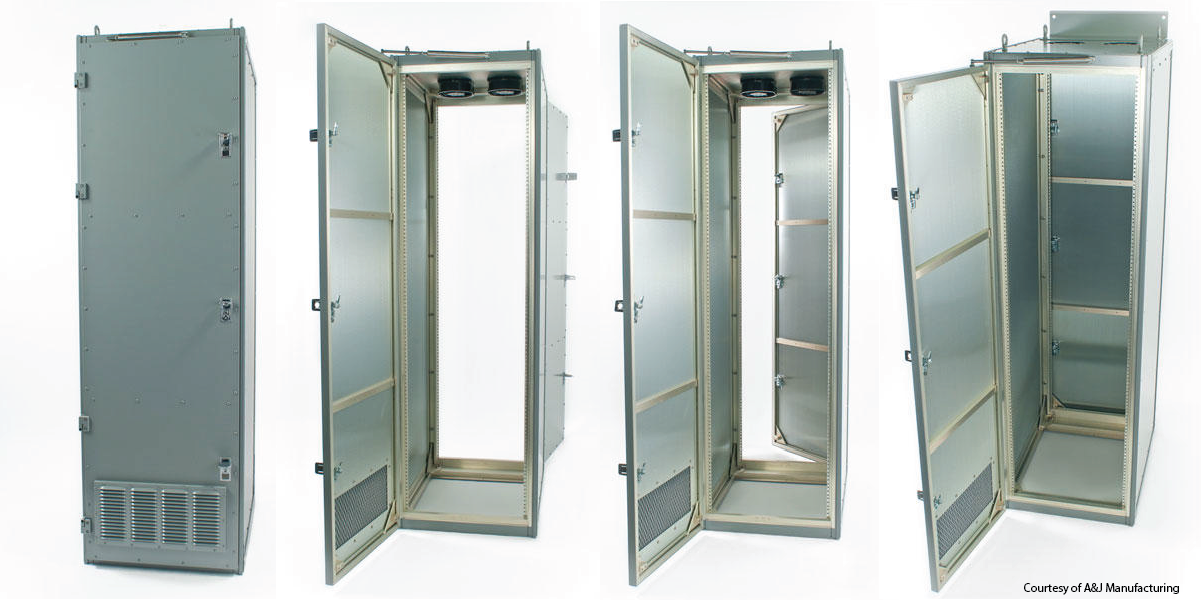
Electromagnetic interference doesn’t announce itself. It shows up as unexplained data errors, erratic sensor readings, failed compliance tests, or equipment that behaves perfectly in isolation and then falls apart the moment it goes near anything else. By the time it’s obvious what’s happening, you’re usually already looking at a redesign.
Getting RFI EMI metal screening enclosures specified correctly from the start is significantly cheaper than retrofitting shielding after the fact. That’s not a minor point. It’s the difference between a product that passes certification and one that doesn’t.
Why This Problem Is Getting Harder to Ignore
The electromagnetic environment that most electronics operate in has become considerably more hostile over the last few years. High-speed electronics, edge computing, EV charging infrastructure, and dense renewable energy installations have all added to the RF noise floor. Products are expected to work reliably in the middle of all of it.
Mis-specification doesn’t just mean a product that performs poorly. It means premature failures, potential safety issues, and regulatory non-compliance. For anyone shipping into European or US markets, that’s not an abstract risk.
Metal Enclosures Still Outperform Everything Else on Attenuation
There’s no real contest at the high end. Metal housings offer the highest shielding performance across the frequency ranges that cause real problems, including ranges that genuinely challenge plastic and composite alternatives.
Aluminium, copper, and steel each bring different characteristics to the table. Aluminium is highly effective at reflecting high-frequency electromagnetic waves and sits in a practical middle ground for most applications. It’s reasonably light, machinable, and widely used across everything from consumer electronics to industrial systems. Steel adds mechanical strength and costs less, but it’s heavier and harder to work with. Copper delivers excellent conductivity but it’s expensive and soft, which makes it the right answer in specific situations rather than a general go-to.
The material choice isn’t just about shielding performance. It’s about what the enclosure needs to do across its whole service life.
The Seams Are Where Most Enclosures Fall Short
An enclosure that looks solid on paper can still leak electromagnetic energy through every joint, seam, ventilation aperture, and cable entry point. This is where designs that test well in simulation regularly fall short in actual testing.
Every gap is a potential entry or exit point for interference. Conductive gaskets, shielded cable glands, and grounding straps are what maintain barrier continuity across those transitions. A shield with poor grounding is about as useful as an umbrella full of holes. The low-impedance path to ground is what lets interference escape safely rather than couple into something it shouldn’t.
Gasket selection is worth more attention than it usually gets. Beryllium copper fingerstock doesn’t absorb moisture, holds its contact force without taking a compression set over years of use, and isn’t degraded by solvents or UV exposure. For enclosures that get opened and closed regularly over a long service life, that matters considerably.
Ventilation Is a Genuine Trade-off
Thermal management and electromagnetic shielding work against each other. Heat has to get out. Electromagnetic energy shouldn’t. That’s a tension that needs solving, not just acknowledged.
Mesh and honeycomb structures in ventilation panels let air through while maintaining attenuation across the relevant frequency range. The critical point is that the aperture geometry needs to be calculated for the highest frequency the enclosure needs to contain, not the fundamental. An aperture that performs perfectly at 1 GHz can be a meaningful leak at 10 GHz. This is one of the more common specification errors and it shows up reliably in pre-compliance testing.
Carbon nanotube coatings are worth knowing about for applications involving displays or viewing windows. They’re ultra-thin, conductive, and transparent, which handles situations where a standard metal panel obviously won’t work.
Leaving Shielding Until the End Costs More Than People Expect
Treating EMI and RFI shielding as something to address once the design is otherwise finished is one of the more reliable ways to end up with an expensive problem. Retrofitting shielding to a product that wasn’t designed for it is harder, costs more, and usually delivers worse results than getting it right upfront.
Material selection, enclosure geometry, grounding strategy, and cable routing all influence each other. A decision about how a cable enters an enclosure can create or eliminate a coupling path that determines whether the assembly passes or fails. Those decisions are easy to make at the start of a project and very difficult to unpick once the design is locked.
Galvanic Corrosion Gets Overlooked Until It Becomes Expensive
Mixing different metals in an enclosure creates a galvanic couple. In a dry indoor environment that might not matter much. In anything humid, outdoor, or subject to condensation, it creates corrosion at contact points over time, and shielding integrity degrades with it.
A stainless steel enclosure with aluminium fasteners in a damp environment is a textbook example. The contact points corrode, the mechanical joint loosens, the seam opens slightly. That slight opening is enough to compromise attenuation at the frequencies that matter. It’s not a rare failure mode. It’s a regular maintenance problem for facilities that didn’t think about it during specification.
Check galvanic compatibility between the enclosure material, the fasteners, and the gaskets before anything gets built. It’s a straightforward check that saves a lot of trouble later.
Bespoke Versus Standard: The Decision Most People Rush
Standard enclosures are fine for a lot of applications. They’re available off the shelf, they come with documentation, and they’re often already certified to relevant standards. But they’re designed around a typical use case, not a specific one.
If a design has areas of significantly different sensitivity sitting alongside each other on the same board, a standard four-sided enclosure may not be able to provide the isolation between sections that the layout actually needs. Bespoke enclosures can incorporate individual cell separation to protect specific sensitive areas of a PCB, and proper design-for-manufacture input can shape decisions from board layout right through to final enclosure form.
That conversation with a specialist is worth having before the design gets locked, not after the first pre-compliance test comes back with problems.