



In the dynamic business environment of July 2026, efficient operations are paramount. Many organizations struggle to balance daily demands with long-term growth. This is where business operations support becomes indispensable.
It’s the backbone that ensures everything runs smoothly. Dedicated support prevents chaos, streamlines workflows, and boosts overall productivity.
This extensive guide will demystify business operations support. We will explore its definition, core responsibilities, and how it differs from general business operations.
We’ll examine various roles and when your business should consider hiring such expertise. From optimizing supply chains to specialized needs like Certified operator business support, we will cover how this function integrates across departments.
Finally, we’ll discuss cost models and how to measure the return on investment. This article aims to provide a comprehensive understanding for any business looking to enhance its operational capabilities.
At first glance, “business operations” and “business operations support” might seem interchangeable, but they represent distinct yet complementary functions within an organization. General business operations encompass all the day-to-day activities and processes an organization undertakes to deliver its products or services, generate revenue, and achieve its strategic goals. This includes everything from production and service delivery to resource management and quality control. It’s the “what” and the “how” of running a business.
Business operations support, on the other hand, is the specialized function dedicated to optimizing, maintaining, and enhancing these general operations. It’s about ensuring the “how” is executed as efficiently, consistently, and scalably as possible. Where general operations are the engine of the business, operations support is the team of expert mechanics constantly tuning, upgrading, and repairing that engine. This function provides the strategic execution framework, ensuring day-to-day workflows are not only performed but are also continually improved. It establishes process consistency, guarantees execution integrity, and builds resilience into the operational fabric of the company.
Consider the difference: a sales team performing its general operation of selling products. Business operations support would involve setting up the CRM system, defining the sales process workflow, creating templates for proposals, analyzing sales data for bottlenecks, and ensuring the sales team has the tools and training to perform their core function effectively. It’s about building a robust system that doesn’t rely on individual heroics but on predictable, repeatable processes. This foundational layer ensures that workflows are maintained, processes stay on track, and execution doesn’t depend on any single person’s memory or intervention.
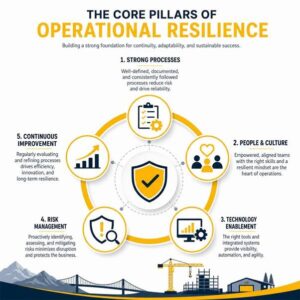 This distinction is crucial for understanding why dedicated operations support is not merely an administrative overhead but a strategic investment in efficiency, scalability, and long-term success. It moves a business from reactive problem-solving to proactive system management.
Feature General Business Operations Business Operations Support Primary Focus Delivering products/services, generating revenue Optimizing, maintaining, and enhancing operational processes Nature of Work Core activities (e.g., manufacturing, sales, service) Process design, documentation, analysis, improvement, system management Goal Achieve business objectives, meet customer needs Ensure efficiency, consistency, scalability, and resilience of operations Output Products, services, revenue Streamlined workflows, clear SOPs, data-driven insights, operational stability Reliance Often on individual effort and departmental silos On structured systems, documented procedures, cross-functional collaboration Time Horizon Day-to-day execution Strategic planning for continuous improvement and long-term stability The Core Roles and Responsibilities within Business Operations Support
Business operations support is a multifaceted field, encompassing a range of roles designed to cater to different organizational needs and scales. From strategic leadership to hands-on task management, these specialists ensure the operational engine runs smoothly.
At the top, we often find the Director of Operations (DOO). This role is highly strategic, focusing on overall operational strategy, planning, and execution oversight. A DOO connects operations directly to long-term business goals, providing executive reporting, decision support, and coordinating large, cross-functional initiatives. They are responsible for ensuring process alignment across departments and driving continuous improvement. For growing businesses, fractional Director of Operations support can provide this high-level leadership without the commitment of a full-time executive hire, offering strategic alignment and execution oversight.
Beneath the DOO, or leading operations in smaller organizations, is the Operations Manager. This role is more tactical, focusing on the day-to-day management of workflows, deadlines, and internal execution. Operations Managers ensure that standard operating procedures (SOPs) are followed, resources are allocated effectively, and departmental goals are met. They often oversee teams, monitor performance, and identify areas for process improvement.
The Operations Assistant typically handles the more granular, hands-on tasks. Their responsibilities include task coordination, data entry, administrative support, managing schedules, and ensuring the smooth flow of information. They are crucial for maintaining the operational rhythm and often act as the first line of support for operational queries. For businesses that rely heavily on external partners, understanding specialized needs like efficient processes for managing external contractors is key. This often involves specific workflows for onboarding, project management, and payment, where robust Contractor operations support can make a significant difference in efficiency and compliance.
Beyond these traditional roles, the rise of fractional operations support offers flexibility. Instead of a full-time hire, businesses can engage Operations Consultants or fractional managers who provide specialized expertise on a project basis or for a set number of hours per month. This model allows businesses to access high-level skills without the associated overhead, perfect for implementing new systems, streamlining specific processes, or navigating periods of rapid growth.
Regardless of the specific title, core responsibilities for business operations support specialists often include:
- Process Improvement: Identifying inefficiencies, designing new workflows, and implementing solutions to enhance productivity and reduce costs.
- Documentation and Standardization: Creating and maintaining SOPs, ensuring consistency across tasks and departments.
- Data Management and Reporting: Collecting, analyzing, and reporting on operational data to inform decision-making and measure performance.
- System Administration: Managing and optimizing the various software and tools used in daily operations.
- Project Management: Overseeing operational projects, from system implementations to process overhauls.
- Coordination and Communication: Facilitating smooth handoffs between teams and ensuring clear communication channels.
These specialists provide a vision for and support the continuous implementation of a data-driven approach to operations management, ensuring every aspect of the business runs as effectively as possible.
Key Technical Skills for Business Operations Support Specialists
In today’s technology-driven landscape, operations support specialists require a robust set of technical skills to excel. Proficiency in enterprise platforms is often non-negotiable. This includes familiarity with ERP (Enterprise Resource Planning) systems like Microsoft Dynamics 365, CRM (Customer Relationship Management) tools such as Salesforce or D365 CRM, and HRIS (Human Resources Information System) platforms like Workday. Experience with specific tools like iCertis for contracts or SharePoint for document management also frequently appears in job requirements.
Advanced Excel skills are fundamental, extending beyond basic formulas to include pivot tables, complex data modeling, macros, and data visualization. The ability to manipulate and analyze large datasets is critical for identifying trends, measuring performance, and making data-driven recommendations.
Process automation is another vital skill set. With the increasing adoption of AI and automation tools, operations specialists are often tasked with identifying opportunities to automate high-frequency, manual work. This can involve using RPA (Robotic Process Automation) tools or leveraging AI capabilities like those found in ChatGPT to enhance business process efficiency. The goal is to free up human resources for higher-value work.
CRM hygiene and data analytics are crucial for maintaining accurate customer and operational data. Specialists must ensure data integrity, develop reporting dashboards, and extract actionable insights from various data sources. This often involves working with business intelligence tools and understanding data flows across different systems.
Overall, the technical aptitude of an operations support specialist directly impacts their ability to streamline processes, manage systems effectively, and provide accurate, timely insights that drive operational excellence.
Integrating Operations Support Across Business Functions
Business operations support is not an isolated function; it acts as the connective tissue that integrates and optimizes various departments. Its impact is felt across every facet of an organization, ensuring seamless coordination and enhanced performance.
In finance, operations support plays a critical role in managing accounts payable, accounts receivable, remote bookkeeping for small businesses, and payroll administration.. They ensure accurate categorization, timely processing of bills and invoices, and meticulous reconciliation, providing real-time financial data for better decision-making. This support can extend to preparing monthly financial packages, including balance sheets and income statements, which are vital for cash flow management and strategic planning.
For human resources, operations support assists with payroll setup and processing, benefits administration, time-off tracking, and employee onboarding/offboarding paperwork. They help standardize HR processes, ensuring compliance and efficiency, allowing HR professionals to focus on talent development and employee engagement.
In the supply chain, operations support is crucial for managing inventory, tracking purchase orders, and optimizing logistics. They help streamline the flow of goods and information, reduce bottlenecks, and ensure timely delivery, often leveraging technology to track inventory activity and customer profitability.
Finally, technology alignment is paramount. Operations support specialists ensure that the tech stack—from communication platforms to specialized software—is aligned with documented workflows and supports operational efficiency. They often act as the bridge between technical teams and end-users, ensuring systems are utilized effectively and data flows are optimized. Cross-department collaboration is inherent in this role, as operations support professionals facilitate communication and coordination, ensuring that processes are not only efficient within a single department but also smooth across functional boundaries. This integrated approach fosters a holistic view of the business, enabling strategic improvements that benefit the entire organization.
When to Scale: Signs Your Business Needs Dedicated Operations Support
Recognizing the right time to invest in dedicated business operations support is crucial for sustainable growth. Many businesses operate reactively, only seeking help when problems become overwhelming. However, several clear indicators suggest that it’s time to proactively scale your operational capabilities.
One of the most obvious signs is operational chaos. If your day-to-day operations feel perpetually disorganized, with constant firefighting, missed deadlines, and a general sense of confusion, your business is likely suffering from a lack of structured support. When execution relies on individual memory or heroics rather than documented processes, it’s a clear signal that a foundational layer of operations support is needed to bring order and predictability.
Another critical indicator is the presence of broken or outdated processes. Manual, repetitive tasks that consume excessive time, inconsistent workflows, or systems that no longer serve the business efficiently are all signs that your operational infrastructure is lagging. These inefficiencies not only waste resources but also hinder productivity and can lead to employee frustration. An operations specialist can identify these bottlenecks, design streamlined workflows, and implement automation where appropriate.
Scaling bottlenecks emerge when a business experiences growth but struggles to maintain its service quality or efficiency. As customer demand increases, existing processes may buckle under the pressure, leading to delays, errors, and a decline in customer satisfaction. This is particularly true for businesses in specialized fields where consistent execution is paramount, such as those requiring precise equipment management and skilled personnel. Ensuring consistent execution across specialized services, for instance, requires robust operational frameworks.
Finally, founder relief is a significant, albeit often overlooked, sign. If the business owner or leadership team is constantly bogged down in day-to-day operational tasks, they are distracted from strategic planning, innovation, and growth initiatives. Operations support frees up these key individuals to focus on what they do best – leading and growing the business. When the business is ready for significant growth or scaling, dedicated operations support becomes an investment rather than an expense, ensuring that the infrastructure can support ambitious expansion plans without collapsing under its own weight.
Strategic Delivery: In-House Teams vs. Outsourced and Fractional Models
When a business decides to invest in operations support, a key decision arises: should we build an in-house team, or opt for outsourced or fractional models? Each approach offers distinct advantages and considerations regarding cost, expertise, and scalability.
In-house teams provide dedicated support, deep institutional knowledge, and direct control over operational processes. An in-house operations manager or assistant is fully integrated into the company culture, understanding its nuances and building strong internal relationships. This model is often ideal for larger organizations with complex, unique operational requirements that necessitate full-time attention and custom solutions. However, building an in-house team involves significant costs, including salaries, benefits, training, and recruitment expenses. It also requires time to find, hire, and onboard qualified personnel, which can be a lengthy process.
Outsourced operations support, exemplified by firms like Supporting Strategies, offers a comprehensive solution where external professionals manage specific operational tasks. This is particularly popular for financial operations such as bookkeeping, accounts payable/receivable, and payroll. Outsourcing provides access to a team of experienced specialists without the overhead of hiring full-time staff. It can be highly cost-effective, as businesses only pay for the services they need, often at a predictable monthly rate. This model allows small businesses, for example, to access controller-level financial reporting without hiring a full-time controller.
Fractional operations support combines elements of both in-house and outsourced models. A fractional Director of Operations or Operations Manager provides high-level strategic and tactical support for a set number of hours per week or month. This allows businesses to access senior-level expertise, strategic planning, and execution oversight without the full-time salary commitment. It’s an excellent solution for growing companies that need operational leadership but aren’t ready for a full-time executive hire. Fractional support is highly scalable; businesses can increase or decrease hours as their needs evolve, making it a flexible and agile option.
The choice between these models often depends on the business’s size, budget, complexity of operations, and specific needs. For routine, high-volume tasks like managing office supplies or ensuring a well-stocked and functional employee common area, specialized external providers can offer efficient and cost-effective solutions. For instance, companies specializing in Breakroom operations support can manage everything from inventory to equipment maintenance, ensuring a seamless experience for employees without diverting internal resources.
The goal is to find the model that best aligns with the business’s current stage and future growth aspirations, providing the right level of support to optimize efficiency and drive success.
Measuring the ROI and Success of Your Business Operations Support
Measuring the Return on Investment (ROI) and overall success of business operations support is crucial for demonstrating its value and justifying continued investment. While some benefits, like “founder relief,” are qualitative, many aspects of operations support can be quantified through specific performance metrics.
One primary area to measure is productivity gains. This can be tracked by monitoring output per employee, task completion rates, or the time taken to complete specific processes before and after implementing operations support initiatives. For example, if a new workflow reduces the time spent on order processing by 20%, that’s a tangible productivity gain.
Cost efficiency is another key metric. Operations support aims to reduce waste, streamline resource allocation, and optimize spending. This can be measured by tracking reductions in operational expenses, lower error rates (which can lead to fewer rework costs), or better utilization of technology and personnel. Identifying and eliminating bottlenecks directly contributes to cost savings.
Turnaround time (TAT) for critical processes is a direct indicator of operational efficiency. Whether it’s customer service response times, product delivery schedules, or internal project completion, a decrease in TAT signifies improved operational performance.
Customer satisfaction is often an indirect but powerful measure. Smoother, more reliable operations lead to better service delivery, fewer complaints, and higher customer retention rates. Surveys, Net Promoter Scores (NPS), and customer feedback can provide valuable insights into how operational improvements translate to customer delight.
SLA (Service Level Agreement) compliance is particularly important for businesses with external or internal service agreements. Operations support ensures that these agreements are met consistently, reflecting reliability and professionalism.
Other metrics include:
- Error Rates: Reduction in mistakes, defects, or data inaccuracies.
- System Uptime/Reliability: Improved performance and reduced downtime of critical IT systems.
- Employee Satisfaction: Reduced frustration from inefficient processes, leading to higher morale and retention.
- Scalability: The ability of operations to handle increased volume or complexity without significant dips in performance or disproportionate cost increases.
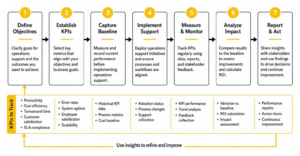
To effectively measure ROI, businesses should establish clear Key Performance Indicators (KPIs) before implementing operations support initiatives. Regular reporting and analysis of these KPIs, coupled with qualitative feedback, will provide a comprehensive picture of the function’s success. This data-driven approach allows for continuous improvement and ensures that operations support remains aligned with strategic business objectives.
Frequently Asked Questions about Business Operations Support
What is the average cost of business operations support?
The cost of business operations support varies significantly based on the model chosen, the level of expertise required, and the scope of services. For hourly rates, you might find specialists charging anywhere from $30 to $125 per hour, depending on their experience and the complexity of the tasks.
Fractional operations support, which provides dedicated expertise for a set number of hours or days per month, typically ranges from $2,500 to $6,000 per month. This model is popular for small to medium-sized businesses that need strategic guidance or specialized project management without the commitment of a full-time hire.
For full-time salaries, an in-house Operations Assistant might earn a lower salary, while an Operations Manager or Director of Operations could command anywhere from $5,000 to $15,000+ per month, plus benefits. These figures can fluctuate based on geographic location, industry, and the specific responsibilities of the role.
When considering budget allocation, it’s important to weigh the direct costs against the potential savings and increased revenue generated by improved efficiency and scalability. Often, the investment in operations support pays for itself through reduced errors, increased productivity, and enhanced capacity for growth.
How does business operations support improve scalability?
Business operations support is fundamental to improving scalability by building a robust and adaptable operational framework. It achieves this through several key mechanisms:
- Process Standardization: By documenting and standardizing workflows and Standard Operating Procedures (SOPs), operations support ensures that tasks are performed consistently, regardless of who is doing them. This standardization allows new team members to be onboarded quickly and efficiently, making it easier to expand operations without losing quality.
- Bottleneck Reduction: Specialists actively identify and eliminate inefficiencies and choke points in existing processes. By streamlining workflows and optimizing resource allocation, they prevent operational hurdles from impeding growth.
- Automation: Operations support leverages technology to automate repetitive, manual tasks. This not only frees up human resources for higher-value activities but also increases processing speed and reduces the likelihood of human error, allowing the business to handle a larger volume of work without proportionally increasing staff.
- Repeatable Workflows: The creation of repeatable, well-defined workflows means that as the business grows, its core functions can be replicated and expanded predictably. This predictability is essential for managing increased demand and entering new markets.
- Resource Optimization: Operations support ensures that all resources—human, technological, and financial—are utilized to their maximum potential. This optimization allows the business to scale efficiently, getting more output from its existing inputs before needing to invest in additional resources.
By focusing on these areas, operations support transforms a growing business from a chaotic, ad-hoc entity into a well-oiled machine capable of sustained and accelerated growth.
What qualifications should a business operations support specialist possess?
The qualifications for a business operations support specialist are typically a blend of academic achievement, practical experience, and a specific skill set.
Academically, many roles, especially at the manager or director level, prefer candidates with a Bachelor’s or Master’s Degree in fields such as Business Administration, Finance, Computer Science, Accounting, Economics, Management, or Engineering. An MBA is also highly valued for senior positions, indicating a strong understanding of broader business principles.
In terms of experience, requirements often include:
- 3+ years of experience in executing operations on a global scale.
- For senior roles, 5+ years of B2B technology and/or operations research experience is frequently sought.
- Experience in building and operationalizing complex systems, particularly data warehouses, can also be a significant asset.
Industry certifications in areas like project management (e.g., PMP), Lean Six Sigma, or specific software platforms can further enhance a candidate’s profile, demonstrating specialized knowledge and a commitment to best practices.
Technical proficiency is paramount. This includes advanced skills in Microsoft Excel, strong PowerPoint abilities, and familiarity with enterprise platforms like D365 CRM, Workday, SharePoint, and potentially AI tools like ChatGPT for process enhancement. Data analytics capabilities are also crucial for reporting and decision-making.
Finally, strong project management experience is essential, as operations specialists often lead initiatives to improve processes, implement new systems, or coordinate cross-functional efforts. Excellent communication, problem-solving, and organizational skills round out the profile of an effective business operations support specialist.
Conclusion
In the competitive landscape of July 2026, business operations support stands as a critical pillar for any organization aiming for sustained success. We’ve explored how this specialized function differentiates itself from general operations by focusing on optimization, consistency, and resilience. From the strategic oversight of a Director of Operations to the hands-on coordination of an Operations Assistant, these roles are integral to translating strategic vision into efficient execution.
By understanding when to invest in dedicated support, whether through an in-house team, outsourced services, or fractional models, businesses can proactively address operational challenges, streamline workflows, and free up leadership to focus on core growth initiatives. The integration of operations support across finance, HR, supply chain, and technology functions ensures a cohesive and optimized organizational structure.
Measuring the ROI through tangible metrics like productivity gains, cost efficiency, and customer satisfaction validates the strategic importance of this function. Investing in robust business operations support is not merely about managing tasks; it’s about fostering operational excellence, enabling long-term growth, maintaining strategic focus, and building inherent business resilience to navigate an ever-evolving market.