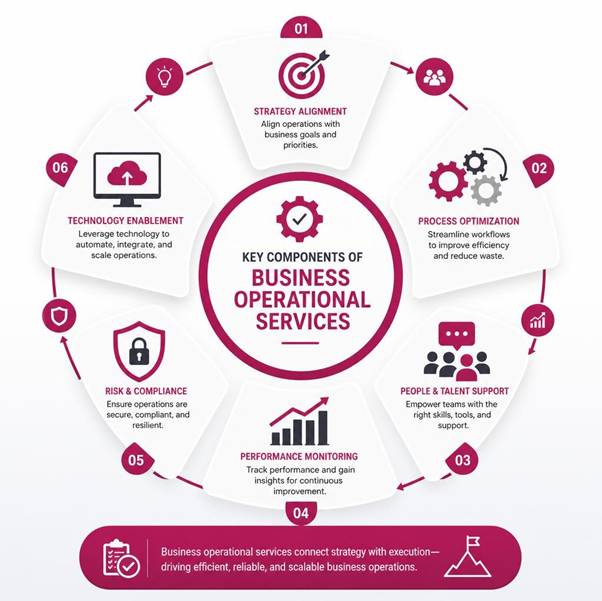
At its heart, “business operations” refers to the entire ecosystem of daily activities that keep an organization running. These are the fundamental functions, from manufacturing and logistics to marketing and sales, that enable a company to produce goods or services and generate revenue. They encompass everything from internal processes and resource allocation to workflow management and strategy execution.
Business operational services, however, represent a more specialized and often externalized approach to managing these functions. Rather than solely relying on in-house teams for every single task, businesses can leverage these services to optimize specific aspects of their operations. This distinction is crucial: while general business operations are the what of running a company, operational services are the how – providing expert support, technology, and frameworks to execute those operations more efficiently, effectively, and strategically. They act as a catalyst, transforming routine tasks into streamlined, high-performance processes.
Differentiating Operations Strategy from Daily Execution
To truly grasp the value of operational services, it’s essential to differentiate between operational strategy and daily execution. Operational strategy defines the long-term goals and the overarching plan for how a business will achieve its objectives. It’s the roadmap that outlines the destination and the most efficient path to get there. Without a clear strategy, daily operations can become fragmented and inefficient, much like a vehicle without a destination.
Daily execution, on the other hand, involves the tactical implementation of that strategy through day-to-day workflows. These are the specific actions, tasks, and processes that keep the business moving. Business operational services bridge the gap between strategy and execution. They translate strategic goals into actionable, optimized daily workflows, ensuring that every task contributes meaningfully to the larger vision. They focus on system outputs, process feedback, and continuous refinement to ensure the operational vehicle not only moves but moves in the right direction and at optimal speed.
The Four Pillars: People, Processes, Technology, Infrastructure
Regardless of industry or size, successful business operations are built upon four interconnected pillars: people, processes, technology, and infrastructure. Understanding these components is key to identifying areas where operational services can provide the most impact.
- People: This pillar encompasses the workforce, their skills, training, and alignment with organizational goals. Effective operational services ensure that employees are not just performing tasks but are empowered, well-trained, and strategically placed to maximize their contribution. This includes everything from talent acquisition and onboarding to ongoing development and performance management.
- Processes: These are the repeatable workflows and procedures that govern how tasks are completed. Well-defined processes reduce errors, ensure consistency, and improve efficiency. Operational services often focus on auditing, redesigning, and standardizing these procedures, often through the creation of clear Standard Operating Procedures (SOPs), to eliminate bottlenecks and enhance flow.
- Technology: Modern businesses rely heavily on technology to automate tasks, manage data, and connect various functions. This pillar includes everything from Enterprise Resource Planning (ERP) systems and Customer Relationship Management (CRM) software to specialized automation tools. Operational services integrate and optimize these technologies, ensuring they enhance rather than hinder productivity.
- Infrastructure: This refers to the physical and digital environments that support operations. Physical infrastructure includes office spaces, manufacturing facilities, and supply chain networks, while digital infrastructure covers cloud services, data centers, and network connectivity. Operational services ensure that this foundation is robust, secure, and scalable, providing the necessary support for all other operational components.
By optimizing these four pillars, business operational services create a cohesive and efficient framework that drives performance and supports sustainable growth.
Primary Types of Business Operational Services
Business operational services are incredibly diverse, reflecting the varied needs of modern enterprises. They can range from comprehensive back-office support to highly specialized functions, all designed to enhance efficiency and allow core teams to focus on their primary mission. Let’s explore some of the most common categories.

Financial and Administrative Support Systems
One of the most frequently outsourced areas, financial and administrative support systems, are critical for maintaining compliance, managing cash flow, and ensuring smooth daily operations. These services include:
- Bookkeeping and Accounting: Managing ledgers, processing invoices, reconciling accounts, and preparing financial statements. Outsourcing these tasks ensures accuracy and compliance, often at a lower cost than maintaining an in-house team.
- Document Lifecycle Management: From creation and storage to retrieval and archiving, effective document management is vital. Services in this area ensure precision in every document and process, streamlining administrative workflows and maintaining office protocol standardization. This can dramatically reduce retrieval times and improve overall organizational efficiency.
- Payroll Processing: Handling employee salaries, taxes, and benefits in compliance with complex regulations. This often includes managing multi-state tax compliance and cross-border payroll for companies with a distributed workforce.
- Accounts Payable and Receivable: Managing incoming and outgoing payments, ensuring vendors are paid on time and customer invoices are collected efficiently.
- Tax Preparation and Compliance: Navigating the intricacies of local, state, and federal tax laws to ensure timely and accurate filings.
By delegating these administrative heavy-lifting tasks, businesses can free up internal resources and reduce the burden of regulatory compliance.
Human Resources and Specialized Staffing Solutions
Effective human resource management is paramount for any organization, but it can be particularly demanding for small to medium-sized enterprises (SMEs) that may lack dedicated HR departments. Operational services in this domain cover a broad spectrum:
- Talent Acquisition and Onboarding: Streamlining the hiring process, from recruitment and background checks to new employee orientation and paperwork.
- Employee Compliance Management: Ensuring adherence to labor laws, benefits regulations, and workplace safety standards. This is especially crucial in rapidly evolving regulatory landscapes.
- Benefits Administration: Managing health insurance, retirement plans, and other employee benefits programs.
- Staff Augmentation and Co-sourcing: Providing specialized personnel to fill skill gaps or manage specific projects, offering flexibility without the commitment of a full-time hire. This can include anything from fractional HR managers to specialized support staff.
- Specialized Healthcare Support: For medical practices and healthcare providers, operational services can include highly specialized roles. For instance, leveraging medical virtual assistants from providers like Phoenix Virtual Staff can significantly enhance patient scheduling, record management, and administrative support, allowing clinical staff to focus on patient care. These virtual assistants are trained to handle the unique demands and compliance requirements of the healthcare sector.
These HR-focused services ensure that a business’s most valuable asset—its people—are well-managed, compliant, and supported.
Modern Customer Service and Business Operational Services
Customer service has evolved from a cost center to a critical differentiator and revenue driver. Modern operational services in this area focus on creating seamless, positive customer experiences:
- Omnichannel Support: Managing customer interactions across various channels, including phone, email, live chat, social media, and self-service portals, to ensure a consistent experience.
- Virtual Customer Service Specialists: Utilizing remote teams to provide 24/7 support, access global talent pools, and significantly reduce operational overhead compared to in-person teams. These specialists can handle inquiries, resolve issues, and even assist with upselling or cross-selling.
- Customer Relationship Management (CRM) Integration: Implementing and optimizing CRM software to track customer interactions, manage leads, and personalize communication.
- Feedback Collection and Analysis: Systematically gathering and analyzing customer feedback to identify areas for improvement in products, services, and operational processes.
- Resolution Speed and Efficiency: Streamlining workflows and empowering specialists with the right tools and training to resolve customer issues quickly and effectively, which directly impacts customer satisfaction and retention.
By optimizing customer service operations, businesses can build stronger client relationships, enhance brand loyalty, and drive repeat business.
Strategic Benefits and Risk Mitigation in Operational Outsourcing
The decision to leverage business operational services, particularly through outsourcing, comes with a host of strategic benefits that can profoundly impact a company’s growth trajectory. However, it also introduces certain risks that must be carefully managed.
Feature In-House Operations Outsourced Operational Services Cost High fixed overhead (salaries, benefits, infrastructure) Variable, often lower (per-task, project, or fractional models) Expertise Limited to internal staff skill sets Access to specialized, niche expertise and best practices Scalability Slow, requires hiring, training, infrastructure Rapid, flexible scaling up or down based on demand Focus Can distract from core competencies Allows internal teams to concentrate on strategic initiatives Technology Requires internal investment and maintenance Provider brings cutting-edge tools and platforms Risk Internal compliance, operational failures Data security, vendor dependency, quality control, compliance transfer Audit Frameworks for Business Operational Services
Before engaging operational services, businesses must first understand their internal landscape. Identifying pain points is the crucial first step. We recommend a systematic audit framework:
- Workflow Audit: Map out all daily, weekly, and monthly tasks across departments. Document each step, the resources involved, and the time taken. This visual representation often reveals hidden inefficiencies and redundancies.
- Bottleneck Analysis: Pinpoint areas where processes slow down or halt. Is it a lack of resources, a technology limitation, or a communication breakdown? Gathering direct feedback from staff is invaluable here, as they are often closest to the operational friction.
- Cycle Time Tracking: Measure the time it takes to complete key processes, from initiation to completion. This provides quantitative data on efficiency and helps set benchmarks for improvement.
- Impact Prioritization: Not all inefficiencies are equal. Prioritize pain points based on their potential business impact (e.g., customer satisfaction, cost savings, revenue generation). Focus initially on high-impact, low-effort wins to build momentum.
- Technology Assessment: Evaluate current software and tools. Are they integrated? Are they being fully utilized? Could automation streamline repetitive tasks?
By conducting such a thorough assessment, businesses can clearly articulate their needs and select operational services that offer targeted solutions, ensuring a strong return on investment. This proactive approach helps avoid the common pitfall of implementing solutions without fully understanding the underlying problems.
Risk Mitigation, Compliance, and Enterprise Infrastructure
While outsourcing operational services offers significant advantages, address potential challenges and risks, particularly concerning data security, compliance, and vendor management.
- Data Protection and Confidentiality: When sharing sensitive business data with third-party providers, robust data protection measures are non-negotiable. This includes implementing strict Non-Disclosure Agreements (NDAs), ensuring encrypted file transfers, establishing role-based access controls, and conducting regular compliance audits. Providers should demonstrate adherence to relevant data privacy regulations like GDPR or HIPAA, depending on the industry.
- Compliance Standards: Businesses must ensure that their operational service providers comply with all relevant industry-specific and regulatory standards. This is particularly critical in highly regulated sectors like healthcare or finance. A comprehensive service agreement should clearly outline compliance responsibilities and audit mechanisms.
- Vendor Dependency and Quality Control: Relying on external providers means entrusting them with critical business functions. Mitigate this risk by thoroughly vetting potential partners, establishing clear Service Level Agreements (SLAs), and maintaining open communication channels. Regular performance reviews and feedback loops are essential to ensure the quality of service.
- Managing Physical and Operational Risks: Beyond digital security, businesses must also consider physical and operational risks. Unexpected disruptions, natural disasters, or even human error can impact service delivery. Mitigating these risks often involves having robust contingency plans, disaster recovery protocols, and ensuring the operational partner has similar safeguards in place. Furthermore, protecting the business from unforeseen events, including operational failures, property damage, or liability claims, is paramount. This is where comprehensive business insurance from agencies like The Hornbuckle Agency becomes an indispensable part of a robust risk management strategy, safeguarding assets and ensuring continuity even when operational challenges arise.
By proactively addressing these areas, businesses can harness the benefits of operational services while minimizing exposure to potential downsides.
Leveraging Technology and Specialized Operations for Growth
The landscape of business operations is continuously reshaped by technological advancements. Modern operational services are no longer just about efficiency; they are about leveraging cutting-edge tools to drive innovation, scalability, and competitive advantage.

Agentic AI and Intelligent Workflow Automation
Perhaps the most transformative development in recent years is the rise of Agentic AI and intelligent workflow automation. Unlike traditional automation that simply executes predefined rules, Agentic AI systems can make decisions, learn from data, and adapt to new situations, effectively embedding intelligence directly into core business processes.
- Enhanced Decision-Making: Agentic AI can analyze vast datasets to provide insights that inform strategic decisions, from optimizing pricing models to predicting market trends.
- Workflow Integration: Robotic Process Automation (RPA) and AI-powered tools can automate repetitive, rule-based tasks across various functions—finance, HR, customer service, and supply chain. This frees human employees to focus on higher-value, strategic work.
- Error Reduction: Automation significantly reduces the likelihood of human error, leading to increased accuracy in data entry, financial reporting, and compliance tasks.
- Data Analytics and Process Mining: Advanced analytics and process mining tools can uncover hidden inefficiencies in workflows, providing actionable data to continuously optimize operations.
For enterprises, implementing Agentic AI often requires a comprehensive overhaul of data structures, processes, and even organizational culture. It’s not just layering AI onto existing models but reimagining the operating model entirely to unlock its full potential.
Vendor Operations and Customized Product Fulfillment
Beyond internal processes, operational services extend to managing external relationships, particularly with vendors and in the realm of product fulfillment. Efficient vendor operations are critical for maintaining supply chain integrity, controlling costs, and ensuring product quality.
- Supply Chain Management: This involves overseeing the entire journey of a product, from raw materials to the end-customer. Operational services can optimize inventory control, warehousing, logistics, and distribution networks, reducing lead times and improving responsiveness.
- Vendor Relationship Management: Building strong relationships with suppliers, negotiating favorable terms, and ensuring consistent quality and delivery. This can involve ongoing performance monitoring and risk assessment of vendor partners.
- Customized Product Fulfillment: For businesses that offer personalized or branded products, operational services can manage the complexities of customization. This includes sourcing specialized materials, coordinating production, and ensuring quality control for unique items. For example, a business looking to enhance its brand presence through merchandise might leverage operational services to manage the production and distribution of items featuring premium custom embroidery from specialists like Apparel Boss. This ensures consistent branding and high-quality product delivery, seamlessly integrating a specialized vendor into the broader operational framework.
- Inventory Control: Implementing systems to track inventory levels, forecast demand, and manage stock to avoid shortages or overstocking, which can significantly impact profitability.
By streamlining vendor operations and product fulfillment, businesses can enhance their market responsiveness, reduce operational costs, and deliver superior customer experiences.
Frequently Asked Questions about Business Operational Services
We often encounter common questions from businesses exploring operational services. Here are some of the most frequent inquiries:
What is the difference between business operations and operational services?
As we’ve discussed, business operations refer to the day-to-day activities and functions that keep a company running internally – the doing of business. This includes everything from manufacturing to marketing, finance, and HR.
Operational services, on the other hand, are specialized offerings designed to optimize, manage, or execute specific aspects of these core business operations. They are often provided by external experts or specialized internal teams. Think of it this way: if “business operations” is the car, “operational services” are the expert mechanics, maintenance crew, and performance tuners who ensure the car runs smoothly, efficiently, and to its full potential, often taking over specific tasks or entire systems. They represent outsourced expertise, managed services, or delegated functions that allow the core business to focus on its strategic objectives.
How do companies evaluate ROI when outsourcing operational functions?
Measuring the Return on Investment (ROI) for operational services is crucial. Companies typically evaluate ROI through a combination of quantitative and qualitative metrics:
- Cost Reduction: Direct savings from reduced overhead, lower labor costs (e.g., 75% less than a full-time hire for some services), and optimized resource allocation.
- Efficiency Gains: Measured by reduced cycle times for key processes, increased throughput, and improved productivity. For example, a logistics company might reduce document retrieval time from hours to minutes, saving over 30 hours per week.
- Error Rate Reduction: Fewer mistakes in data entry, financial reporting, or customer service interactions lead to fewer rework costs and improved customer satisfaction.
- Compliance and Risk Mitigation: Avoiding fines, legal issues, or reputational damage due to non-compliance or security breaches.
- Scalability and Flexibility: The ability to quickly scale operations up or down without significant capital investment or hiring/firing cycles.
- Focus on Core Competencies: The qualitative benefit of allowing internal teams to dedicate their time and talent to strategic initiatives that drive innovation and growth.
- Customer Satisfaction: Improved Net Promoter Scores (NPS), Customer Satisfaction (CSAT) scores, and client retention rates.
By tracking these KPIs before and after implementing operational services, businesses can gain a clear picture of their ROI.
How long does it take to implement a third-party operational service framework?
The implementation timeline for a third-party operational service framework can vary significantly depending on the complexity of the services, the size of the business, and the degree of integration required. However, general timelines often follow these stages:
- Discovery & Assessment (1-2 weeks): This initial phase involves the service provider understanding the client’s current operations, identifying pain points, and defining the scope of work.
- Custom Strategy Design (1-2 weeks): Based on the assessment, a tailored operational blueprint is created, outlining processes, technology integration, and performance metrics.
- Implementation & Integration (2-4 weeks for core services): This is where the actual setup begins. For administrative workflows and document management, implementation might start within 5-7 business days, with full integration completed in 2-4 weeks. More complex services like ERP integration or large-scale HR system overhauls can take several months.
- Ongoing Management & Optimization: Once integrated, the services enter a continuous improvement phase, with regular monitoring, feedback, and adjustments to optimize performance.
Providers like Operational Documentation Services report that administrative onboarding and process integration typically take between 2 to 4 weeks, demonstrating that many foundational services can be rapidly deployed to deliver immediate value.
Conclusion
In an increasingly competitive and dynamic business environment, operational excellence is no longer a luxury but a necessity. Business operational services provide a powerful avenue for organizations to achieve this, offering specialized expertise, advanced technology, and streamlined processes that underpin growth and efficiency.
From optimizing financial and administrative functions to enhancing human resource management and customer service, these services enable businesses to overcome operational challenges, mitigate risks, and focus on their core mission. By strategically leveraging the right operational partners, companies can transform their daily execution into a seamless engine of productivity and innovation.
As we look towards August 2026 and beyond, the integration of cutting-edge technologies like Agentic AI and intelligent automation will continue to redefine what’s possible in operational management. For any business striving for sustainable success, understanding and embracing business operational services is not just an option—it’s an essential strategy for navigating complexity, achieving continuous improvement, and unlocking true enterprise potential.