


Most home improvement advice starts with budget or style. The first questions should include how long you expect to live there, because that horizon helps determine whether a change is likely to be worthwhile.
It is also a number worth estimating explicitly. A short, middle and long scenario can lead to very different choices.
The spread is wider than people assume
Averages hide the useful detail here. Nationwide’s analysis of the English Housing Survey puts the average time respondents had lived at their current address at the time of the survey at around 14 years, but that figure collapses four very different situations into one.
These are elapsed figures: how long people had already been in place when asked, not a forecast of when they will move. Read them as a picture of how widely tenure varies, not as a prediction for your own household.
Broken out by how people occupy their homes:
- Private renters: about 4.3 years, with roughly half of the private rented sector resident for two years or less
- Mortgaged owners: about 9.2 years
- Social renters: about 12.2 years
- Owners with no mortgage: about 23.2 years, and around a third of them have been in the same property for 30 years or more
That is a fivefold spread between the shortest and longest groups. Zoopla puts UK homeowners’ average stay before moving at about 9 years. Separately, Land Registry data put the average interval between two transactions at roughly 8.25 years in 2011–2014 and about 10 years in 2019–2022.
The US shows the same lengthening pattern. Redfin’s 2025 figure puts the typical American homeowner at 12 years in the same house, up from 11.8 the previous year, and up sharply from 6.5 years back in 2005.
One conclusion follows. A private renter and an outright owner are in materially different positions, and should not be reading the same advice.
Quick comparison
| Under 5 years | 5 to 10 years | 10 years or more | |
| Sensible spend | Low, and portable | Moderate, room-by-room | Structural where justified |
| Reversibility | Essential | Preferred | Optional |
| What pays back | Comfort now | Comfort plus resale | Living standard |
| Worst mistake | Permanent changes you cannot take | Deferring everything until “later” | Cheap fixes redone three times |
Where reversible changes win
Under about five years, almost everything should be able to leave with you or be undone in a weekend.
That means lighting, textiles, freestanding storage, rugs, and paint where the tenancy allows it. The test is simple: if you moved next year, would this still be worth having? A good floor lamp passes. A fitted wardrobe does not.
This is also the group for whom arrangement matters more than purchase. Moving what you already own into a better configuration requires no new furniture purchase and can usually be reversed. Because testing several arrangements with heavy furniture takes effort, it can be easy to skip this step.
Style is the other decision worth testing before money changes hands. Tools like roomdesigngpt.ai take a photo of the room as it currently stands and restyle it in different styles and colour schemes, keeping the walls, windows and rough layout. That helps you settle on a direction for paint, textiles and lighting before buying anything. It shows a direction, not a finished plan. What survives the screen still needs measuring, and materials still need seeing in person.
Where permanent changes earn their place
If your own credible scenario is ten years or more, the maths inverts. Here the expensive mistake is the opposite one: repeatedly buying cheap solutions to a problem that a single proper fix would have settled.
Replacing a poor kitchen layout, reworking bad lighting circuits, insulating properly, moving a badly placed door: these only make sense if you are around long enough to live with the result. Over a long horizon you will be. Over a two or three year one, you are largely renovating for whoever comes next.
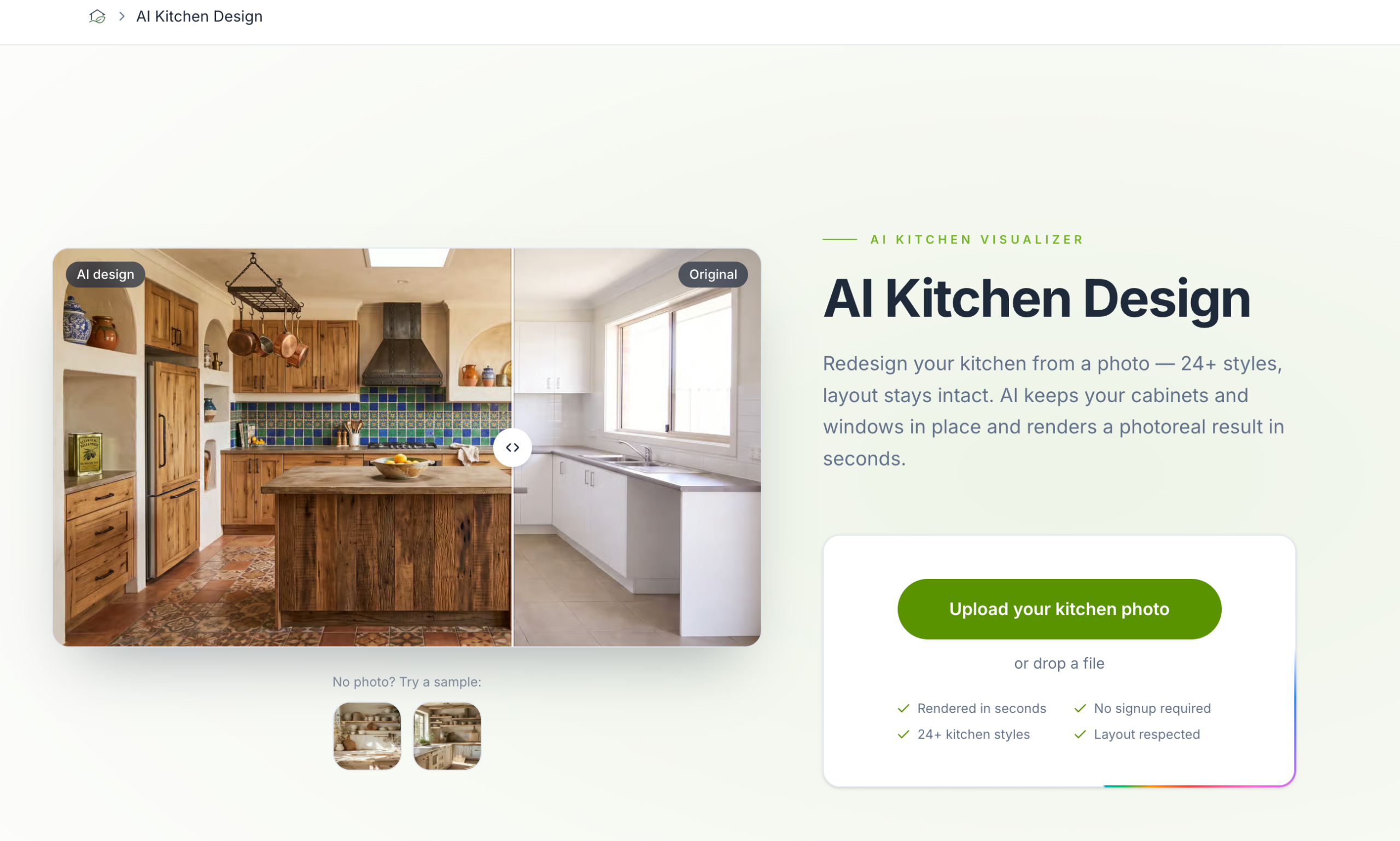
Kitchens show this most clearly: a refit is a large, hard-to-undo spend in a room used several times a day, and finishes can be hard to judge from a single sample door. Before committing, it can help to preview new finishes on a photo of your existing kitchen, trying cabinet colours, worktops, splashbacks and lighting in different styles while the footprint stays as it is. That makes it a check on surfaces, not on layout. Moving a sink or taking out a wall still needs a proper plan and real measurements.
Running costs work differently. Efficiency work may reduce bills as soon as it is completed, but whether the upfront cost is recovered still depends on the savings achieved and how long the owner stays.
The horizon in the middle
A self-estimated five to ten year horizon is an awkward position to be in.
That length is long enough to justify real work and short enough that resale still matters. The practical approach is to sequence rather than choose: do the things that improve daily life and are neutral or positive at sale first, defer anything highly personal, and avoid locking in layouts you have not lived with through a full year of seasons.
A common error in this group is deciding everything in the first three months, while the house is still unfamiliar. For non-urgent, highly personal changes, living through a full cycle of seasons can reveal how the house is actually used before work begins.
Frequently asked questions
How do I estimate how long I will stay?
Sketch three scenarios rather than one number: a short stay, a middle case, and a long one. Work, household size and whether the property still suits you in each case will separate them quickly. Then plan reversible changes against the shortest scenario you find credible.
Is it worth improving a rented home at all?
Yes, within the reversible category. Lighting and arrangement can materially change how a room works, and portable choices can leave with you. Check the tenancy before anything that marks a wall.
Does a longer stay always justify spending more?
Not automatically. It justifies spending more on the things you use daily and less on the things that only read well to a visitor. Twenty years of a badly lit kitchen costs more in daily irritation than twenty years of an unfashionable one. Sequence by how often you touch something, not by how much of it a guest sees.
What if I genuinely do not know?
Default to reversible for cosmetic changes, and assess safety, maintenance and energy-efficiency work separately. Under-investing in decoration is fixable later. A permanent change may not recover its full cost if you leave sooner than expected, especially when it is highly personal.