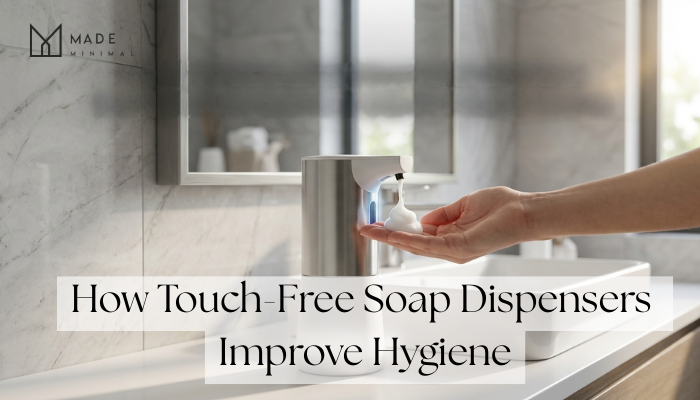
You pump the soap dispenser, wash your hands, and assume they’re clean. But that pump you just touched? It might be covered in the same bacteria you’re trying to remove. So much for germ prevention.
Here at Made Minimal, we’re a Brisbane-based boutique store that stocks stylish home and bathroom solutions, including hygiene products like automatic soap dispensers.
And the main issue with push-style dispensers comes down to contact. You press the pump after handling raw meat, scrolling your phone, or using the toilet. Then the next person does the same, and bacteria just keep building up on the nozzle.
One peer-reviewed study even found that roughly 70% of refillable pump dispensers showed bacterial contamination. This article will cover how a touchless soap dispenser improves hygiene and cuts down on germs.
So, you can make your daily hand-washing routine more sanitary.
How an Automatic Hand Soap Dispenser Makes Daily Life Easier
An automatic hand soap dispenser removes the need to touch anything while you wash your hands. The result is fewer germs, less mess, and a smoother bathroom routine.
Below, we’ll break down how these dispensers work and what to watch out for when you shop for one.
How Automatic Soap Dispensers Work
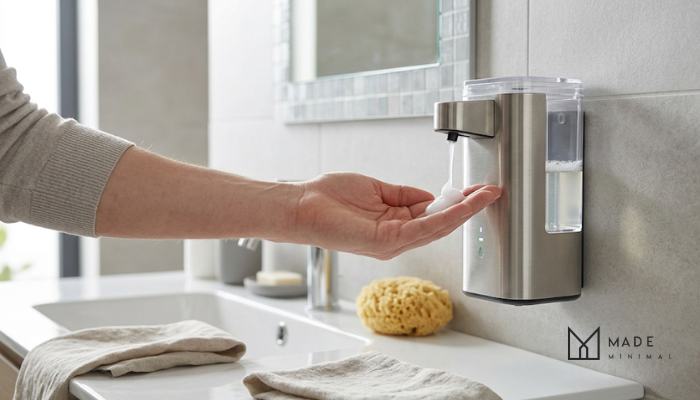
How to Use Automatic Soap Dispenser The infrared sensor of the automatic soap dispenser senses the hands, and a small amount of soap is automatically released. When you hold your palm underneath it, the sensor detects your body heat or movement and turns on a tiny motorised pump. The pump dispenses just the right amount of liquid soap or foam you need (all this, without touching). Also, with a fixed amount, you also get to waste less soap per wash.
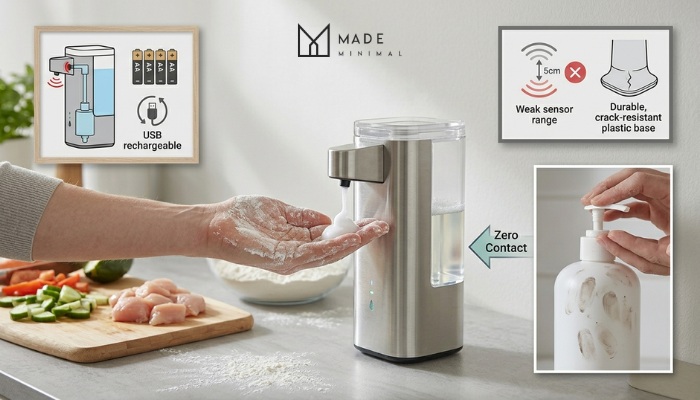
Most models operate on 4AA batteries, which last for a few months depending on the use. Some models even have USB charging. Yes they do, Both soap dispensers would work perfectly well for a wall mounted soap dispenser or a free-standing unit on your sink.
The Benefits of Hands-Free Hygiene
Having fewer touch points in your bathroom and kitchen also means fewer opportunities for bacteria to spread. Here are a few reasons why hands-free dispensers make life easier at home:
- Zero Contact Operation: You never touch the nozzle, so germs from raw meat, dirty hands, or cleaning products don’t transfer to the dispenser. The soap simply comes to you, which is a big plus for germ prevention.
- Better for Multitasking: If you’re cooking dinner and need to wash up mid-chop, you can just place one hand underneath the sensor. There’s no fumbling with a sticky pump while your other hand is covered in food or grease.
- Practical for Busy Households: And for families with young kids, elderly relatives, or frequent guests, the sensor does the work. Nobody has to struggle with stiff pumps or slippery bottles. This way, everyone in the house can wash their hands independently.
From what we’ve seen, the convenience of automatic dispensers is almost instantly recognized by families that make the switch. And that’s particularly true in the thick of meal prep and hectic after-school routines.
Real-Life Situations Where Touchless Systems Help
Imagine you are dicing chicken for your dinner: your hands are greasy and you need to wash them before you do anything else. With a traditional pump, you’re spreading germs over the pump before you even get to the soap and water. A touchless soap dispenser eliminates the mess entirely.
Same logic applies after changing a nappy, helping your kids in the toilet or wiping clean any shared surfaces in the bathroom.
What’s more, for senior citizens or anyone who has a hard time gripping things, a no-touch automatic dispenser is much less physically strenuous to squeeze out soap. The end result is a cleanliness routine that is uniform and straightforward for all members of the household.
Common Product Problems Readers Want to Avoid
Now they clean when you press, and with so much convenience, thorough cleaning, and a useful long life, you can’t expect every automatic soap dispenser to radiate the same high quality.Before you fork out the dosh, it’s handy to know about problems other buyers have_run_into, so you can avoid:
- Weak Sensor Response: Some cheaper models struggle to detect your hand from a normal distance (which is usually around 5 to 7 cm). This means if the sensor only works when you press right up against it, the dispenser isn’t really touchless.
- Flimsy Plastic Build: Durability is another common complaint. Low-cost dispensers, like generic plastic models or unbranded online imports, often crack at the base and start leaking around the nozzle within a few months of daily use.
- Fast Battery Drain: A dispenser that uses up batteries every few weeks can become expensive over time. Instead, we recommend models that have low-power sensors or a rechargeable option. These features can reduce ongoing running costs and make it more practical for daily use.
- Clogging and Refill Hassles: Finally, choose a model with a wide refill opening to make refilling easier and avoid spills. You should also look for a clog-resistant nozzle design that reduces blockages, especially when using thick soap or foam formulas.
At the end of the day, a good automatic dispenser should feel smooth, respond at a comfortable distance, and endure regular use. If a product cannot deliver on all three, it is likely not worth the cost.
Why Touchless Soap Dispensers Improve Germ Prevention and Bathroom Hygiene
As we’ve said before, a hands-free soap dispenser is more hygienic as it eliminates the one thing that causes the most bacteria to spread: touch. It makes for cleaner hands, a cleaner bathroom, and a more sanitary routine — and you don’t have to do any extra work.
Let’s look at how these dispensers actually impact daily use and what to keep in mind when choosing one.
Reducing Contact Helps Stop Germ Spread
Every soap dispenser in a bathroom is a shared surface. You touch it after you’ve used the bathroom, handled food, wiped down a counter, and then the next person comes along and grabs hold of whatever you left behind.
Thus, in the long run, the tip is becoming a source of bacteria that is continuously transferred between users. But a touch-free soap dispenser eliminates that point of contact altogether, so the transfer of germs from one person’s hands to the next is less likely.
Microbiologist Dr Charles Gerba from the University of Arizona has also noted that hard surfaces like dispensers can act as major transfer points for bacteria and viruses.
Cleaner Bathrooms With Less Mess
On top of improved germ prevention, touchless dispensers also contribute to a tidier bathroom or kitchen. The controlled amount of soap dispensed each time means less dripping around the sink and less product wasted on the benchtop.
So you will keep the area around your basin significantly cleaner over time. Also, with no soap accumulating near the tip, the dispenser is much easier to clean and maintain.
Small Hygiene Improvements That Add Up
One overlooked advantage is that people are more likely to wash their hands when using an automatic dispenser.
Since the entire process is fast and doesn’t require hands, people have little reasons to not do it. Kids, for example, are more apt to wash up before meals and guests tend to be more at ease in using a clean, modern configuration in your bathroom.
Over time these small rotuine shifts translate into better overall hygiene for the whole family.
Get Modern Bathroom Upgrades for Better Hygiene and Ease of Use
So, does your bathroom need a minor hygiene boost? Some of the tiniest tweaks are the ones that make the biggest changes in your day-to-day life.
For instance, a touchless soap dispenser helps keep your hands clean, reduces the spread of germs, and makes life easier for everyone in your home. The end result is a cleaner bathroom, longer-lasting hand soap, and a space that guests feel comfortable using.
Made Minimal stocks a range of quality bathroom products chosen for their design, durability, and everyday practicality. Have a browse and find what works for your home.