

The world of home design has evolved dramatically over the past decade, but nothing has reshaped it quite like artificial intelligence. What once required hours of manual planning, expensive consultations, and endless trial-and-error has now become faster, more accessible, and far more precise. Today, homeowners and designers alike are turning to digital tools powered by AI to create stunning interiors and exteriors with confidence and ease.
At the center of this transformation are tools like Ai home design platforms and innovative features such as a paint color visualizer, both of which are redefining how people imagine and execute their living spaces. These technologies are not just trends—they represent a fundamental shift in how design decisions are made.
The Rise of AI in Home Design
Artificial Intelligence is now present in almost every sector, including the world of interior design. Designing a home used to be combined with professional knowledge, physical samples and the ability to imagine. Now, analysis of user preferences, spatial constraints, lighting conditions and even current design trends are all considered by AI, which allows it to produce truly unique recommendations.
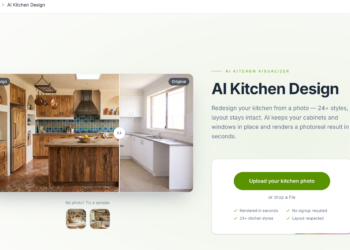
Using AI-powered services, users take pictures of their rooms or provide measurements and immediately are presented with a multitude of design solutions. It’s not like a random recommendation – these ones are backed by data-driven insights considering aesthetics, function, and yes, resale value. What they can do as far as customisation goes means people (who aren’t designers) can feel empowered to make solid choices — and not just overwhelmed.
Personalization Like Never Before
One of the best features of AI in home design is customisation. Everyone has their own taste, lifestyle and needs, and AI Tools will help you to have them. For instance, when working with an AI house design tool, you can state preferences such as minimalist, modern, rustic or traditional, etc.
The AI then presents layouts, furniture arrangements, and décor recommendations tailored to those preferences. Over time, through continued use of the platform, the platform learns its users’ preferences and makes even better recommendations. It just means, instead of going through endless inspirational pictures, users can immediately find curated designs that are in line with their dream from the beginning.
Visualizing Before Committing
One of the most difficult things about designing a house has always been knowing how things will look. It’s hard to predict how a new couch or paint colour, or floor will really look in a given space. This doubt is what most of the time makes people to have a hesitation or worst they buy something they don’t really like.
That’s where tools like a paint color visualizer come in. These tools allow users to digitally apply different paint colors to their walls using photos of their actual rooms. Instead of relying on small paint swatches or guesswork, homeowners can see how a color interacts with lighting, furniture, and other elements in the space.
This not only builds confidence in decision-making, but it can save significant time and money by eliminating the need for repainting or redesigning.
Speed and Efficiency
Accuracy is only one of the ways AI enhances—not to mention speed. What used to be weeks of meetings to talk everything over, make revisions, and get approvals can now be done in minutes.
Designers are able to get an instant look at a number of ideas for a client thanks to AI. Homeowners, meanwhile, can do so to their heart’s content without having to wait for professional advice at every turn.
This is especially helpful for big jobs such as remodelling an entire house or building a new one. AI streamlines the process, so every decision is data-driven and visually clear, he explains.
Cost-Effective Design Solutions
Of course, hiring a professional interior designer isn’t cheap, and not everyone has extra cash flow to throw at it. AI tools fill this void by providing quality design help for a fraction of the price.
Thanks to platforms focused on AI home design, consumers can now enjoy professional design services at a fraction of the cost. Although they won’t necessarily replace professional designers, these applications do greatly diminish the need for them on a continual basis.
Moreover, a few other things, such as the paint colour visualizer, can help you avoid making expensive mistakes like choosing the wrong colour or type of paint. By seeing results in advance, homeowners can prevent throwing money away and keep spending within their means.
Enhanced Creativity and Experimentation
AI-enabled creativity = more creativity, not less. With immediate replay and a slew of design options, these programs are encouraging users to experiment with concepts they may have never considered before.
For instance, a homeowner may want neutral colors to start with, but then decide after using a visualizer that bold accent walls add warmth to the room. AI-generated layouts can even suggest entirely new furniture arrangements you hadn’t thought of to maximise space and flow.
This ability to experiment with ideas consequence-free is one of the most thrilling aspects of AI-driven design. Users can try different styles, colors and layouts freely until they find one that they like.
Bridging the Gap Between Professionals and Homeowners
AI technology is not limited to homeowners – the tools are revolutionising how professionals work, too. Interior designers and architects can apply AI to streamline their process, better express their ideas and ultimately create stronger outcomes for clients.
With the incorporation of AI home design applications into their workflow, professionals can produce interpretations that are closer to reality and better educated clients. This will minimise the miscommunication and both parties know what to expect at the very beginning.
Meanwhile, clients become active participants in the process, having the ability to engage with the design and offer feedback in real time.
Sustainability and Smart Choices
Another major benefit of AI in interior design is its ability to help boost sustainability. Various AI tools can promote green-friendly materials, energy-efficient layouts, and sustainable design approaches.
For example, users choosing paint colours with a paint colour visualizer can also take into consideration options that show them more light or that require less artificial lighting. And just as AI can help you find the best natural lighting in the room, it can suggest furniture placements that improve natural flow — and your heating and cooling bill.
These are small wins but meaningful wins, and they impact what’s inside your home and what’s outside your home.
The Future of AI in Home Design
As technology advances, so will the capabilities of AI in home design. Future upgrades may involve AR integration to enable users to take a stroll through their renovated spaces on the spot. Voice-assisted design tools and further personalisation algorithms will be coming too.
Just think: Redesigning your entire house by simply stating your likes and preferences or using your smartphone to see the changes instantaneously. These innovations aren’t decades away — they’re being developed now, starting to crawl toward the mainstream.
Final Thoughts
AI has changed the way homes are designed, now making it easier, faster, and more tailored to the individual than ever. Tools such as AI home design platforms and a paint color visualizer enable consumers to confidently make decisions about their living spaces.
From a minor room refresh to a full home remodel, AI has the resources to help you realise your vision. With technology and creativity married, homeowners can excel without the usual headaches.
In a world where time, budget, and precision matter, AI is not just a helpful addition—it’s becoming an essential part of the home design journey.