


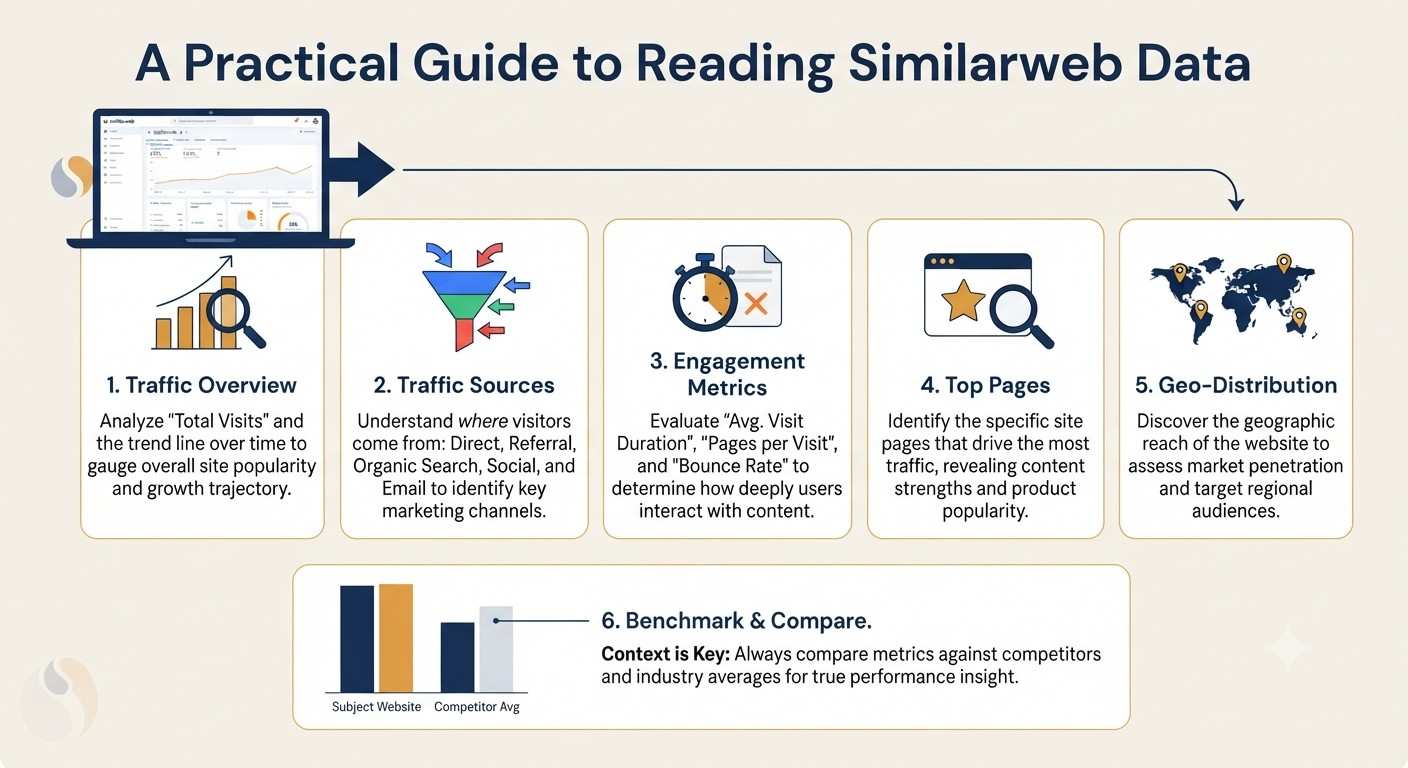
Similarweb estimates traffic using a mix of panel data, ISP partnerships, and modelling, not direct server logs from every site. That means its numbers are directional, useful for spotting big gaps and trends, but wrong by a meaningful margin on smaller sites, and you should never treat a single number as exact.
What Similarweb Is Actually Good For
Two things, reliably: catching order-of-magnitude mismatches, and catching trend direction. When I audited kongotech.org, The gap between branded search volume and actual visits was the single most useful data point in the whole review, not because the exact figures were precise, but because a gap that large (258K+ searches against ~35K visits) is too big to be a modelling error. That’s the right way to use this tool: for gaps, not for decimals.
Where the Estimates Break Down
Similarweb’s accuracy drops sharply below roughly 5,000 monthly visits, where its panel sample size gets thin. It also struggles with sites that get most of their traffic from apps, direct navigation typed into the address bar, or messaging-app shares, none of which its data sources capture well. A site can be genuinely popular in ways Similarweb simply can’t see.
The Three Numbers Worth Checking
- Traffic trend (3–6 months). Direction matters more than the exact figure. A steady decline is a real signal even if the underlying numbers are estimates.
- Traffic source split. Heavy “Direct” traffic on a site with weak SEO usually means bookmark-driven repeat visitors, which is a healthier signal than it first appears.
- Top competing sites. Useful for finding Real alternatives worth comparing that you might not have known about.
FAQ
Is Similarweb data free?
The free tier shows rounded ranges and top-line numbers. Precise figures require a paid plan, which most casual audits don’t need.
Should I trust Similarweb over what a site claims about itself?
Generally, yes, for traffic claims, since sites have an incentive to inflate their own numbers and Similarweb doesn’t. But treat both as estimates and look for the size of the gap between them, not the exact numbers on either side.