


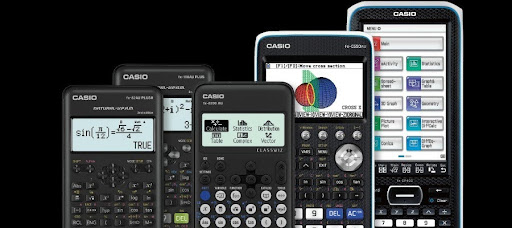
In today’s dynamic learning environment, the role of technology is becoming increasingly important. One such technological advancement that has significantly impacted education is the graphing calculator. These devices have evolved from mere calculation tools to essential components of the educational process.
Enhancing Mathematical Understanding
Graphing calculators are built to make it easier for students to understand higher-level math concepts. As equations can be visualised graphically, students better understand the functions, inequalities and other mathematical concepts. This visual element can be especially important for students who have difficulty thinking in the abstract.
Aiding in Learning Across Disciplines
Although commonly used for mathematics, graphing calculators can be used in several other disciplines. Such as in physics to model projectiles and electric fields, or in economics to draw supply and demand lines. This flexibility allows them to be useful in a wide range of areas.
Graphing Calculators vs. Traditional Calculators
Graphing calculators are not just the simple calculators of yesteryears; they come with several practical and educational features enabling students to know more. They perform all the functions of a scientific calculator, solve equations and systems of equations, plot graphs of functions and do many more things. This feature is a huge benefit in educational environments.
The Role in Standardised Testing
Lots of standardised tests now permit (or require) use of a graphing calculator. That kind of inclusion is a testament to their worth, educationally. Students who are knowledgeable about these tools are often better prepared to answer difficult questions efficiently in a test.
Promoting Technological Proficiency
But graphing calculators not only have immediate practical applications in mathematics, they also give students an experience with an interface and use model that is similar to that of more advanced computer programs. Having this knowledge helps for general technological ability, which is a required skill in today’s workplace.
Encouraging Independent Learning
Graphing calculators allow students to play with math problems in real time, all on their own. They can move equations around, adjust parameters, and see the results right away. This immediate gratification se ndfedback loop promotes curiosity and discovery, ultimately leading to a more profound understanding of the discipline.
Impacts on Teaching Practices
Teachers can use graphing calculators to create dynamic lessons that engage students. Also they can use these devices to help explain the delivery of difficult material to students in a filled benefit.
Choosing the Right Graphing Calculator
Popular Today Choosing the best graphing calculator. Graphing calculators have become very popular, but with so many models to choose from nowadays, it can be a very difficult decision. Teachers and students will want to consider what features the calculator includes and which ones they really need to decide which calculator is best for them.
The Future of Graphing Calculators
With the advances in technology, graphing calculators will have the potential to offer even more features. Upcoming versions of the device could potentially have even more features to help teachers and students connect with each other (and with other educational devices, perhaps).
Accessibility and Inclusion
Graphing calculators can also be used to help students with learning disabilities, earning (no pun intended!) the device high marks for accessibility. They are visual and interactive, which can make them more effective in closing understanding gaps and Help ensure all students have an opportunity participate in shared educational experiences.
Cost Considerations
It is true that a graphing calculator cost a pretty penny but the value that it provides for the education of a student is certainly worth the investment. Schools can typically even lend students a graphing calculator if the need is there, so just like anything else, it can be a cost barrier but schools work to break down those barriers.
Environmental Impact and Sustainability
Top producers are prioritizing the sustainability of their products. Modern graphing calculators are energy efficient and some have solar power options, so you don’t have to replace batteries as often.
Integrating Graphing Calculators with Other Technologies
They can also work with other technology in the education environment, such as computers and interactive whiteboards. This adds up to more of a plain learning experience where students can move painlessly from tool to tool.
Conclusion
In conclusion, graphing calculators hold a vital position in today’s educational landscape. From enhancing mathematical comprehension to fostering independent learning and technological proficiency, these tools support multiple facets of student development. As education advances, the role of graphing calculators will likely continue to grow, further solidifying their place in modern classrooms.