By a technology policy analyst tracking AI governance since the GDPR era.
The European Union just handed every AI team on the planet a compliance deadline. And most of them aren’t ready.
The EU Artificial Intelligence Act is the world’s first comprehensive legal framework governing AI systems, and it officially entered into force on August 1, 2024. IBM’s top researchers flagged it immediately. In their 2026 AI trends breakdown, Martin Keen and Aaron Baughman identified “Verifiable AI” as one of eight forces reshaping the industry, calling it a direct response to what Brussels now legally requires. That’s not a coincidence. It’s a warning.
So what exactly is the EU AI Act? Why does it matter beyond Europe? And why is IBM betting that verifiable, auditable AI is the defining technical challenge of the next two years? Let’s get into it.
What Is the EU AI Act?
The EU AI Act is a binding legal regulation adopted by the European Parliament that classifies artificial intelligence systems by risk level and imposes transparency, documentation, and accountability requirements on developers and deployers. It works by assigning every AI application to one of four risk tiers: unacceptable risk (banned outright), high risk (strict compliance required), limited risk (transparency obligations), and minimal risk (largely unregulated). As of 2024, prohibitions on unacceptable-risk AI systems are already in effect, with high-risk requirements phasing in through 2026 and 2027.
Why the EU AI Act Matters Right Now
Here’s something most articles won’t say plainly: the EU AI Act is not just a European problem.
Any company building AI that touches EU citizens, processes EU data, or sells into EU markets must comply, regardless of where the company is headquartered. That covers a staggering range of businesses: a SaaS startup in Bangalore, a health-tech firm in Singapore, a fintech platform in Chicago. If your AI product has EU users, the Act applies to you.
The scale of exposure is real. According to the European Commission, the EU AI Act will directly affect an estimated 5,000 to 10,000 AI providers globally in its first phase. And consulting firm Gartner projected that by 2025, more than 30% of enterprise AI projects would face regulatory scrutiny they weren’t designed for.
What makes this different from earlier tech regulations like GDPR? Specificity. GDPR told companies to protect data; the AI Act tells them how their systems must behave, what documentation must exist, and who is responsible when something goes wrong. That’s a much harder bar to clear.
And this is exactly the problem IBM’s researchers are pointing at.
What Is “Verifiable AI” and Why Is IBM Talking About It?
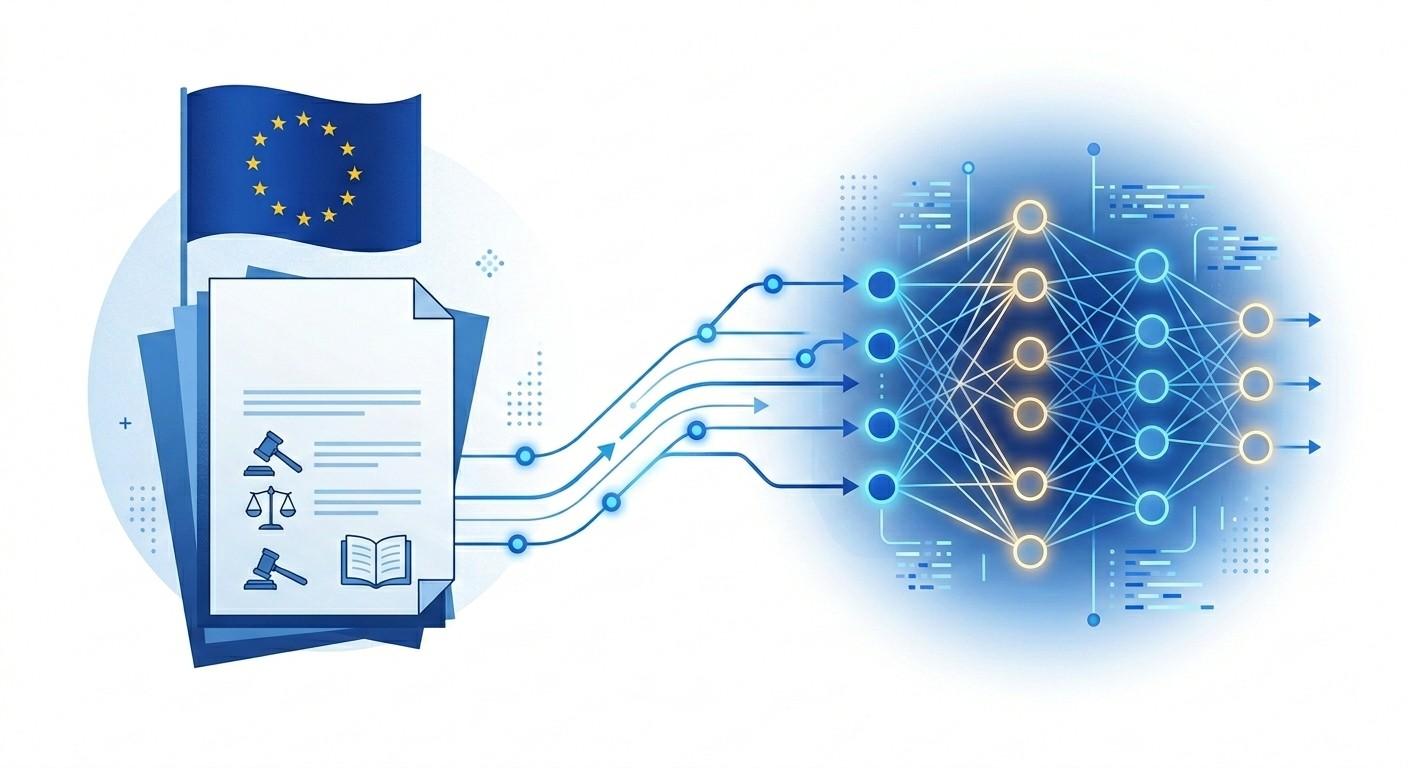
In IBM’s 2026 AI trends video, Keen and Baughman describe Verifiable AI as the practice of building AI systems that are auditable, transparent, and traceable. This means strict data lineage documentation, explainable model outputs, and the ability to demonstrate exactly how a decision was reached.
Think about what that actually requires in practice. Auditors and regulators can’t just take your word for it that your credit-scoring model doesn’t discriminate. They need a paper trail: where did the training data come from, how was it cleaned, what features drove the output, and can you reproduce the result? That’s a fundamentally different engineering mindset than “ship fast, optimize later.”
Verifiable AI is the technical answer to a legal question the EU AI Act is asking very loudly.
IBM isn’t alone here. The National Institute of Standards and Technology (NIST) published its AI Risk Management Framework in 2023, specifically calling out measurability and traceability as core governance pillars. The AI Act and the NIST framework essentially agree: accountability without documentation is theater.
Which Sectors Face the Highest Verifiable AI Pressure?
The EU AI Act’s high-risk category reads like a who’s who of consequential industries. If your AI system makes decisions that affect people’s safety, rights, or livelihoods, it’s high risk. Here’s where verifiable AI becomes not optional but legally mandatory.
Healthcare. AI tools used for medical diagnosis, patient triage, or treatment recommendations fall squarely in the high-risk tier. A diagnostic AI that can’t explain its reasoning isn’t just bad medicine; under the Act, it’s non-compliant. IBM’s Watson Health experiments taught the industry this lesson the hard way years ago. Now there’s a law codifying it.
Financial Services. Credit scoring, insurance underwriting, and fraud detection algorithms must be auditable. This hits every major bank and fintech operating in Europe. The European Banking Authority has already flagged AI explainability as a supervisory priority for 2025 and beyond.
Employment and HR. AI tools used for hiring, promotion, or performance evaluation are explicitly listed as high-risk. Resume screening tools, interview scoring software, and workforce analytics platforms all need documented, verifiable decision processes.
Critical Infrastructure. AI managing power grids, water systems, and transportation networks carries obvious safety implications. Operators need not only functioning systems but provable ones.
Law Enforcement and Justice. AI-assisted risk assessments in criminal proceedings require the highest transparency standards. Predictive policing tools and recidivism scoring systems have already faced legal challenges in the US; the EU Act is preemptively closing those gaps.
Education. AI systems that evaluate students or determine access to educational opportunities must demonstrate fairness and explainability. This matters enormously as adaptive learning platforms and AI tutors go mainstream.
The common thread across all six? Decisions with real consequences for real people. Where there’s consequence, the EU says there must be accountability.
The Four Things Verifiable AI Actually Requires
This is where most articles go vague. Let’s be specific.
1. Data Lineage Documentation. You need to know exactly where your training data came from, how it was sourced, who processed it, and what biases it may carry. This isn’t just good practice; it’s a compliance artifact that auditors will request.
2. Model Cards and System Documentation. For high-risk AI, the Act requires technical documentation before deployment, not after. Model cards describing intended use, performance benchmarks, known limitations, and testing methodology must exist and be kept current.
3. Explainability Mechanisms. Affected individuals have the right to understand AI-driven decisions that impact them. That means your model output can’t be a black box. Techniques like LIME, SHAP, or attention visualization aren’t just academic tools anymore; they’re compliance infrastructure.
4. Human Oversight Interfaces. High-risk AI systems must be designed to allow meaningful human intervention. An AI that makes autonomous consequential decisions with no override mechanism doesn’t just fail ethics review; it fails legal review under the Act.
What Competitors’ Articles Miss: The Global Compliance Cascade
Most coverage of the EU AI Act treats it as a parochial European story, but that perspective ignores the tectonic shift occurring in global tech governance. The Act is currently triggering what policy researchers at the Future of Life Institute describe as a “Brussels Effect,” where the sheer scale of the EU market necessitates that multinational firms adopt these stringent standards globally. Just as GDPR made cookie consent banners and privacy disclosures a standard fixture of the internet, the EU’s mandate for AI transparency will inevitably become the global baseline.
IBM recognises this reality with particular clarity. When Aaron Baughman identifies “Verifiable AI” as a definitive 2026 trend, he is speaking to an inevitable horizon for every enterprise. He is not merely describing the immediate scramble of European compliance teams; he is articulating the new baseline expectation for enterprise AI operations worldwide within the next 24 months. For those building the next generation of digital infrastructure—as frequently discussed in GeeksHub—the race is no longer just about computational power or model intelligence. The true competitive advantage now lies in the ability to deliver systems that are demonstrably auditable, traceable, and compliant.
FAQs About the EU AI Act and Verifiable AI
What is the EU AI Act in simple terms?
The EU AI Act is a law that categorizes AI systems by how risky they are and requires high-risk applications in healthcare, finance, hiring, and similar fields to meet strict documentation, transparency, and human oversight standards before deployment.
When does the EU AI Act take full effect?
The regulation entered into force in August 2024. Prohibitions on banned AI practices applied from February 2025. Requirements for high-risk systems apply from August 2026, with some provisions extending to 2027.
What does “verifiable AI” mean in practice?
Verifiable AI means your system can demonstrate how it reached a decision, show the data lineage behind its training, and provide documentation auditors can inspect. It’s AI that produces receipts.
Does the EU AI Act apply to companies outside Europe?
Yes. Any AI provider or deployer serving EU users or operating in EU markets must comply, regardless of where the company is located.
What happens if you don’t comply with the EU AI Act?
Fines can reach 30 million euros or 6% of global annual turnover for the most serious violations, higher as a percentage than GDPR penalties.
Which IBM products address EU AI Act compliance?
IBM’s watsonx.governance platform is specifically positioned for AI model documentation, monitoring, and compliance workflows. IBM has explicitly mapped its tooling to EU AI Act requirements.
What This Means for You
Three things worth taking away from all of this.
- First, “we’ll figure out compliance later” is no longer a viable strategy for any AI product touching European markets. The timeline is now.
- Second, verifiable AI isn’t just a legal checkbox. Done well, it makes your systems better: more auditable systems catch bias earlier, fail more gracefully, and earn more trust from the users and institutions you need on your side.
- Third, IBM naming this as a top-eight 2026 trend tells you something about where enterprise AI investment is heading. Companies that build verifiable AI infrastructure now won’t just avoid fines. They’ll win procurement contracts from regulated industries that competitors can’t touch.
The EU AI Act isn’t the end of AI innovation in Europe. But it is the end of AI deployed without accountability. For the sectors where it matters most, that’s long overdue.
Want to explore the full IBM 2026 AI trends breakdown? Watch the original video at IBM’s YouTube channel.
For official EU AI Act text and implementation guidance, visit EUR-Lex, the official EU law portal.
NIST’s AI Risk Management Framework is available at nist.gov/artificial-intelligence.